
Payments newsletter: Betaaljournaal 19
The past two years have been somewhat turbulent for our organisation due to the departure of Piet and Lex, staff members who left when the Risk team moved to the NVB, and the separation of the Dutch Payments Association and Currence. With the appointment of the new chair, the adjustment of the governance structure and my appointment as managing director, the cycle agreed with the board in December 2021 has now been completed.
It is an honour to now formally lead the Dutch Payments Association, supported by a wonderful team of highly motivated staff. This enables us to energetically tackle the implementation of the 2023 Annual Plan and, in particular, its key priorities. These priorities are Accessibility & Inclusivity and Sustainability & Infrastructure Costs (follow-up to the McKinsey study). Even more so than before, we will focus on delivering a positive impact for our members, whilst taking into account the legitimate societal interests of our stakeholders. I am very much looking forward to this and hope our excellent collaboration will continue in 2023!
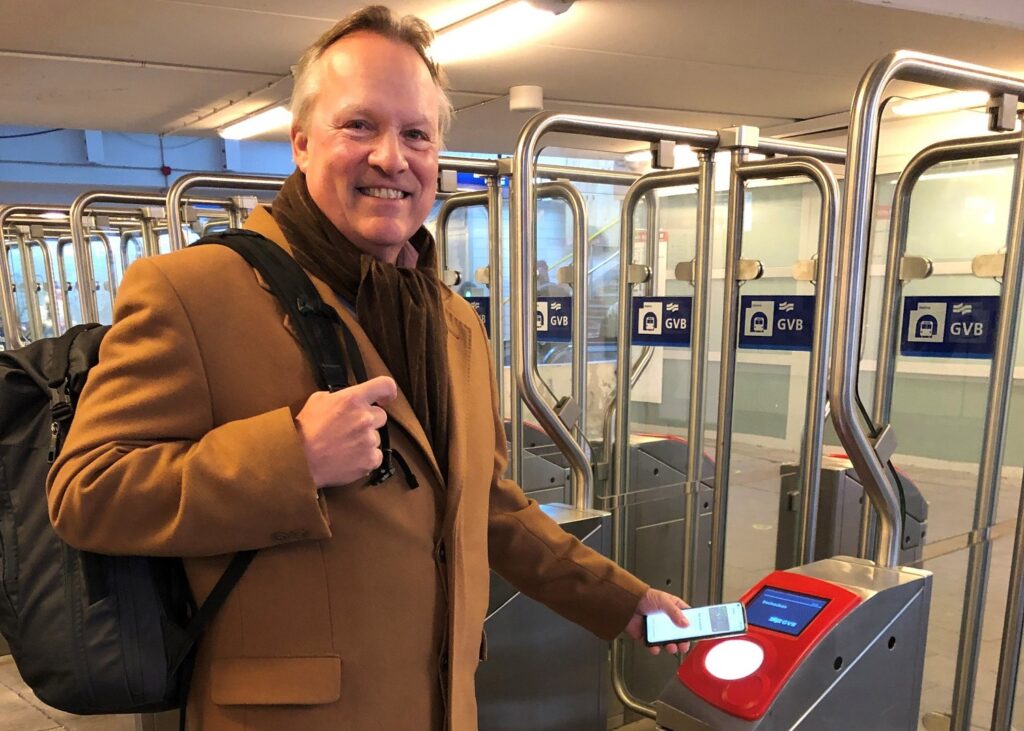
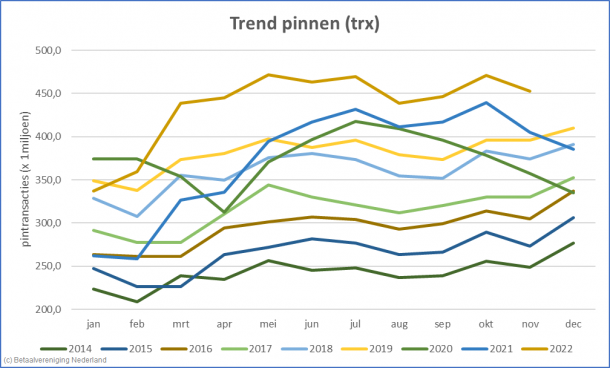
This year ends on a high note: for the first time, more than 5 billion debit card transactions have been carried out in a single calendar year. I symbolically carried out the 5 billionth transaction by using my virtual debit card to check in at the metro in Amsterdam. I chose that location specifically to draw attention to this new way of travelling on public transport. Our members have worked hard on this over the past few years. I wish you all a wonderful festive season and a healthy and happy New Year!
Gijs Boudewijn, Managing Director
- Acceptgiro test facilities to cease on 1 January 2023
- My one-off donation
- Online purchases and spending appear to be stabilising after a period of growth
- OVpay roll-out continues
- Migration of merchants to new debit card brands nearly complete
- Review of the General Meeting of Members on Open Banking and SPAA
- Pilot scheme for walk-in banking consultation hours at libraries
- More than 5 billion debit card transactions in 2022
- Study into the cash cycle
- Checkout.nl to be discontinued
- New version of the Request to Pay Rulebook
- Consultations and legislative proposals
- Figures
- Calendar
- Association news
Acceptgiro test facilities to cease on 1 January 2023
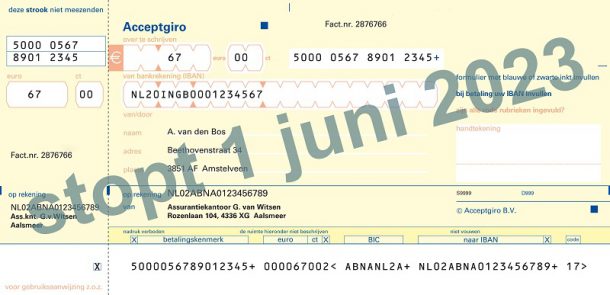
In anticipation of the final phasing out of Acceptgiro on 1 June 2023, Currence has recently informed certified Acceptgiro printers and service bureaux that the Acceptgiro test facilities will be discontinued on 1 January 2023. Details of certified printers and service bureaux will be removed from the Acceptgiro website as of 1 March.
Currence has urged distributors of Acceptgiro forms to stop sending Acceptgiro forms to their clients from 1 March 2023. Furthermore, Currence advises printing companies and service bureaux not to supply their customers with more Acceptgiro forms than those customers can send by 1 March 2023. It is important that Acceptgiro distributors inform their customers in good time about the alternatives to Acceptgiro that they will be offering after 1 March 2023. The available alternatives are listed on the websites of banks, Acceptgiro and the Dutch Payments Association. Gijs Boudewijn, Director of the Dutch Payments Association, said: “We are seeing distributors actively working on alternatives to the Acceptgiro, including paper-based alternatives. For example, an occasional donation to a charity can easily be paid using a one-off direct debit authorisation on paper.”
My one-off donation
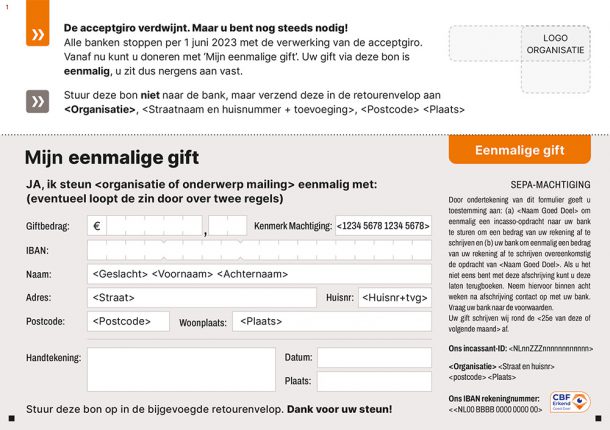
Goede Doelen Nederland (GDN), in consultation with the Dutch Payments Association, has developed a one-off paper authorisation form specifically designed for one-off donations or contributions from donors. During its development, GDN tested its practical usability, amongst other things, whilst the Dutch Payments Association assessed the interbank requirements for this authorisation. This has resulted in ‘My one-off donation ’. Donors can use this to authorise the charity in writing to collect a one-off amount from their current account for:
- a specific (campaign) cause or;
- a membership fee; or
- the annual membership fee.
Online purchases and spending appear to be stabilising after a period of growth
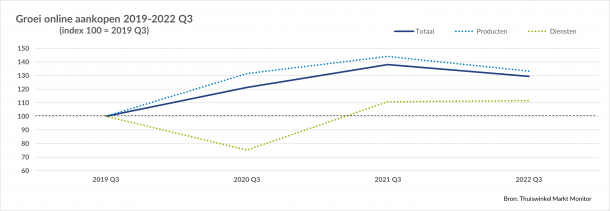
In the third quarter of 2022, online consumer spending increased slightly. In total, Dutch consumers spent €7.2 billion online during that quarter, 4% more than in the same quarter last year. This growth is driven by higher online spending on services (14%), particularly on package holidays (20%) and tickets for attractions and events (19%).
The number of service purchases remains fairly stable (1%), but as consumers are buying fewer products, the total number of online purchases has fallen (-5%) compared with Q3 2021. This is according to the latest Thuiswinkel Market Monitor, the survey of online consumer spending in the Netherlands. This survey is conducted by GfK, on behalf of Thuiswinkel.org and Retail Insiders, in collaboration with PostNL, the Dutch Payments Association and Currence.
OVpay roll-out continues
Since 29 November 2022, passengers in Amsterdam have been able to check in and out on GVB services using their debit card. The Amsterdam transport operator is the second city transport operator, after HTM, to allow travel using a debit card. Nationwide, the OVpay campaign is continuing to roll out. Several regional transport operators had already introduced this travel option, and it is now gradually becoming available nationwide.
At the end of August, NS launched a trial involving a limited group of participants. This trial will run until the end of 2022. Feedback from both passengers and public transport operators has been positive. Passengers appreciate the convenience; they already have their debit cards in their pockets and no longer need to carry a separate public transport chip card.
From early 2023, it will be possible to travel throughout the Netherlands using a debit or credit card on all transport services (bus, tram, metro and train). Initially, this will apply to full-fare journeys only. In the course of 2023, it will also be possible to travel at a reduced fare, such as senior citizen discounts or off-peak discounts.
Migration of merchants to new debit card brands almost complete

The aim of the Debit Card Acceptance (DCA) project is to ensure that, by the end of 2022, debit card payments can be made not only with Maestro and V PAY, but also with Debit Mastercard and Visa Debit. The infrastructure has now been adapted to process these card brands: payment terminals can recognise the new debit cards and route transactions to acquiring processors, which can then process them at the usual debit card rates. Merchants’ payment contracts have been extended to include Visa Debit and Debit Mastercard, and point-of-sale information materials have been developed for business owners .
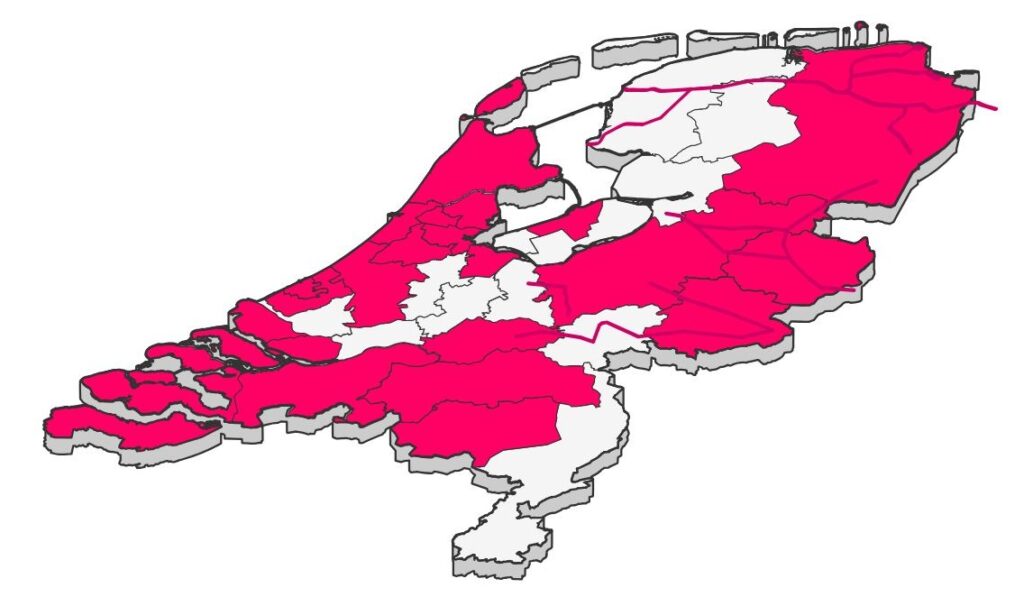
At present, the final merchants are being migrated to the new card brands. This is being done via a software upgrade and the activation of the new card brands on their payment terminals. To monitor the process, the Dutch Payments Association receives weekly reports which are used to calculate the national coverage rate for the new card brands. Seven out of ten terminals now accept payments with Debit Mastercard and Visa Debit. We expect coverage to have risen to 85% by the end of this year. The remaining terminals will be updated or replaced in the first quarter of 2023.
Review of the General Meeting of Members on Open Banking and SPAA
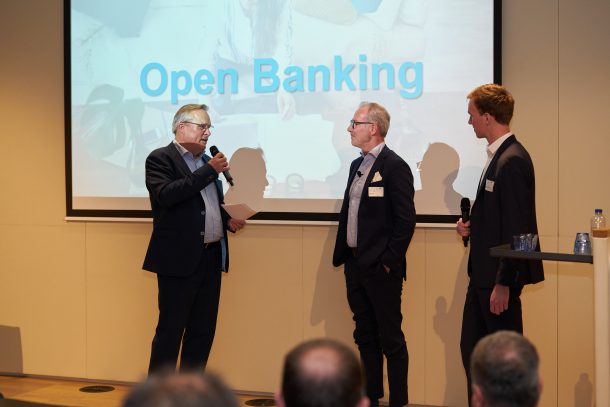
On Thursday 17 November, we held our half-yearly General Meeting of Members (GMM), followed by an informative session on open banking led by Gijs Boudewijn. Around eighty members attended the meeting. The speakers were Maarten Bakker, partner at Innopay; Jan van Vonno, head of industry strategy at Tink; and Christian Schäfer, co-chair of the EPC SPAA Multi-Stakeholder Group.
At the start of the programme, Gijs spoke with the chair (Rob van Bergen, ING) and secretary (Niels Pranger) of our Open Banking Working Group. This working group is closely involved in the European Payments Council’s (EPC) so-called SPAA initiative, the SEPA Payment Account Access scheme (SPAA). Several speakers referred to SPAA during the meeting. The SPAA rulebook version 1.0, approved by the EPC’s board, was recently published. The rulebook is expected to come into force in November 2023. The initiative aims to support new premium account information and payment initiation services in the market.
Further information on open banking and SPAA is available on the Dutch Payments Association’s website. A report on the meeting and a photo gallery can also be found there.
Pilot walk-in consultation hours with retired bank staff at libraries

Since 11 October, people with questions about banking or payments have been able to seek advice from retired bank staff. This takes place during walk-in consultation hours at libraries in three cities. This is a pilot scheme aimed primarily at Dutch people in vulnerable situations, such as older people, those with low literacy levels, and people with physical or intellectual disabilities. The volunteers are retired staff from ABN AMRO, ING and Rabobank. They provide impartial, bank-independent information and are available for two hours a week at libraries in Utrecht, Rotterdam and Deventer. We expect these pilot schemes to be rolled out further in the new year.
Over 5 billion debit card transactions in 2022
Today, we reached the milestone of 5 billion debit card transactions within a single calendar year. To mark this, we issued a press release. Throughout the year, debit card transaction figures have been well above those of previous years, with the proportion of transactions made using a mobile phone or wearable device growing in particular: currently, almost 30 per cent of all debit card payments are made via mobile devices. Inserting a card continues to lose ground: 88.6 per cent of all transactions are contactless.
Study into the cash chain

The Ministry of Finance and the Dutch Central Bank (DNB) have commissioned PwC to investigate the advantages and disadvantages of various options for the market organisation and funding of the cash chain. This so-called TICKET study follows on from an earlier study by McKinsey commissioned by DNB in 2021 (known as CITO) and the Cash Covenant concluded in April 2022. The study has been underway for several months now. PwC has consulted with all stakeholders and will present the proposed options to them in the coming weeks. PwC will incorporate the feedback and views on the options into the final phase of the study. The results are expected at the end of January 2023. On this basis, the commissioning parties will select a preferred option to be developed further.
Checkout.nl is being discontinued

For many years, business owners could visit www.checkout.nl for information on till systems and payment terminals. This website was the only independent comparison site in this field. The website was set up by the Hoofdbedrijfschap Detailhandel following the introduction of the euro (initially as betaalterminal.nl). It was subsequently taken over by the Stichting Bevorderen Efficiënt Betalen and, in recent years, was required to become financially self-sufficient. Unfortunately, this was not successful. During periods when many business owners were looking for a payment terminal for the first time or needed to replace their existing one, there were more than 100,000 visitors per year, and providers also had a vested interest in ensuring their information on the site remained up to date. Those days are over: debit card payments have become so widespread that business owners visit the site far less frequently and find their own way around. It has therefore been decided to discontinue the website and to refer users to www.pin.nl/ondernemers for general information.
New version of the Request to Pay Rulebook
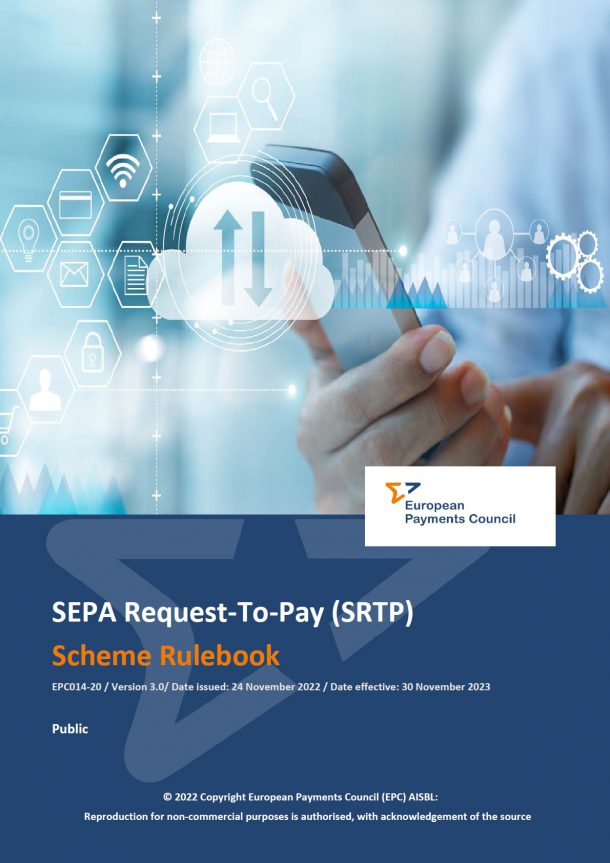
On 30 November, the EPC published version 3.0 of the SRTP rulebook (SEPA Request To Pay) . SRTP aims to facilitate standard payment requests for various situations (C2B, B2B, P2P) using credit transfers (SEPA Credit Transfers). With SRTP, the payer is provided with the correct details for the transfer (such as the amount, name and IBAN of the payee) and the payee can easily reconcile the payment.
SRTP services are ‘merely’ messaging services; no specific licence is required to provide them. An SRTP service provider is therefore not subject to supervision by DNB (unless it also provides payment services). The rulebook sets out the rules for providers of SRTP services. It also describes the data elements that providers exchange with one another. ISO 20022 messages have been defined for this purpose. A new feature in version 3.0 is that API technology is supported for the exchange of SRTP data. Another new feature of Rulebook 3.0 is that it supports the ‘redirect’ function, as we know it in the Netherlands with iDEAL. This was important for the Netherlands, as it ensures that iDEAL remains in line with the SRTP standard.
Although the rulebook and the associated specifications are now well-established, SRTP is still scarcely offered in the market: there are only two SRTP service providers registered with the EPC. This may change in the future. One promising possibility, for example, is that SRTP, in combination with a QR code, could lead to an ‘Instant Payment’ at the till. We continue to monitor developments surrounding SRTP closely and represent our members in the SRTP consultation process.
Consultations and legislative proposals
On 26 October, the European Commission published the legislative proposal for a regulation on Instant Payments. With this legislative proposal, the European Commission aims to make Instant Payments in euros available to all citizens, businesses and institutions holding a payment account in the EU and EEA countries, to ensure that Instant Payments in euros are affordable and secure, and that they can be processed without hindrance.
The legislative proposal consists of amendments to the SEPA Regulation (Regulation (EU) No 260/2012) and the revised Cross-Border Payment Regulation (Regulation (EU) 2021/1230). It comprises four parts:
- Banks in the EU that already offer their current account holders traditional European credit transfers in euros (SCT) both within and outside the euro area will be required to do the same for European Instant Payments in euros (SCT Inst);
- The fees for Instant Payments must be the same as or lower than those for traditional European credit transfers;
- All providers of Instant Payments must offer their current account holders (consumers and business customers) an ‘IBAN name check’ as a service;
- Providers of Instant Payments must follow a harmonised sanctions screening procedure, based on at least daily checks of their own customers against EU sanctions lists.
Although at first glance the impact on our members appears relatively low (unlike in many other countries), we will need to examine very closely the potential consequences should the proposals be adopted unchanged by the European Council and the European Parliament. The timelines are ambitious: the Commission hopes to finalise the legislative process in Q4 of 2023. The Dutch Payments Association will take this opportunity to convey its members’ collective views to the Commission (‘Have Your Say’). The deadline for submitting comments is 4 January 2023.
Figures
55% more online payments on Black Friday than on a normal Friday. 840 debit card transactions per second on 3 December at around 2.15 pm.
More figures relating to the festive season
Agenda
- 19 December – Board meeting
- 6 March – Account-to-Account Payments Stakeholder Forum/Card Forum
- 17 May – General Meeting
Association news
Ahead of the half-yearly General Meeting of Members of the Dutch Payments Association on 17 November, the association’s board has formally appointed Gijs Boudewijn as director.
The Dutch Payments Association welcomes the electronic money institution Modulr Finance as a new member. Furthermore, one of our members, Bitsafe Payments B.V., has changed its name. Bitsafe is now officially known as Yoursafe B.V.
On 8 December, Cynthia Tulp (ABN AMRO) took over the chairmanship of the Advisory Board from Suzan van Eeten (Rabobank).
Members’ Bulletin
In addition to this Betaaljournaal, the Dutch Payments Association also publishes Members’ Bulletins. In these, we inform members about practical matters of interest. The bulletins are usually published a few times a month and focus on a specific theme. Are you a member but not yet receiving these bulletins? You can ask to be added to the mailing list via secretariaat@betaalvereniging.nl.
Subscribe to the Betaaljournaal
Are you also interested in the latest developments in the payments sector? Stay up to date via the ‘Betaaljournaal’. You can subscribe here.
Related articles
-

BIC and Identifier ‘BCDMNL22’ removed from the SEPA BIC list
-
IBAN/BIC list
-
IBAN and BIC
-
-

High confidence in Dutch payment system
-
News
-
Card payments
-
-
New bank account numbers Dutch Tax Administration
-
News
-
Account-to-Account payments
-
-
Make digital euro useful, simple and affordable
-
News
-
European legislation
-
-
BIC and Identifier ‘FIRHNL22’ added to the SEPA BIC list
-
IBAN/BIC list
-
IBAN and BIC
-
-
Trial with €100 banknotes at Geldmaat
-
News
-
Cash payments
-