
Seminar on the future of open banking at Dutch Payments Association General Meeting
On Thursday 17 November, the Dutch Payments Association held its half-yearly General Meeting of Members, followed by an informative and interactive programme on open banking led by Gijs Boudewijn.
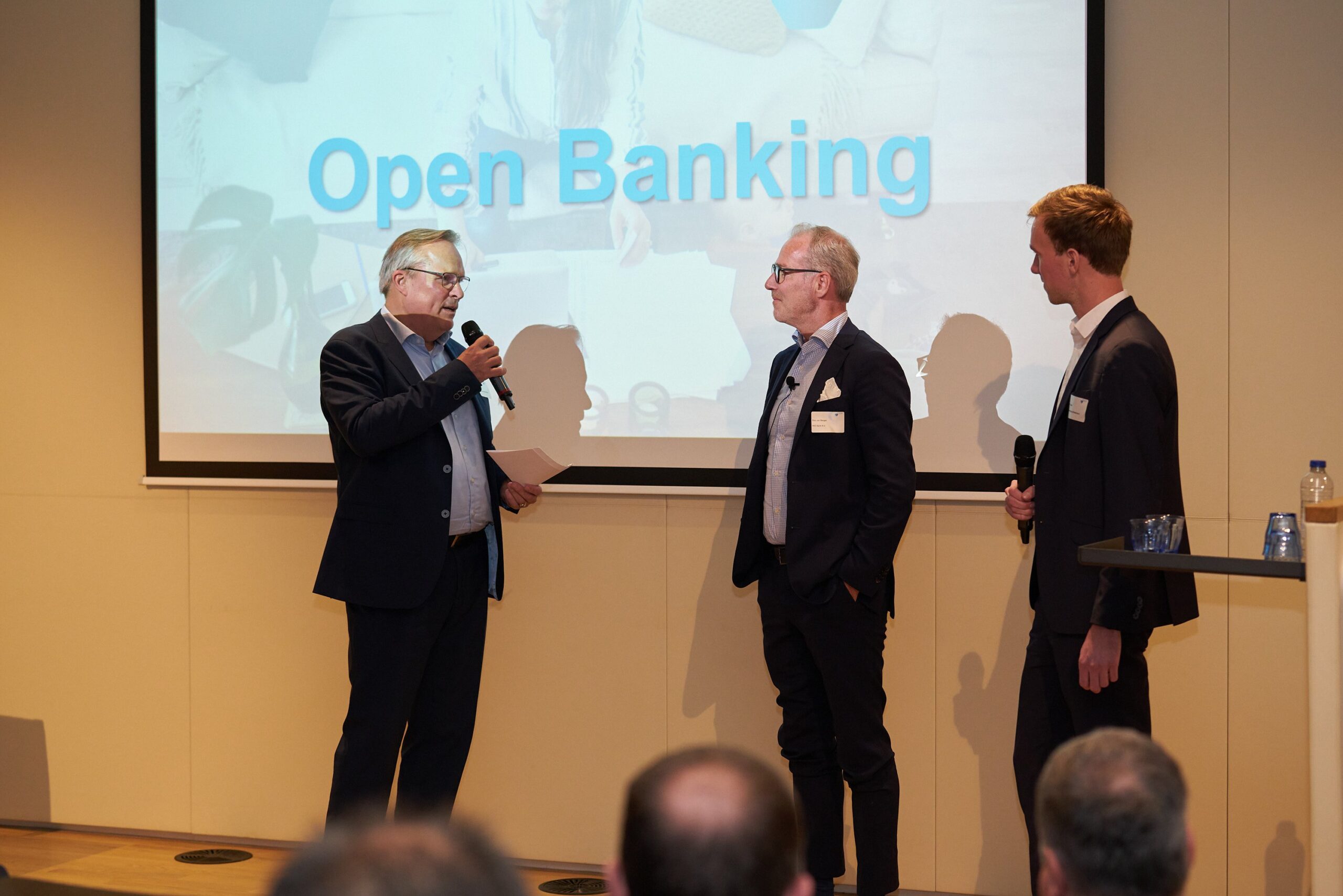
During the General Meeting, Gijs Boudewijn was appointed Managing Director of the Dutch Payments Association. Several amendments to the articles of association were also made with the members’ approval.
Open banking
Open banking means giving a licensed third party access to a payment account with the account holder’s explicit consent. This year, the Dutch Payments Association launched its Open Banking Working Group. Rob van Bergen (ING) chairs the group and Niels Pranger (Dutch Payments Association) is its secretary. The working group provides members of the Dutch Payments Association with a permanent platform for cooperation in the open-banking ecosystem. It monitors legislative developments, discusses technical matters and contributes to sector initiatives such as the SEPA Payment Account Access scheme (SPAA) and the Berlin Group. The working group also discusses the direction that the Dutch open-banking sector could take.
Maarten Bakker
Maarten Bakker, a partner at INNOPAY , presents INNOPAY’s Open Banking Monitor. The monitor assesses the gateways that banks provide for open banking, better known as APIs (Application Programming Interfaces). An API’s functionality and developers’ experience of using it determine a bank’s API score. Dutch banks perform well in the monitor. Maarten Bakker has seen a shift from open banking to open finance in recent years. In addition to providing access to payment accounts, financial institutions, including banks, are making a wider range of services and products available. Mortgages, insurance and investments are good examples. INNOPAY predicts that embedded lending could grow into a multibillion-euro industry in the years ahead.
Jan van Vonno
Jan van Vonno, Head of Industry Strategy at Tink , shares his view of the future of payments. Tink is licensed as a payment initiation service provider and uses this licence to innovate in the payments market. It enables Tink to initiate transfers between payment accounts. Variable recurring payments are a new payment method that could transform the payments sector. They allow a seller to collect a variable amount periodically, within conditions set by the buyer. This is a suitable solution when the final amount is unknown, for example for subscriptions. It could also support the development of a point-of-sale payment method that competes with payment cards. Jan van Vonno stresses the importance of the SPAA scheme to these innovations.
Christian Schäfer
Christian Schäfer, co-chair of the SPAA Multi-Stakeholder Group , introduces the SEPA Payment Account Access (SPAA) scheme. The revised Payment Services Directive (PSD2) unleashed open banking, but it lacks important pieces of the puzzle, such as remuneration for API providers. PSD2 is also limited in scope to payment accounts. The SPAA scheme seeks to address this and goes beyond PSD2; it is intended to take open banking in Europe to the next level. Christian Schäfer says that SPAA’s development process was highly complex and sometimes difficult, but is now well advanced. Banks and third parties have agreed on the need for a fair distribution of value and risk and a stronger focus on consumers. Together, they have developed new use cases, such as variable recurring payments. The default fee and minimum viable product (MVP) for this new payment method will be announced in the first quarter of 2023.
Gijs Boudewijn closed the event with an interactive panel discussion on open banking between Rob van Bergen and the three speakers mentioned above, with questions and comments from the audience.
Related articles
-

High confidence in Dutch payment system
-
News
-
Card payments
-
-

Make digital euro useful, simple and affordable
-
News
-
European legislation
-
-
EU trilogue on the digital euro begins
-
News
-
European legislation
-
-

The Digital Euro and Stablecoins: Apples and Oranges
-
News
-
European legislation
-
-

Payment orders with unstructured address data will be rejected starting November 14 or 15, 2026
-
News
-
European legislation
-
-
First online lunch session updates members on current developments in the payments sector
-
News
-
European legislation
-