
Banks and civil society organisations join forces for accessible and inclusive services
Banks are making it easier to obtain help with banking and payments. They are working with a range of civil society organisations, including the Digital Society Alliance. Today, the Dutch Payments Association and the Dutch Banking Association (NVB) announced that a pilot involving three bank information points has been expanded to ten municipalities across the Netherlands. The banks will also launch a joint ‘accessibility pathway’ this year.

Dutch banks have individually offered a wide range of accessibility services for many years. These include employees who can visit customers at home and 1,150 bank branches, service points in local shops and advisory offices that provide banking services.
Support programme
Recent research by De Nederlandsche Bank (DNB) shows that around 2.6 million people in the Netherlands cannot manage all their banking and payment matters independently, for a variety of reasons. The Dutch banks therefore promised in a joint commitment to provide more support. With that support, as many people with decision-making capacity as possible should be able to use basic banking services independently.
Dutch banks are bringing their accessibility efforts together in a broad Accessible Banking programme. A public meeting with representatives of various target groups will be held at Rotterdam Central Library on 1 June to launch the programme. The joint website www.ToegankelijkBankieren.nl will also be launched that day.
Collaboration
For the Accessible Banking programme, the banks are working with a range of civil society organisations, including organisations representing older people, people with low literacy and people with physical or intellectual disabilities, as well as the Digital Society Alliance and libraries. These organisations help banks understand the barriers and needs of different target groups and reach them more effectively, enabling banks to develop suitable solutions for better accessibility.
Medy van der Laan, Chair of the NVB: “Digital services offer convenience and support to large groups of people. We want independent banking to become the norm for as many people as possible, including the many people who are currently unable to keep up. That is why we work closely with all the parties involved, including representatives of groups that struggle with digital services. This means listening carefully to one another and learning from each other how we can lower barriers for different groups.”
Bank information points
Many bank branches have closed because customers rarely or never visited them. The disappearance of branches can be difficult for people who struggle with digital services, so banks are developing adapted and additional facilities.
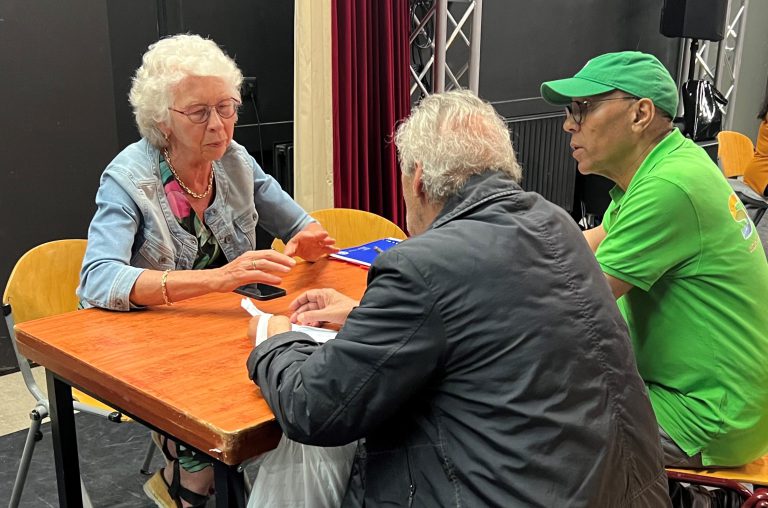
At the initiative of the three largest banks, a pilot with bank information points is being held in ten municipalities across the Netherlands. The points are located in libraries, community centres, assisted-living complexes and a Geldmaat shop. Until September, visitors can obtain general information and help with everyday banking and payment matters. When necessary, a bank information point can put a visitor in touch with a bank employee who can assist with confidential banking matters. The visitor may also call their bank together with someone from the information point. The pilot’s experiences will be collected and evaluated in September, after which a decision will be made about which bank information points can continue and in what form.
Accessibility pathway
In addition to the bank information point pilot, the banks will publish a roadmap with a joint ‘accessibility pathway’ this year. It will help customers and support workers find the right assistance more easily. In many cases, they can find a direct solution to the problem someone is experiencing. If not, the roadmap can lead to telephone or in-person assistance from a bank employee.
The banks will provide training and tools to information providers so they can assist bank customers when approaching a bank independently is too difficult. An interbank digital information platform will also support them with information and guidance on digital and non-digital banking services.
Banks will also improve their telephone services and make their digital services through websites and mobile apps more accessible.
A list of articles
-
A2A payments continue to grow
-
News
-
Online payments
-
-
Your bank is always nearby!
-
News
-
Payments for all
-
-

Dutch abroad pay most with cards in Spanish hospitality
-
News
-
Card payments
-
Related articles
-
Your bank is always nearby!
-
News
-
Payments for all
-
-

High confidence in Dutch payment system
-
News
-
Card payments
-
-
Growing number of people are satisfied with handling their daily banking affairs
-
News
-
Payments for all
-
-
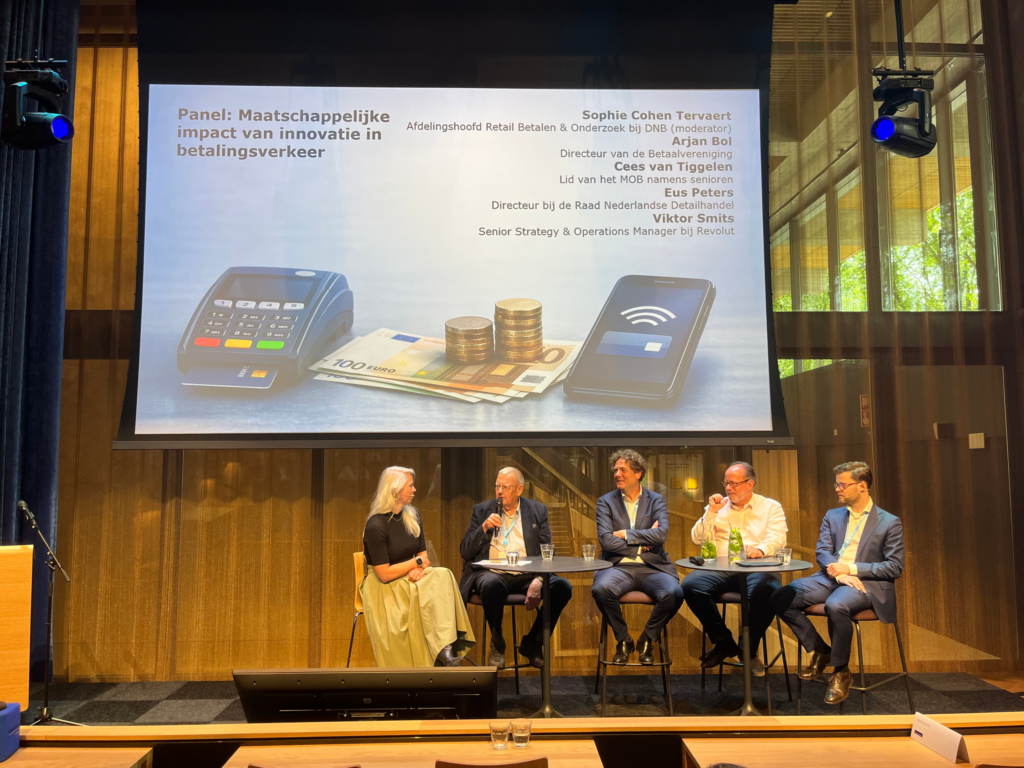
Innovation Takes Center Stage at Annual DNB Symposium on Payments
-
News
-
Payments for all
-
-
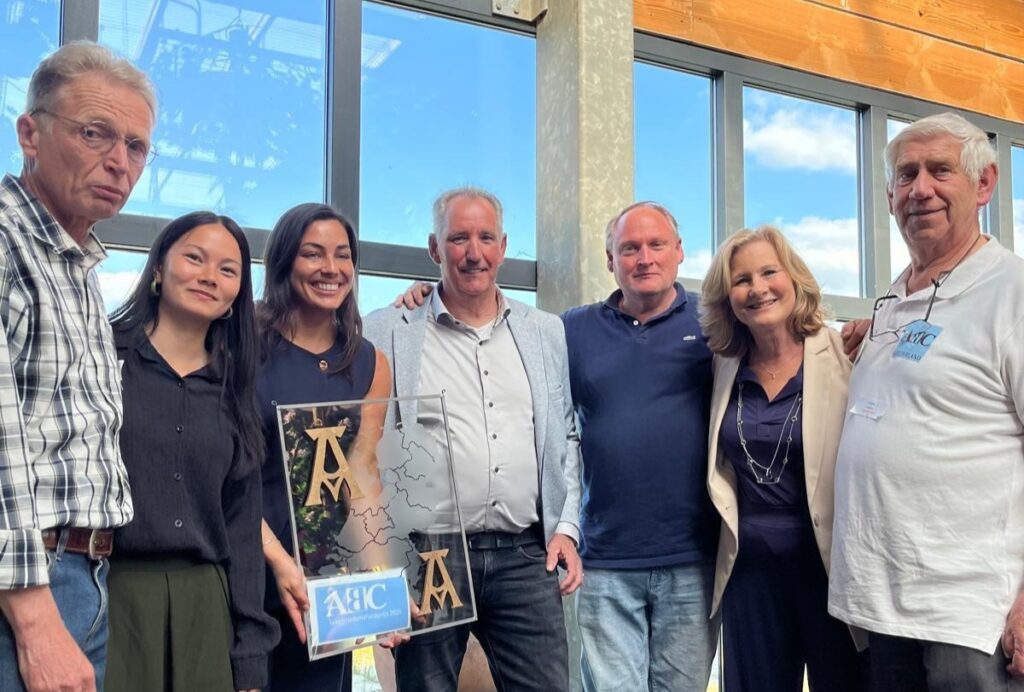
Accessible Banking Wins the ABC Trophy
-
News
-
Payments for all
-
-
EU trilogue on the digital euro begins
-
News
-
European legislation
-