
Facts & Figures 2025
Facts and figures from the past year about Dutch payments. The sources for these facts and figures are key participants in the Dutch payments system, such as Mastercard, Visa, Currence, EPI Company, Worldline, CCV, Geldmaat, and major banks. Other key sources include studies by the Dutch Payments Association itself, De Nederlandsche Bank, the Dutch Banking Association, and Thuiswinkel.org.
Payments at points-of-sale
In the Netherlands, we primarily pay at points-of-sale (POS) using debit cards (bank cards). Here we present the figures for payments made by Dutch residents using debit cards, credit cards, smartphones, smartwatches, and cash at Dutch POS. This includes payments made, for example, at municipal service counters, on buses and trams, and at vending machines.
-
Number of transactions in 2024
-
Number of transactions in 2025
Chip-and-pin vs. contactless
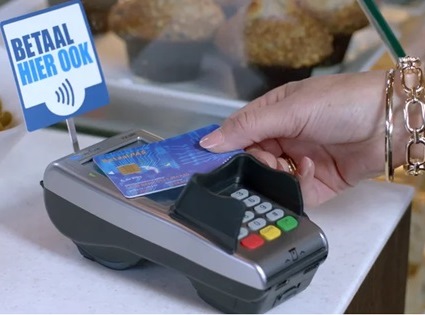
In 2025, 95% of all Dutch debit card payments at points-of-sale (POS) were contactless, 1 percentage point more than a year earlier. The share of cardless and contactless payments, made with a smartphone or smartwatch, continues to grow steadily, but in 2025 it was not yet the most commonly used payment method at POS; that remained tap-to-pay with a physical card.
-
Distribution in 2024
-
Distribution in 2025
Card refunds
A card refund is an electronic refund at the point-of-sale using a customer’s payment card. This allows a merchant to refund, for example, a deposit or a returned purchase.
Card refunds include both Retourpinnen transactions and general card refunds. With the Dutch Retourpinnen system, a debit card must be held against the payment terminal in the store. With most card refunds, this is not necessary, and the required card details can be retrieved from the original card payment in the payment service provider’s systems.
-
31 . 4 mn31.4mn Number of card refunds in 2025Number of card refunds in 2025
-
€ 1 . 35 bn€1.35bn Total amount of card refunds in 2025Total amount of card refunds in 2025
The average amount for a card refund in 2025 was €43.
Account-to-account payments
-
The numbers and amounts for SEPA credit transfers and instant payments refer only to transactions between different Dutch banks. Transactions within the same bank are not included.
More figures on online banking transactions by DNB(opens in new window) …
E-Mandates
-
In 2015, Dutch banks launched a collective digital mandate service for direct debits (e-mandate) via online banking. To make monthly payments via direct debit for example, the payer only needs to issue an e-mandate once. As a result, these figures for the number of issued e-mandates are relatively modest compared to the figures for individual direct debit payments.
Bank Switching Service
-
These figures show the total number of users of the collective Bank Switching Service per year, for both business and personal payment accounts at all Dutch consumer banks.
Online payments
-
In recent years, reliable figures have only been available for iDEAL credit cards and (upgraded) debit cards. iDEAL and payment cards cover roughly 85% of the Dutch e-commerce payment market. There are other online payment methods not included in this chart due to a lack of reliable data.
These numbers and amounts cover all types of online payments made by Dutch residents to domestic and foreign online stores, businesses, and organizations. This also includes online payments to government agencies, for example, and iDEAL payments for mobile requests-to-pay from family and friends.
Peer-to-peer payments (P2P)
Consumers pay each other using cash, bank transfers, and mobile requests-to-pay, as well as various gift cards. Due to the convenience of requests-to-pay via mobile apps, the number of electronic peer-to-peer payments is rising sharply, at the expense of cash peer-to-peer payments.
-
Number of P2P payments in 2024
-
Number of P2P payments in 2025
E-Commerce payments by device
These percentages are taken from the Thuiswinkel Markt Monitor. They relate to (online) e-commerce payments made by Dutch consumers at online stores and businesses in the Netherlands and abroad. Online payments outside of e-commerce, such as mobile requests-to-pay or traffic fines, are excluded.
-
Share by device in 2024
-
Share by device in 2025
Payment instruments
-
Virtually every adult in the Netherlands has a payments account with a debit card. The sharp increase in the number of payments accounts in 2025 may be due to the offering of so-called ‘virtual’ IBANs, particularly by new online banks. Customers of these banks can use virtual IBANs for various spending purposes, among other things. The figures in this chart are from DNB and include business accounts and business payment cards.
More figures from DNB on (among other things) payment instruments…(opens in new window)
ATMs and bank branches
-
Note: Figures on the number of bank branches in 2025 will follow in mid-2026
The number of physical bank branches continues to decline steadily, partly because fewer customers are visiting them. Banking services that used to require a visit to a bank branch can now be handled anytime, anywhere via online and mobile banking. The number of bank branches includes bank service points in neighborhood stores and so-called ‘bank shops’.
More than 99.5 percent of all Dutch residents live within 5 km of an ATM. At the store checkout, roughly one in five payments is made with cash, and at 95% of all retail locations, you can pay with cash, unchanged for many years. The number of ATMs refers to machines for withdrawing cash, both from Geldmaat and other (non-bank) operators.
All DNB figures on cash withdrawal and deposit machines…(opens in new window)
Cash withdrawals
-
Note: Figures on cash withdrawals in 2025 will follow in July 2026
The availability, reachability, and accessibility of cash remain high in the Netherlands. More than 99.5 percent of all Dutch residents live within 5 km of a cash dispensing point. Roughly one in five point-of-sale payments is still made with cash. You can pay with cash at 96% of all point-of-sale locations.
The number of cash withdrawals includes withdrawals at all ATMs in the Netherlands, both at Geldmaat ATMs and at other (non-bank) ATMs.
More figures from DNB on (among other things) cash withdrawals…(opens in new window)
Payment fraud
-
This line graph shows the trend in banking payments fraud over the past five years, for bank spoofing fraud and for all fraud resulting from phishing and the use of stolen debit and credit cards (all categorized as “phishing” in the graph). Data on banking fraud is collected and published by the Dutch Banking Association (NVB).
Availability of payment infrastructure
The nation wide payments infrastructure for card payments has been highly reliable for many years, with an availability of nearly 99.9%. Starting in 2025, the card payments availability will no longer be reported.
There are no availability standards for mobile and online banking, but there is a legal requirement that malfunctions must be resolved within two hours. The Dutch Payments Association publishes quarterly availability figures for mobile and online banking on its website.
Currence tracks the availability of iDEAL|Wero(opens in new window) itself, including both monthly averages and real-time availability on an hourly basis, going back up to one week.
Read more about disruptions and the availability of payments infrastructure…
| Availibility | 2021 | 2022 | 2023 | 2024 | 2025 |
|---|---|---|---|---|---|
| Debit card payments | 99.89% | 99.89% | 99.89% | 99.89% | – |
| Mobile banking | 99.76% | 99.81% | 99.72% | 99.92% | 99.85% |
| Internet banking | 99.77% | 99.81% | 99.77% | 99.88% | 99.88% |