
Six out of ten retail business owners say they are prepared for card payments failures
Of nearly 500 retail locations surveyed, 62% report having been affected by one or more card payments failures in the past year. Nearly half of the affected merchants cite a (local) telecom or internet outage as the cause. Other major causes they mention are malfunctioning POS terminals (15%) and (local) power outages (12%). This is evident from a study by research firm Panteia among Dutch retail outlets (in Dutch), commissioned by the Dutch Payments Association. Meanwhile, 61% of the surveyed retail business owners have taken one or more measures to circumvent a potential card payments failure.

Backup data connection and payment terminal
Over the past year, there was one nation wide debit card payments failure during which less than half of all debit card payments failed for one hour. Small-scale (local) malfunctions occur much more frequently. According to the Panteia study, the most common measures taken against debit card payments failures are:
- a fixed data connection with a mobile connection as a fallback option;
- a mobile backup payment terminal with a battery as a fallback option;
- a service contract for the payment terminal (e.g., with rapid emergency replacement).
In the first half-hour of a card payments failure, three-quarters of the merchants surveyed ask customers to pay in cash, just as in 2022. Meanwhile, an increasing number of merchants also offer cashless alternative payment methods as soon as a card payments failure occurs:
- 40% offer a mobile request-to-pay (21% in 2022);
- 40% offer payment via an account-to-account instant transfer (21% in 2022);
- 14% have a mobile backup payment terminal with a battery (6% in 2022).
There are significant differences among various types of retail locations. For example, account-to-account transfers during a card payments failure are common at quiet stores that process relatively large amounts (49%) and at stores that deliver on order, such as interior design stores (69%).
Due to increased geopolitical unrest around the world, two-thirds of study participants say they feel more digitally vulnerable than in 2022. At the same time, two-thirds also say they are unfamiliar with recent recommendations for improving resilience against digital malfunctions and outages. Partly for this reason, the ongoing “Think Ahead” campaign (Denk Vooruit in Dutch) is bringing these recommendations to the attention of merchants and organizations.
Related articles
-

High confidence in Dutch payment system
-
News
-
Card payments
-
-
Checking In and Out on Public Transportation Is Now Even Smoother with Your Smartphone
-
News
-
Card payments
-
-
More travelers very satisfied about traveling with payment card
-
Press release
-
Card payments
-
-
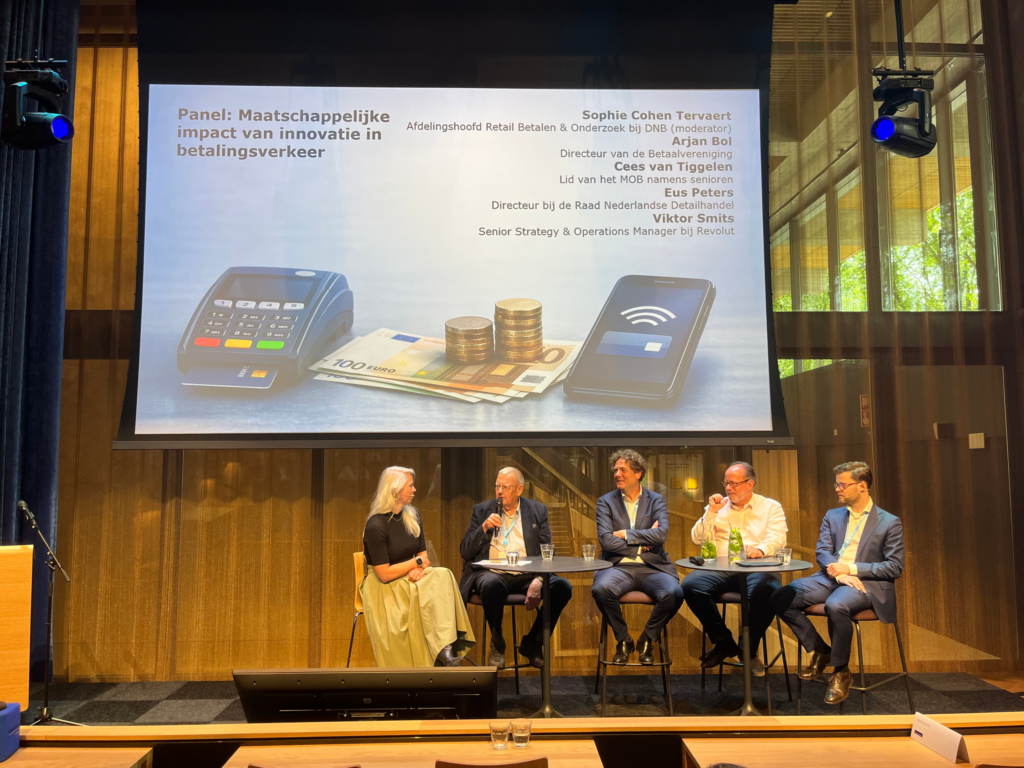
Innovation Takes Center Stage at Annual DNB Symposium on Payments
-
News
-
Payments for all
-
-
Make sure you have (digital) fallback options in case of a potential card payments failure!
-
News
-
Card payments
-
-
Elderly increasingly pay with debit card
-
News
-
Card payments
-