
Online banking fraud losses fall
In the first half of 2017, losses from online banking fraud fell by 21%, from €674,000 in the second half of 2016 to €535,000 in the first six months of 2017.
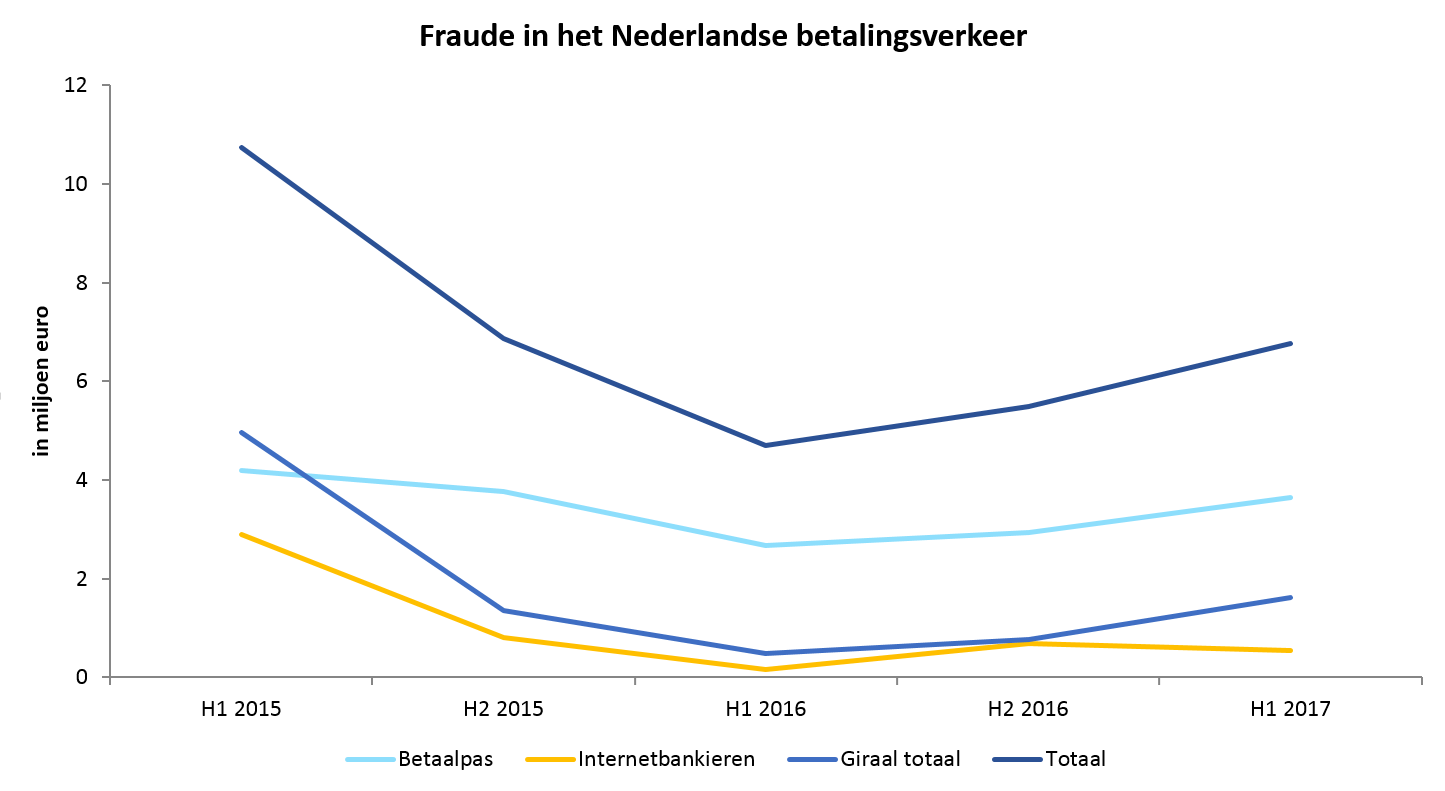
Total losses from fraud in payments rose by 23%, however. This increase was mainly due to more fraud involving direct debits, manual payment instructions and fraudulent debit card applications.
Lost or stolen debit cards
As in previous years, lost or stolen debit cards accounted for the largest share of fraud losses in payments in the first half of 2017. Losses amounted to €1.8 million, an increase of 14% compared with the second half of 2016. Many debit cards are still stolen from bags and coat pockets, while phishing is used to trick cardholders into revealing their PIN and sending their debit card by post.
Losses from fraudulent debit card applications rose by 30% to €989,000 in the first half of 2017. As fraud losses in payments were historically low last year, small increases in amounts result in relatively large percentage changes.
Increase in account-to-account payment fraud
Losses from fraud involving account-to-account payment methods more than doubled over the past six months. Fraud involving direct debits and manual payment instructions in particular caused losses of €1.1 million, compared with just under €80,000 in the preceding six months.
In general, early 2017 saw a shift from fraud involving electronic payment methods to old-fashioned forgery and fraud through postal channels. Banks have therefore tightened their checks on these types of fraud further.
Banks are also seeing an increase in non-banking financial fraud and online scams, including fraud involving fake emails, apps and websites, scams on online marketplaces, invoice fraud, identity fraud and the deception of companies’ finance staff, known as CEO fraud. Consumers and businesses must remain as vigilant as ever.
Related articles
-
Dutch abroad pay most with cards in Spanish hospitality
-
News
-
Card payments
-
-

The Payments Association at GDC26: digital identity and payments
-
News
-
Digital identity
-
-

High confidence in Dutch payment system
-
News
-
Card payments
-
-

Industry organisations: involve the financial sector in the roll-out of digital wallets
-
News
-
Digital identity
-
-

Checking In and Out on Public Transportation Is Now Even Smoother with Your Smartphone
-
News
-
Card payments
-
-
More travelers very satisfied about traveling with payment card
-
Press release
-
Card payments
-