Payments newsletter: Betaaljournaal 15
After the summer, discussions began that led to the Cash Covenant last week. I am pleased that the Covenant has now been signed. The agreements will ensure that cash remains readily available and within reach for everyone who needs it. The Covenant also stipulates that DNB and the Ministry of Finance will soon commission a study into how cash services should be funded in the longer term. This funding is a major concern, and we are the first in Europe to examine the issue. I am very keen to see the results. To make room for the study, the banks have decided to freeze their business and retail fees for depositing and withdrawing cash for just over a year. It is important to establish the extent of the ever-rising costs that our members face in meeting their gatekeeper obligations. Business banking customers in particular are raising concerns, and we need to consider how those costs can be kept manageable.
In addition to the Covenant, we have been working hard over the past few weeks to make payment accounts available to Ukrainian refugees. You can read more about this in this newsletter.
Miriam Osten also discusses the study into the costs and benefits of payments for our members, and you can read about the ‘Payments at the point of sale in 2021’ study, which was published on Tuesday. Enough to get you through the long Easter weekend ahead, I think.
Gijs Boudewijn, Acting Managing Director of the Dutch Payments Association
- Cooperation agreement for nationwide roll-out of debit cards on public transport
- The Cash Covenant aims to ensure the long-term availability and accessibility of cash
- Ukraine: what arrangements are in place for refugees in the Netherlands?
- Impact of sanctions on cardholders from Russia and Belarus
- Study into costs of payments – Miriam Osten
- Limit for refuelling at self-service pumps raised to €200
- Panteia 2020 survey: physical shops and restaurants pay an average of €0.68 per online payment
- Payments at the point of sale in 2021
- Online fraudsters are increasingly targeting customers
- Consultations
- Stakeholder forums
- The Debit Card Acceptance Project is on track
- DNB’s Vision on Payments 2022–2025
- Consumers spent more than €30 billion online in 2021
- Figures
- Agenda
- Other activities
Cooperation agreement for nationwide roll-out of debit cards on public transport
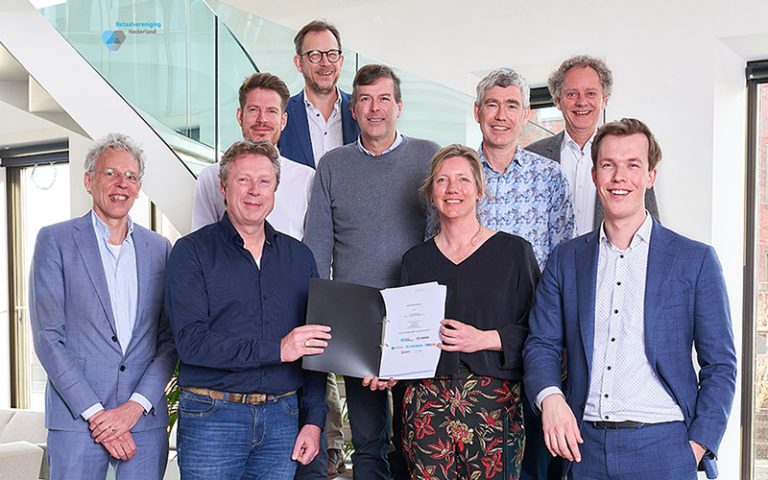
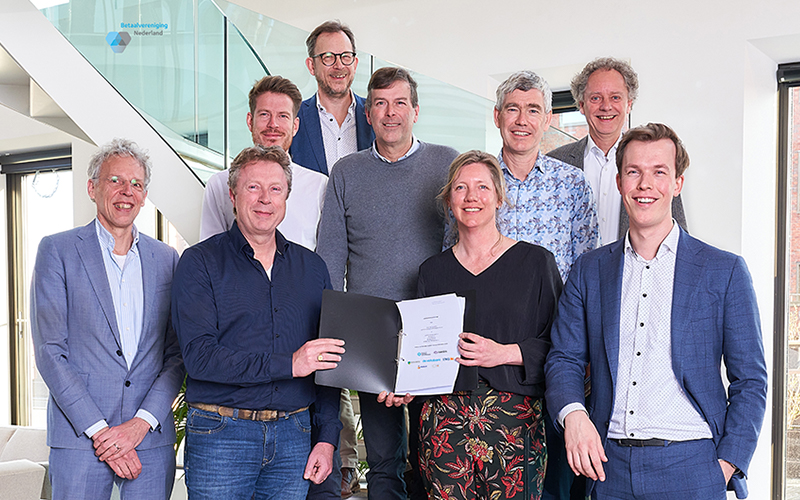
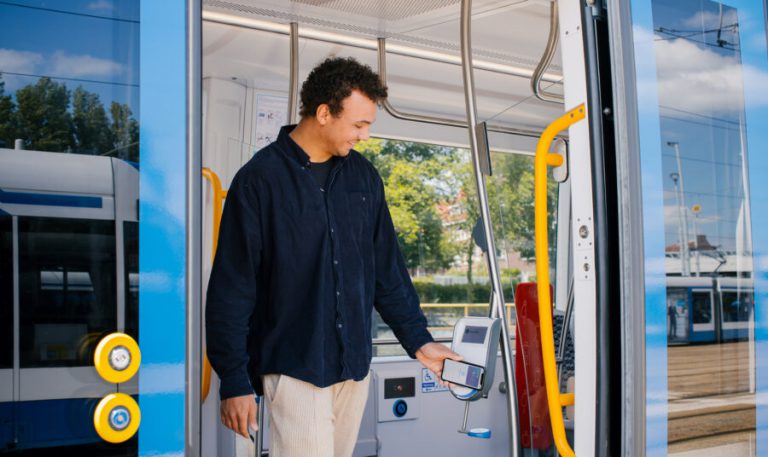
At the end of 2021, public transport operators and issuing banks reached an agreement on their collaboration over the coming years to enable debit card payments on public transport. This was formalised with the signing of the cooperation agreement (see photo). This paves the way for a nationwide roll-out. In March 2021, the project to use debit cards for checking in and out on public transport began. Transport operator Arriva was the first to introduce the scheme in Lelystad. Feedback from both passengers and public transport operators has been positive. Passengers appreciate the convenience. They already have their debit cards in their pockets and no longer need to carry a separate public transport chip card.
In October, the debit card was introduced on public transport in the larger Gooi and Vechtstreek transport area. The experiences gained there are being used to implement a few further improvements to the technology and communication.
In 2022, all public transport operators in the Netherlands will accept debit cards on buses, trams and trains. For the time being, this applies only to single journeys at the full fare. Agreements have been made in the cooperation agreement to also enable discounted travel and season ticket travel using debit cards in the near future.
Towards available and accessible cash in the longer term with the Cash Covenant
On 8 April 2022, the Minister of Finance, Sigrid Kaag, presented the Cash Covenant to the House of Representatives. Twenty-three organisations closely involved in the Dutch payments system have signed the agreement. The aim of these arrangements is to ensure that cash continues to function effectively as a means of payment at the point of sale, even as electronic payments become increasingly common.
The Covenant has been signed by the major banks, the Dutch Payments Association, representatives of consumers, retailers, the hospitality sector and petrol stations, cash service providers and De Nederlandsche Bank. It is valid for a period of five years. Read the full article…
Ukraine: what arrangements are in place for refugees in the Netherlands?
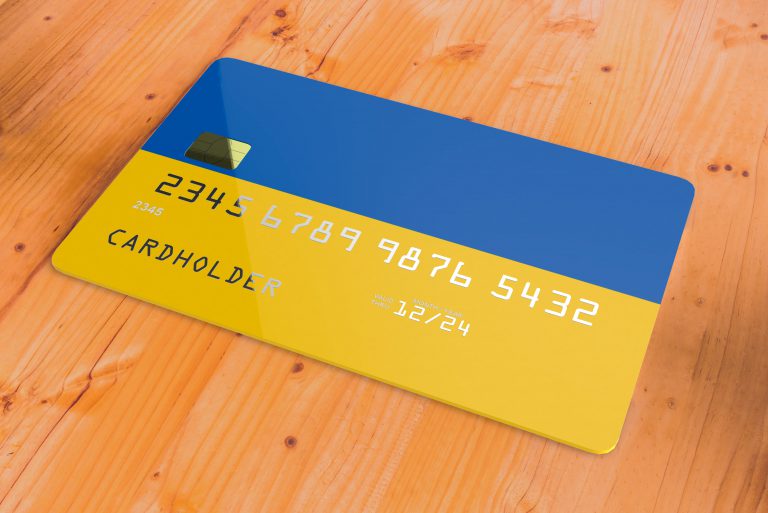
Refugees from Ukraine can quickly open a payment account with banks and other payment service providers in the Netherlands. With a payment account, they can receive living allowances or wages. Every payment account comes with an IBAN, a debit card, online banking and/or a mobile payment app. Ukrainian hryvnias in cash can hardly be exchanged within the EU. Ukrainians with a Mastercard or Visa debit or credit card can, for the time being, use these anywhere in the European Union in shops and at cash machines. Conversely, debit and credit cards from the EU can be used in Ukraine, provided the payment terminal or cash machine is still operational.
Impact of sanctions on cardholders from Russia and Belarus
Since 12 March, Russian banks have no longer been accessible via SWIFT to any other SWIFT participants worldwide. Naturally, Dutch banks are complying with all official sanctions. As a result, no payments to or from Russia and Belarus are possible via Dutch banks. The advice to Dutch bank customers, both business and private, remains: for the time being, do not make any payments to or from an institution, company or individual in Russia or Belarus without consulting your bank. Mastercard and Visa have also completely suspended their services in Russia. Russians with a credit or debit card from these brands can no longer use them outside Russia. Cardholders from other countries with cards from these two brands can no longer use them in Russia. This also applies to the Maestro and V PAY card brands.
- Payments with payment cards from Russia and Belarus
- Electronic payments to and from Russia and Belarus
Research into the costs of payments – Miriam Osten
This content is available after accepting the marketing cookies.
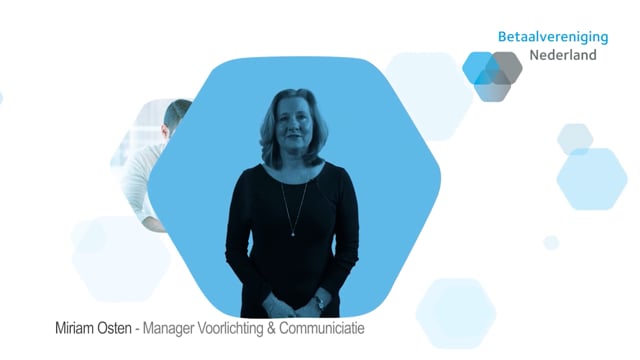
Miriam Osten is Head of Information & Communications at the Dutch Payments Association. She brings us up to date on a major project we are running this year: the study into the costs and benefits of payments for financial institutions.
Limit for refuelling at self-service pumps raised to €200
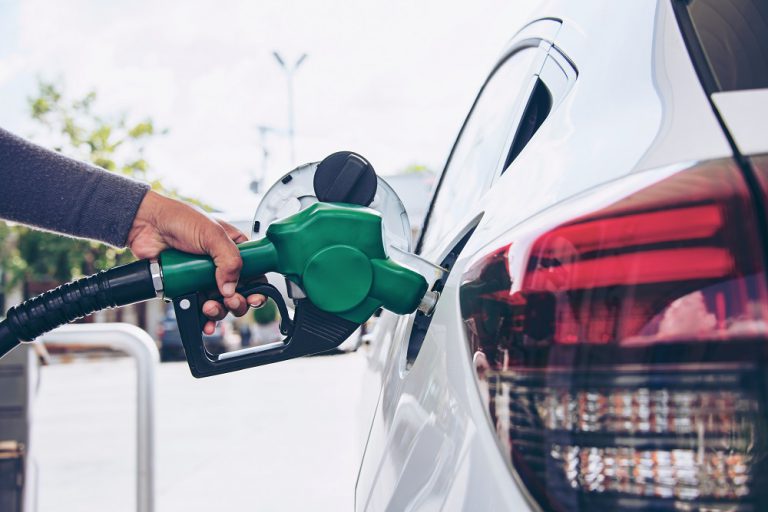
All Dutch banks and their transaction processors have agreed to increase the pre-authorisation limit for card payments at self-service petrol pumps to €200 per refuelling. The banks that issue debit or credit cards to their account holders are ready for this higher pre-authorisation amount. The Dutch Payments Association coordinated the arrangements between all parties involved in the payment chain. Read the full article…
Panteia 2020 survey: physical shops and restaurants pay an average of €0.68 per online payment
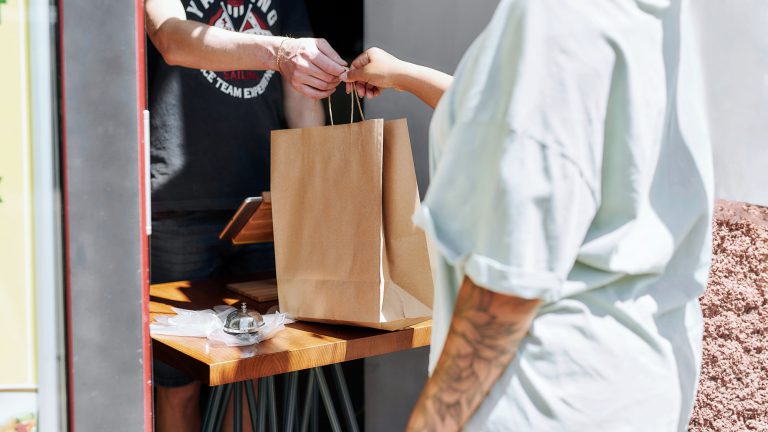
The Dutch Payments Association and Dutch retail organisations (retail, petrol and hospitality sectors) commissioned a study into the costs of online payments for bricks-and-mortar SME shops and restaurants with their own online shops. On average, they pay €0.68 for an online payment. This is significantly higher than the cost of a payment made at the point of sale at the businesses surveyed. On average, this costs €0.26, whether paid by debit card, credit card or cash. Read the full article…
Payments at the point of sale in 2021
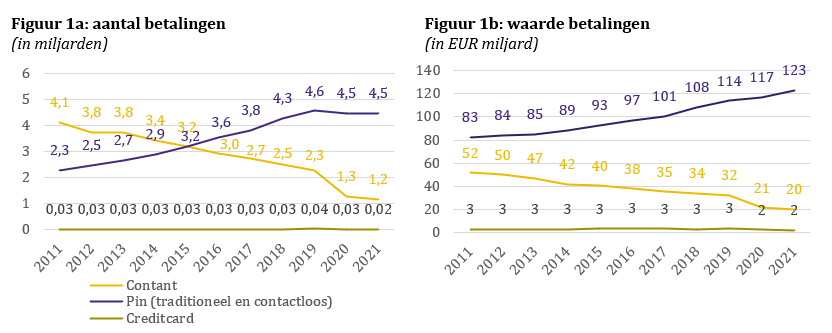
Little has changed in 2021 in terms of the proportion of all payments made by debit card, but the way in which these payments are made is changing. The Dutch are increasingly preferring contactless payments: both with their debit cards and via other methods such as mobile phones, smartwatches or other wearables. The use of cash remained virtually stable throughout 2021: one in five point-of-sale payments was made in cash. This proportion is significantly higher among people on lower incomes. They paid for almost one in three in-store purchases with cash. This is according to joint research by the Dutch Payments Association and De Nederlandsche Bank. Read the full article…
Online fraudsters are increasingly targeting customers
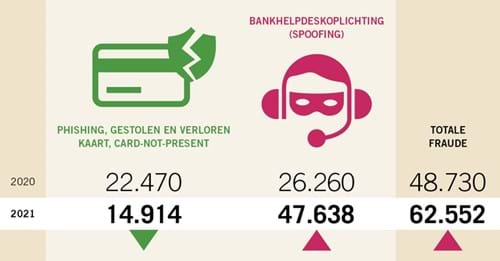
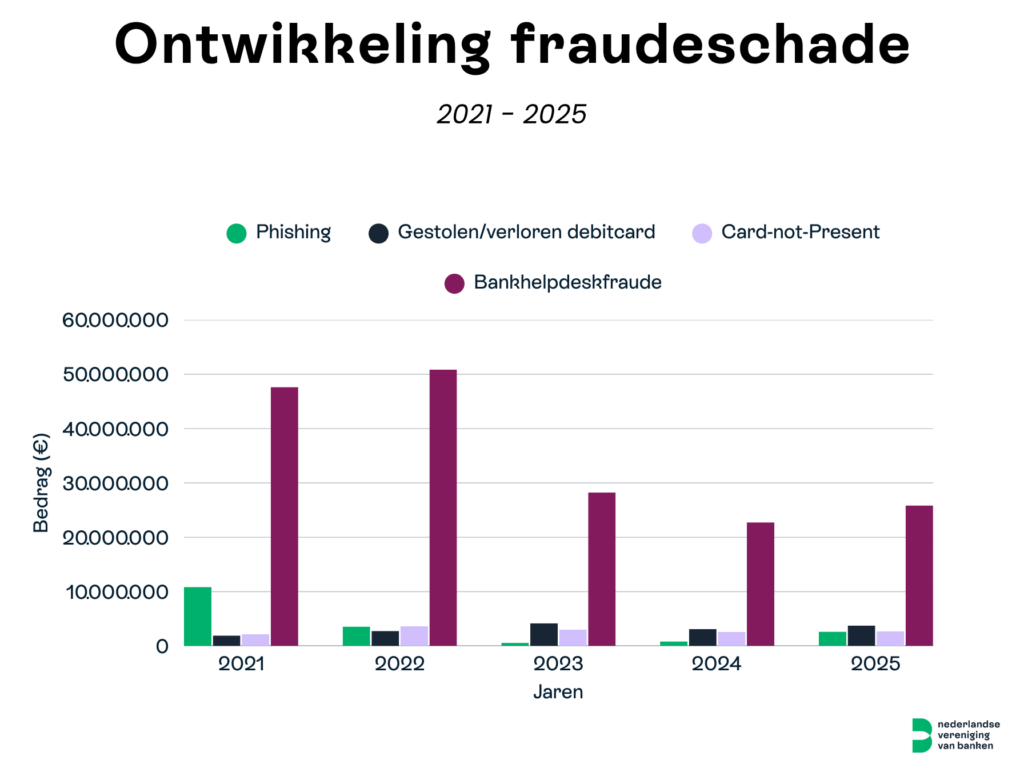
The total losses incurred by banks due to payment fraud rose in 2021 from nearly 50 million euros in 2020 to 62.5 million euros. Within this figure, losses resulting from bank helpdesk fraud rose to 47.6 million euros. Losses from other forms of fraud, such as phishing, and losses resulting from stolen bank cards actually fell in 2021. Read the full press release…
Consultations

RfP for an Economic Consultant to define a business model for the SPAA Scheme
In November 2021, the EPC Board accepted the invitation from the Euro Retail Payments Board (ERPB) to act as scheme manager for a SPAA (SEPA Payment Account Access) scheme.
The EPC is inviting interested parties to submit a proposal for establishing the detailed cost methodology for such a remuneration model. Proposals may be submitted until 22 April 2022. You can find all the documentation and further consultations from the Dutch Payments Association here.
Stakeholder forums

The Dutch Payments Association is involved in various stakeholder forums. These forums address issues relevant to different areas of the payments sector. Here are some of these forums.
- Account-to-Account Stakeholder Forum – Dutch Payments Association
The Account-to-Account Stakeholder Forum oversees the efficient processing, (further) standardisation and security of account-to-account payments. - Point-of-Sale Stakeholder Forum – Dutch Payments
Association The Point-of-Sale Stakeholder Forum addresses all issues relevant to the point of sale, particularly debit card and cash payments. - National Forum on the Payment System – DNB
The MOB closely monitors the accessibility of payment services and takes action where necessary. The MOB also emphasises that it is important for society that cash continues to function effectively as a means of payment at the point of sale. - The Euro Retail Payments Board – ECB
The ERPB is a strategic consultative body tasked with promoting the integration, innovation and competitiveness of retail payments in the European Union. - The European Forum for Innovation in Payments – EC/ECB
The EFIP is an informal initiative of the European Central Bank and the European Commission. Its objective is to achieve greater economic efficiency and deepen the single market by fostering a competitive market for European retail payments.
Debit Card Acceptance project is on track
Under the leadership of the Dutch Payments Association, the project to enable the acceptance of Debit Mastercard and Visa Debit is on schedule. Terminal applications and acquiring host systems have now been adapted, and end-to-end testing is currently in full swing. The acquiring chain is expected to be technically ready for the acceptance and processing of Debit Mastercard and Visa Debit in the second quarter.
Banks will be launching offers in the second quarter. ING and Rabobank have already set up a landing page for their customers. Both banks have announced that the fees for Debit Mastercard and Visa Debit will be the same as those for Maestro and V PAY. Finally, the Dutch Payments Association is publishing promotional material for use in shops. Holders of Debit Mastercard or Visa Debit cards will then be able to see straight away whether their cards are accepted.
Acquiring banks will activate Debit Mastercard and Visa Debit for their customers in the second half of this year. It is expected that by the end of 2022, it will be possible to pay with Debit Mastercard and Visa Debit almost everywhere in the Netherlands. Initially, this will mainly involve foreign tourists, but from 2023 Dutch cardholders will also be able to use them.
DNB’s Vision on Payments 2022–2025
The Dutch Payments Association endorses the comprehensive vision on payments presented by De Nederlandsche Bank on 29 March. This provides all stakeholders in the social landscape with clarity and guidance for the coming years. DNB rightly points out that the ongoing digitalisation is also having a major impact on the payments sector. Virtually all the topics DNB highlights in its vision fall within the mission and objectives of the Dutch Payments Association, namely the pursuit of a secure, reliable, efficient and accessible payments system. Read the full article…
Consumers spent more than €30 billion online in 2021
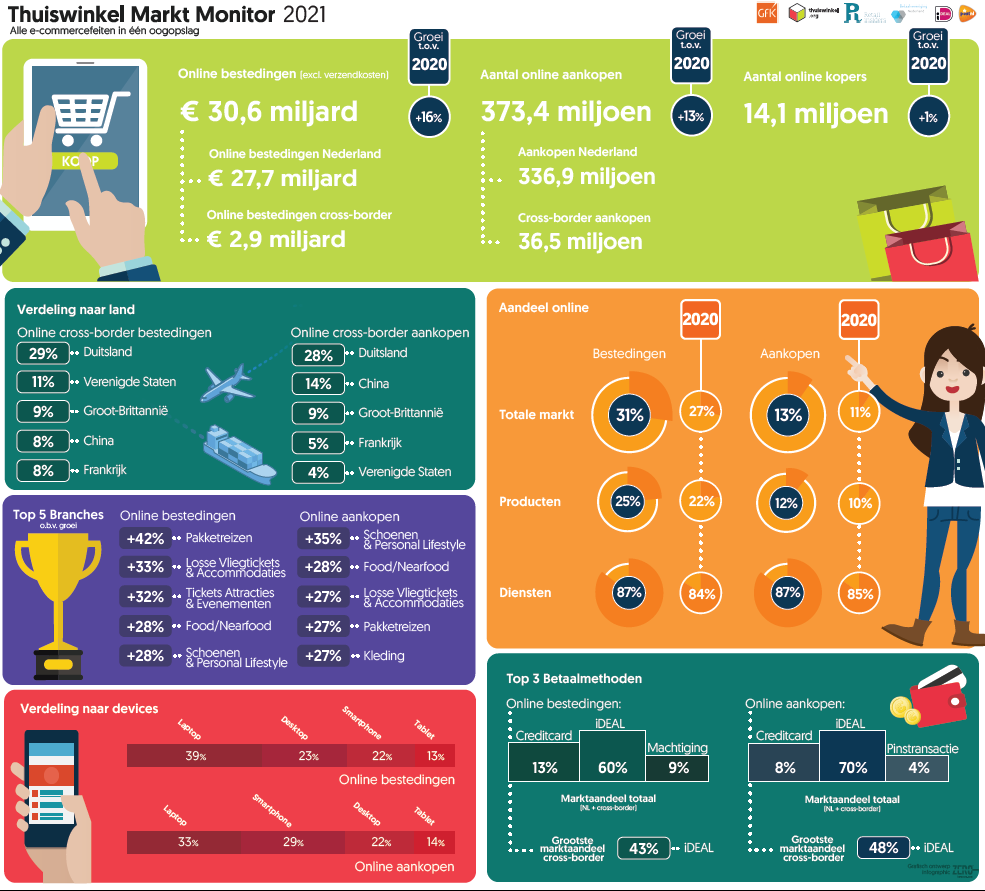
Online spending by Dutch consumers totalled €30.6 billion in 2021, representing a 16 per cent increase compared with 2020. A total of 373 million online purchases were made, representing a 13 per cent increase compared with 2020. Online spending thus accounts for 31 per cent of total expenditure. This is according to the latest figures from the Thuiswinkel Market Monitor, the survey of online consumer spending in the Netherlands. This survey is conducted by GfK, commissioned by Thuiswinkel.org and Retail Insiders, and in collaboration with PostNL, the Dutch Payments Association and Currence. Read the full article…
Figures
99.89% availability of payment terminals in 2021
Only 7,644 Acceptgiro distributors remain in the Netherlands in 2021
Want more figures? Visit factsheet.betaalvereniging.nl .
Agenda
- 19 May – Annual Conference of the Dutch Payments Association: All digital?
- 30 June – Stakeholder meeting (cards/account-to-account payments)
- 29 September – Members’ meeting
- 10–13 October – SIBOS, RAI Amsterdam
- 13 October – Stakeholder meeting
- 17 November – General Meeting of Members
Other activities
Members’ bulletin
In addition to Betaaljournaal, the Dutch Payments Association also publishes members’ bulletins. The bulletins are usually published a few times a month and focus on a specific theme. You may be a member but not yet receiving these bulletins. You can ask to be added to the mailing list via secretariaat@betaalvereniging.nl.
Subscribe to Betaaljournaal
Are you also keen to find out about the latest developments in the payments sector? Stay up to date via Betaaljournaal. You can subscribe here.
Related articles
-
Banks are calling out social media platforms for their role in fraud and scams
-
News
-
Online payments
-
-

BIC and identifier ‘BUXANL22’ added to the SEPA BIC list
-
IBAN/BIC list
-
IBAN and BIC
-
-
Dutch abroad pay most with cards in Spanish hospitality
-
News
-
Card payments
-
-
Checking In and Out on Public Transportation Is Now Even Smoother with Your Smartphone
-
News
-
Card payments
-
-
BIC and Identifier ‘HLGTNL22’ added to the SEPA BIC list
-
IBAN/BIC list
-
IBAN and BIC
-
-

Payment orders with unstructured address data will be rejected starting November 14 or 15, 2026
-
News
-
European legislation
-