
Tap-to-Pay
From contact-rich to contactless
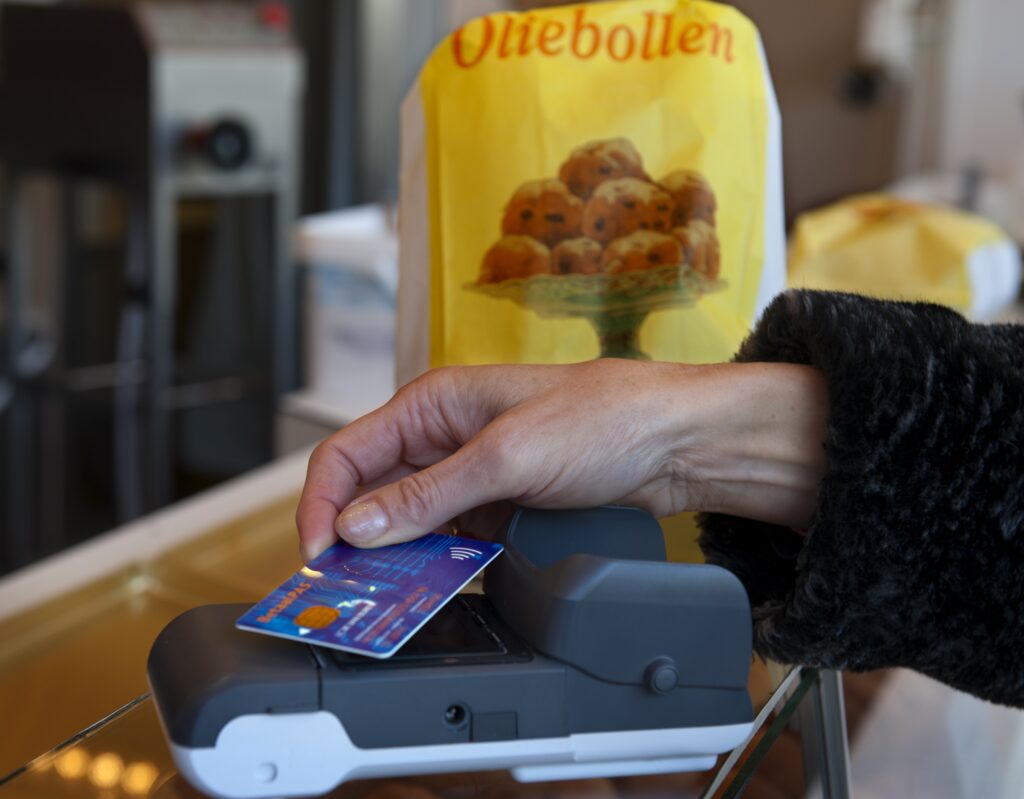
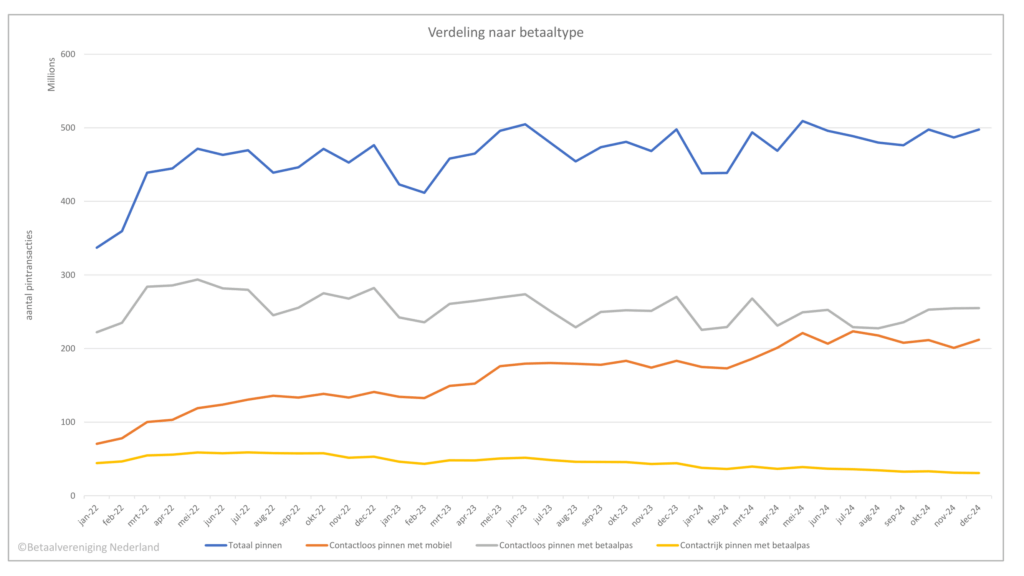
The convenience of contactless payments has now been widely embraced. Whereas for years about 90% of all debit card payments were contactless, that proportion has risen to 95% by 2025. Only 5% of debit card payments are still made by inserting the card into the payment terminal.
Some consumers deliberately insert their card into the payment terminal, for instance because they (mistakenly) think that tap-to-pay is not possible for amounts above €50, or that it provides better security.
Shift to mobile
Contactless payments can be made with a physical payment card or a virtual card on a mobile device. In the early days of tap-to-pay, only physical cards were used, but since the introduction of Apple Pay and Google Pay, mobile card payments have experienced strong growth.
In 2025, nearly half of all contactless payments were made using a mobile device. It is expected that by 2026, more contactless payments will be made using a mobile device than using a debit card.
How do contactless payments work?
Contactless payments uses Near Field Communication (NFC). This technology works over a short distance of a few centimetres and is based on international EMVCo specifications (ISO 14443). As a result, contactless payments work the same way worldwide for all card brands.
The user briefly holds the payment card or mobile near the card reader. A secure data exchange then takes place between card and terminal.
This content is available after accepting the marketing cookies.

Advantages of contactless payments
- Quick and easy: payments are completed in seconds.
- No PIN code required for amounts up to €50.
- Additional security: after consecutive payments without PIN up to a total of €100, a PIN is requested again.
- Privacy: whenever a PIN is not required, it cannot be intercepted.
- Security: mobile payments often use biometrics instead of a PIN (a fingerprint or facial recognition).
Future prospects
The convenience of contactless payments continues to appeal to consumers. The proportion of contactless payments may still increase slightly, although a small group of users will continue to prefer inserting the debit card.
Working together on reliable card payments
-
Cards Working Group
The Cards Working Group monitors developments in card payments in the Netherlands and discusses their implications for policy, legislation and standards. The working group contributes to secure, efficient and reliable payments at the point of sale and online.