
Payment terminals
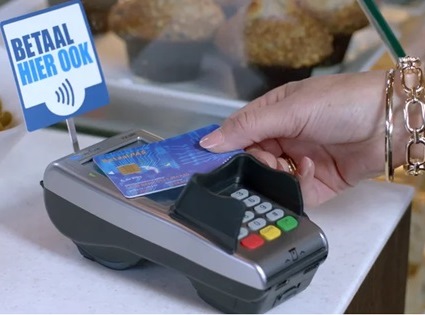
Paying with a POS terminal
Almost all debit card transactions these days are contactless, and a large part of these are done without a PIN code. For consumers, this means holding the debit card or mobile phone briefly at the machine (“tapping”) and – if necessary – entering the PIN code.
With contactless payment, you hold the payment card or phone against the vending machine’s contactless NFC(Near Field Communication) card reader.
- When using a debit card, the payment terminal may ask you to tap in the PIN code on the machine after tapping.
- When using a mobile phone, you either tap in the PIN on the phone, or use your fingerprint or facial recognition on your phone.
Types of payment terminals
Traditional payment terminals have a screen, a card reader, and a separate numeric keypad. However, SoftPOS terminals—mobile phones or tablets used as payment terminals—are becoming increasingly common. The idea behind SoftPOS is that a separate, relatively expensive payment terminal is not necessary. This makes it easier for merchants to accept card payments, making card payments possible in more locations. Because these devices are not specifically designed as payment terminals, their use can sometimes raise questions—for example, when you have to enter your PIN on a touchscreen or hold your debit card against the bottom of the device. To ensure a smooth payment experience, guidelines have therefore been established for the use of SoftPOS terminals.
All payment terminals in the EU, including SoftPOS terminals, are thoroughly inspected and certified. Payment service providers in the EU that connect merchants’ payment terminals to the payments infrastructure for card payments are licensed and regulated. They connect only certified terminals.
European Accessibility Act and accessibility
Since July 2025, payment terminals must comply with the requirements of the European Accessibility Act (EAA). This ensures that people with disabilities can also pay properly and safely with their debit cards or smartphones.
The main requirements are:
- Information must be perceptible via at least two different senses (e.g. eyes and ears).
- The contrast of the screen must be adjustable.
- The vending machine should provide feedback with sound and vibration.
- People with disabilities should be given enough time to use the vending machine.
With touch screens, entering the PIN code is particularly challenging. The device must use sound and vibration to give feedback to the user when they press a digit or button on the screen.
Perspective
New generations of payment terminals, such as SoftPOS terminals, can deliver a different payment experience. Retailers and banks can avoid confusion and promote accessibility with proper consumer education.
People with disabilities must be given sufficient time to use the payment terminal. Now that the law is in effect, work is also underway to establish the regulatory framework. The National Inspectorate for Digital Infrastructure(opens in new window) (RDI) has been designated as the regulatory authority for payment terminals. The RDI has set up a hotline where consumers can file complaints.
Working together on reliable card payments
-
Cards Working Group
The Cards Working Group monitors developments in card payments in the Netherlands and discusses their implications for policy, legislation and standards. The working group contributes to secure, efficient and reliable payments at the point of sale and online.