
Mobile payments
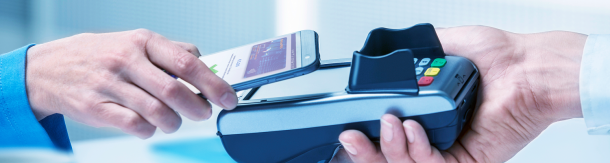
Differences between mobile and with card
There are some important differences between contactless payment with a mobile phone (smartphone) and with a physical debit card:
- The cell phone screen must be on for wireless communication with the payment terminal.
- With Apple Pay and Google Pay, the user must always approve a payment, via a numeric code, fingerprint or facial recognition. When paying with a physical payment card, no PIN is usually required for amounts up to €50.
- A digital debit card on a smartphone is stored digitally in a banking app or wallet app (a digital wallet for smartphones). A physical debit card is usually sent by mail.
- A digital debit card uses a unique card number that works only in combination with one specific smartphone. A physical debit card is not tied to a specific device.
How does mobile contactless payment work?
Like a physical card, mobile payment uses Near Field Communication (NFC) for secure contactless data exchange with payment terminals. The user briefly holds their device near the card reader to pay.
For the payment terminal, there is no difference between a digital and a physical payment card; the smartphone with digital payment card acts like a physical payment card for.
Architectures for mobile payments
To prevent fraud, cardholder data and cryptographic keys are stored securely in mobile phones. There are three common architectures for this:
- Secure Element (SE): confidential data is stored in a special secure chip inside the device.
- Trusted Execution Environment (TEE): a secure environment within the smartphone’s processor.
- Cloud-based architectures: the first generation of mobile payments in the Netherlands worked via this method. Less secure but independent of companies like Apple and Google.
Advantages
Mobile contactless payment mainly offers consumers extra convenience:
- User-friendly: many users especially find approving payments with fingerprint or facial recognition easier than with a PIN.
- Easy online payment: With Google Pay or Apple Pay, you don’t need to enter your physical payment card information. Your payment card details are securely transmitted to the online store automatically.
- Always in your pocket: some people are less likely to forget or lose their mobile phone than their wallet with payment cards and cash. On the phone, you can instantly review every payment.
Future prospects
The convenience of mobile contactless payments is driving continued growth in use. Apple and Google digital wallets are expected to remain the main tools for mobile card payments at the counter and online in the coming years.
In the process, new concerns also arise:
- Dependence on large non-European technology companies, which occupy an increasingly important position in the card payment chain.
- Privacy issues, as wallet providers such as Apple and Google have potential insight into payment data.
- Accessibility: not everyone has a modern smartphone or can handle it well.
Working together on reliable card payments
-
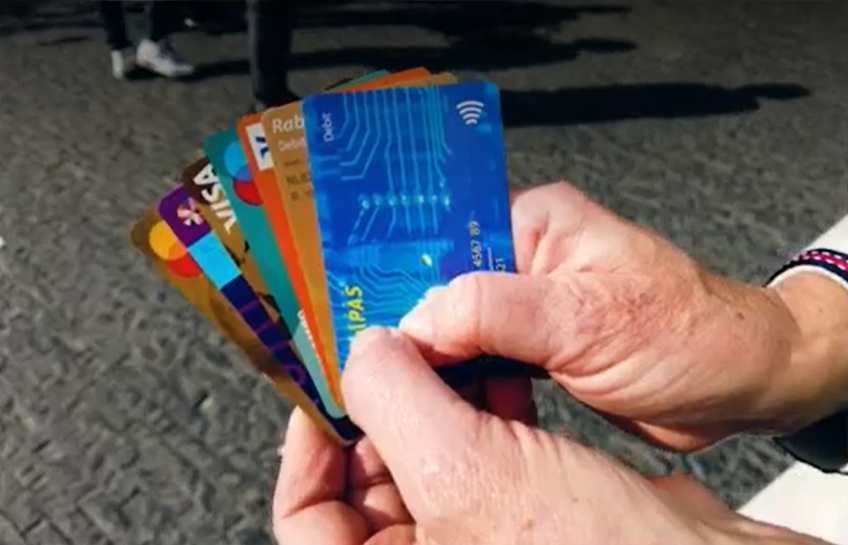
Cards Working Group
The Cards Working Group monitors developments in card payments in the Netherlands and discusses their implications for policy, legislation and standards. The working group contributes to secure, efficient and reliable payments at the point of sale and online.