
Contactless payments convenient for people with visual impairments
On 8, 9 and 10 April, visitors to the ZieZo fair, the Dutch national exhibition about living with impaired vision, were able to experience the convenience of contactless payments.
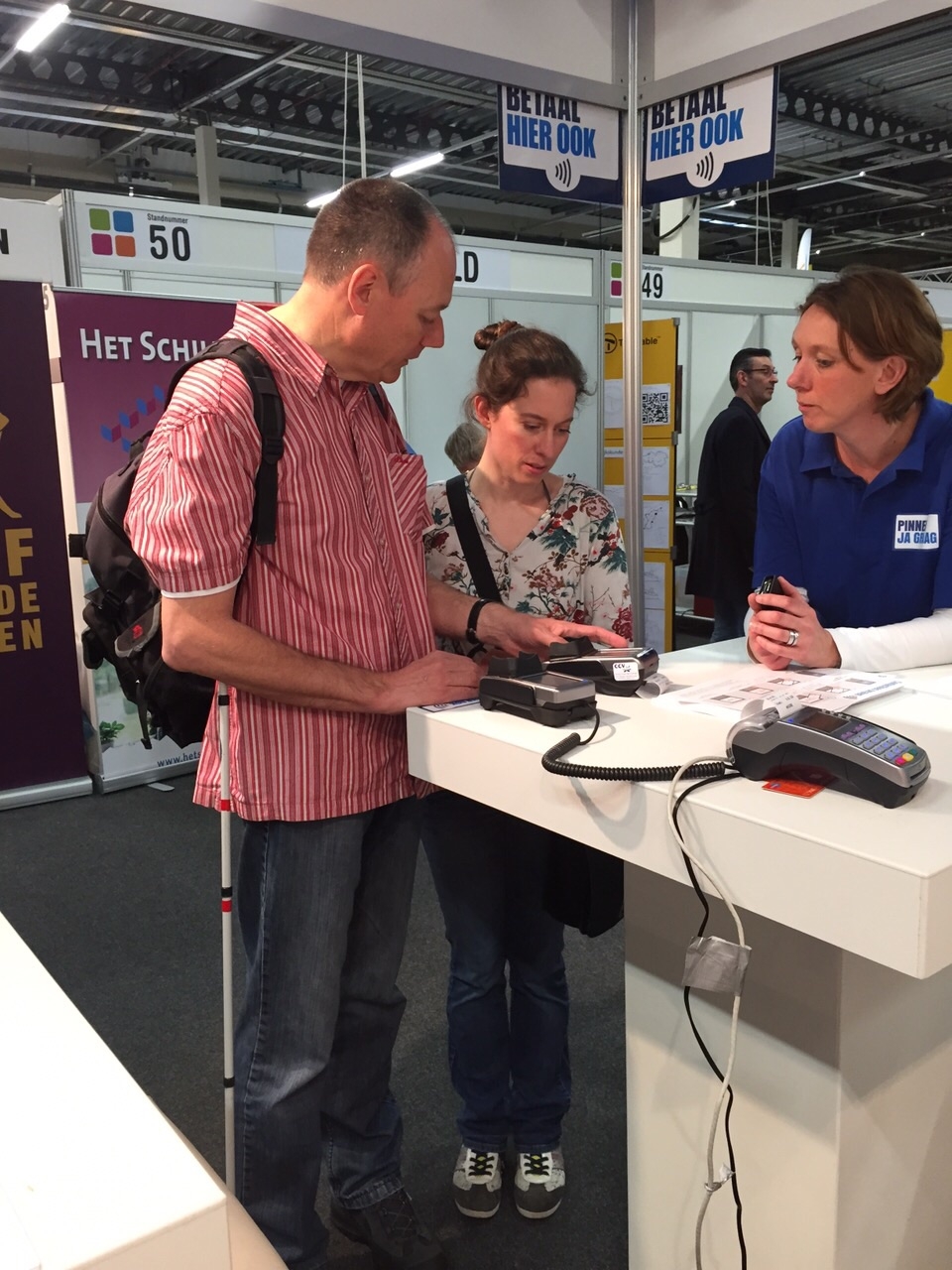
Contactless payments were particularly useful for people with a visual impairment, as no PIN had to be entered for amounts up to and including €25. Another benefit was that users could pay simply by holding the card in their hand and did not have to find the exact place to insert it.
In collaboration with the Dutch Eye Association, the Dutch Payments Association, the Foundation for Promoting Efficient Payments and several payment terminal suppliers, a practice setup was installed at the Dutch Eye Association’s stand at the ZieZo fair (link in Dutch). Visitors could practise contactless payments (in Dutch) at their own pace and ask questions. Many visitors made use of the opportunity.
The practice setup received compliments and produced several useful suggestions: make the amount on the payment terminal screen larger and consider adding a speech function to the terminal.
Contactless payments on the rise
More than 9.5 million debit cards and mobile phones with contactless payment functionality were in circulation. Consumers could use them to pay contactlessly at 70,000 payment terminals in the Netherlands, one in five. The number of contactless payments rose to more than 4.4 million in March, an increase of 36% compared with February that year.
Most contactless payments were made in catering and restaurants and in supermarkets. Small amounts were particularly likely to be paid contactlessly: 80% of contactless payments were below €7.50.
Related articles
-
Your bank is always nearby!
-
News
-
Payments for all
-
-
Dutch abroad pay most with cards in Spanish hospitality
-
News
-
Card payments
-
-

High confidence in Dutch payment system
-
News
-
Card payments
-
-
Checking In and Out on Public Transportation Is Now Even Smoother with Your Smartphone
-
News
-
Card payments
-
-
More travelers very satisfied about traveling with payment card
-
Press release
-
Card payments
-
-
Growing number of people are satisfied with handling their daily banking affairs
-
News
-
Payments for all
-