
Point-of-sale payments in 2018: declining cash trend continues
In 2018, consumers in the Netherlands paid for 37% of their purchases in shops, restaurants and similar establishments with cash and 63% with a debit card. In 2017, they had paid for 41% of their purchases in cash.

Although consumers predominantly use cash for payments to one another, a shift towards electronic payment methods is also evident here. In 2018, 59% of person-to-person transactions were made in cash, compared with 67% in 2017. This is shown by joint research conducted by the Dutch Payments Association and De Nederlandsche Bank .
Share of cash payments at the point of sale falls to 37%
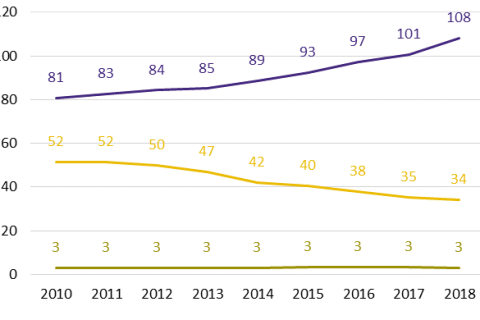
Between 2017 and 2018, the number of cash payments made by consumers in shops, restaurants and cafés, petrol stations, markets and at service providers fell from 2.74 billion payments (worth €35 billion) to 2.53 billion payments (worth €34 billion). Over the same period, the number of debit card payments rose from 3.84 billion (worth €101 billion) to 4.28 billion (worth €108 billion). The increased use of debit cards is partly due to consumers making contactless payments for small amounts with their debit cards at a growing number of locations, including restaurants, cafés and markets. Growth in debit card use was strongest for amounts up to €5, while there was hardly any change for amounts of €50 or more.
Figure 1a: Number of payments, in billions
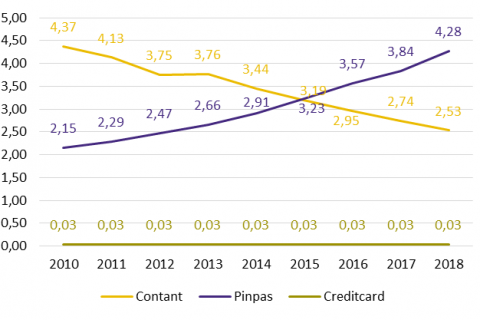
Figure 1b: Value of payments, in € billions
Cash use also falling for person-to-person payments
In 2018, people in the Netherlands made almost 600 million payments to one another, with a total value of €22 billion. These included transactions between family members, friends, colleagues and acquaintances (500 million transactions), as well as transactions for school- or sports-related activities such as gifts for teachers or trainers and contributions towards parties (87 million transactions). Cash was used for 59% of person-to-person payments in 2018, while 38% involved an electronic transfer. Compared with 2017, the use of cash for these payments fell by 8 percentage points, from 67% to 59%. The shift towards electronic methods was stronger here than for point-of-sale payments, probably because more people are discovering mobile options for making payments to one another.
Young adults pay electronically most often
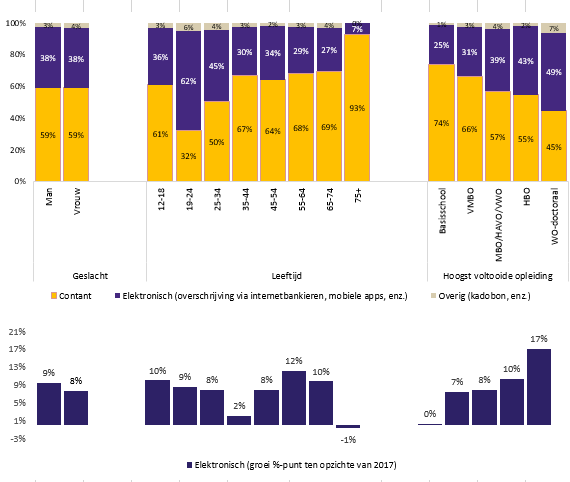
In 2018, young adults aged 19 to 24 used cash the least and electronic payment methods the most. This applied both to point-of-sale payments (Figure 2a) and to transactions between one another (Figure 2b). Teenagers recorded the strongest growth in their share of debit card payments at the point of sale, up 10 percentage points. This may be because more young people have their own bank account at an early age and parents increasingly transfer pocket money to that account. Another likely factor is that purchases in school canteens and at sports clubs can now more often be paid for electronically only. Contactless payment grew particularly rapidly among people aged 75 and over: their contactless share almost doubled in one year, from 9% of all payments in 2017 to 17% in 2018. Debit cards now account for 41% of all payments made by this age group.
People aged 55 to 64 made 68% of their person-to-person transactions in cash in 2018 and 29% electronically. Their increase in electronic transfers to other people was the highest of all age groups, at 12 percentage points. The use of electronic transfers grew most strongly among people with an academic education, rising by 17 percentage points.
At the point of sale, consumers generally pay using their preferred payment method. Where this was not the case—2% of all payments—they more often paid cash when they had wanted to use a debit card (2.3% of cash payments) than the other way around (0.6% of debit card payments). Older people appear to use their preferred payment method more often than younger people.
Figure 2a: Young adults pay for three out of four point-of-sale purchases by debit card
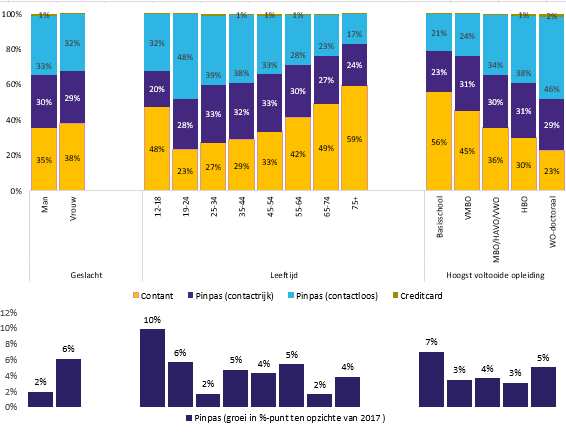
Figure 2b: Young adults usually make person-to-person payments electronically
For all the findings from the joint research by DNB and the Dutch Payments Association into the use of cash and electronic payment methods in the Netherlands in 2018, download the factsheet Point-of-sale payments, 2018 (in Dutch). The factsheet (in Dutch) contains information on the use of cash and electronic payment methods for point-of-sale and person-to-person payments, broken down by transaction amount, sector or purpose, demographic characteristics and month of the year.
Related articles
-
Tackling ATM attacks with ink, glue and synthetic DNA
-
News
-
Cash payments
-
-

High confidence in Dutch payment system
-
News
-
Card payments
-
-
Make digital euro useful, simple and affordable
-
News
-
European legislation
-
-
Cash accepted at 96% of points of sale
-
News
-
Cash payments
-
-
Vote on the Design of New Euro Banknotes
-
News
-
Cash payments
-
-

The Digital Euro and Stablecoins: Apples and Oranges
-
News
-
European legislation
-