
Payments newsletter: Betaaljournaal 25
This is already the last Payment Journal of an eventful payment year with many different activities and milestones. This edition covers some of these again with new developments of interest, including at SPAA and Instant Payments, in the processing of deposited cash and for the Home Shopping Market Monitor.
Accessibility remains a leading theme and we underlined this last month with a well-attended and successful Annual Conference entitled Time for Accessibility. We enjoyed meeting many of you there. You can read more about it in this newsletter.
Prior to the congress, our General Assembly appointed two new board members. John Visser succeeded Gerjoke Wilmink as an independent board member, nominated by the Consumers’ Association, and Maartje Cremers (Knab) took the place of Daniel Köhler (Triodos), on behalf of the small banks.
We are very pleased to also welcome Revolut as a new member of the Payments Association at the end of the year.
I wish everyone a Merry Christmas and a peaceful New Year. I hope to see you back next year full of good intentions and in good health.
Gijs Boudewijn, managing director
- Accessible Banking programme update
- ECB publishes updated retail payments strategy
- Further shift from over-the-counter to online payments for Black Friday and Sinterklaas
- Update Debit Card Acceptance
- Successful completion of Copper Boiler project: redesign deposit and order cash
- EPC publishes business terms for SPAA fee model
- Online consumer spending increases, mainly due to run on holidays
- Tentative agreement on Instant Payments Regulation
- Information meeting Instant Payments Regulation
- Invitation: ‘Legal aspects of payments’ introductory course
- Member discount for conference Future of Payments
- Association news
- Moneyland
- Figures
- Agenda
Accessible Banking programme update
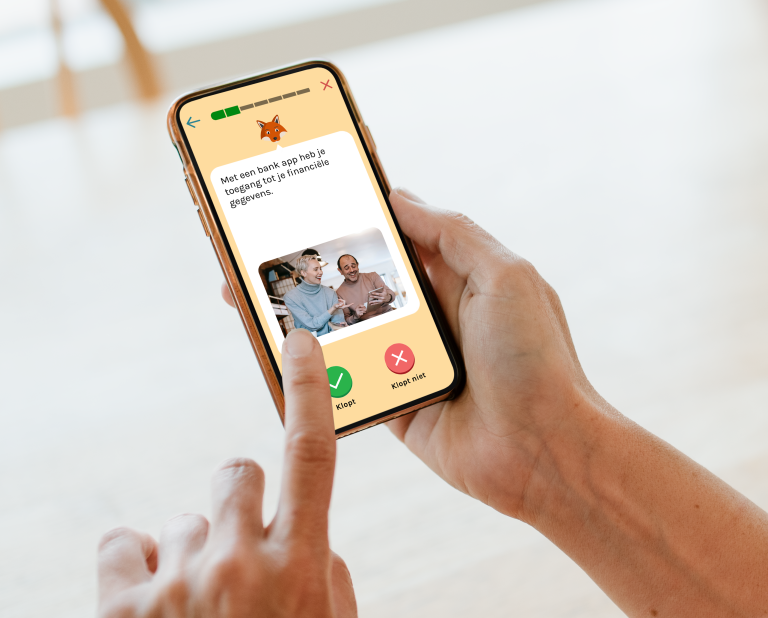
So much is happening within the Accessible Banking programme that we maintain a separate website about it, with its own newsletter for which you can sign up . Here are a few highlights:
- By popular demand, in cooperation with DigiHandig, we are now offering the opportunity to practice mobile banking in DigiHandig’s mobile app without worries and without limits . The exercises are for anyone who thinks mobile banking is scary or difficult. First see what it’s like and try it yourself in the practice app, and then ‘for real’ with your own bank’s app.
- The DigiHulplijn (0800-1508) is a free helpline that offers telephone support to people who have difficulties with digital services. This line was already receiving questions on everyday banking matters. From now on, the helpline will work closely with banks, the Dutch Banking Association and Betaalvereniging Nederland to answer these questions even better . This help complements the telephone help provided by individual banks themselves.
- The four major banks participating in the programme invited experience experts and their representatives to watch and listen behind the scenes in their call centres. Some 40 invitees watched along. There was plenty of room during ‘listen-in’ sessions to engage in conversation and increase mutual understanding.
- The theme of the Payments Association’s Annual Conference was accessibility. It featured the Accessible Banking programme and innovations that can promote accessibility. You can look back at all presentations, photos and videos on our website.
ECB publishes updated retail payments strategy
The ECB recently updated its retail payments strategy (the so-called ‘retail payments strategy ‘). The strategy remains focused on strengthening the European payments market with pan-European retail payment solutions and enhancing the Single Euro Payments Area (SEPA).
A digital euro could also contribute to its objectives in several ways, through higher efficiency levels and strategic autonomy and robustness, according to the ECB. Moreover, a digital euro could support the digitisation and innovation of retail payments. Furthermore, a digital euro could provide a pan-European payment solution, based on existing industry standards, components and technologies. It is unclear whether that is a realistic option.
Since 2020, many external developments have impacted the payments ecosystem. In particular, the Russian war against Ukraine, increasing cyber threats and the heavy reliance on electronic payments highlight the importance of increasing the resilience of retail payments. This is a new goal of the strategy.
Read more about it in Eurosystem’s retail payments strategy .
Further shift from over-the-counter to online payments for Black Friday and Sinterklaas

After PIN payments at the physical counter experienced a strong rebound after two difficult corona years in 2022 and early 2023, they remained stuck around last year’s levels this year around Black Friday and Sinterklaas. The number of online payments with iDEAL around the shopping days was roughly 10% higher than last year; this was also the case in the first 10 months. The shift from over-the-counter transactions to online transactions that took off during the various coronagraphs therefore seems to be continuing for a while.
It seems that December will not set a new absolute pin record for the first time this year. That honour is likely to be retained for the month of June this year.
Debit card acceptance update
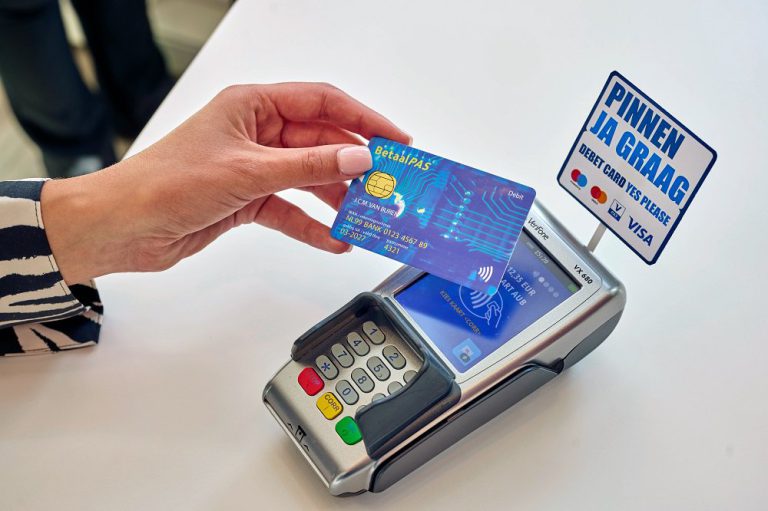
Under the direction of the Payments Association, earlier this year the PIN chain was made fit for acceptance of new debit cards of the Visa Debit and Debit Mastercard card brands, which are now issued by some small members. Activating these updated debit cards on all POS terminals of Dutch acceptors is the final part of this migration. Currently, more than 90% of all terminals have been adapted to accept the renewed debit cards at favourable PIN terms. The actual acceptance rate is a lot higher at 98% because terminals already accepting credit cards did not need to be adapted.
Points of sale where payments cannot yet be made with the updated debit cards are mainly in the SME sector. There, there are still relatively many outdated Verifone Vx570 terminals that need to be completely replaced. Acceptors with such outdated terminals are putting off that replacement for as long as possible. The Payments Association has therefore called on them to replace their outdated Vx570 terminal as soon as possible.
Furthermore, there is a relatively small number of unmanned vending machines in the parking industry that have yet to be fitted with new software to accept the updated debit cards. The Payments Association recently brought this to the attention of parking operators through their umbrella organisation.
In the Dutch PIN chain, more and more transactions are processed with Visa Debit and Debit Mastercard. The updated debit cards are used by many foreigners but also by more and more Dutch people. Triodos, Knab and Van Lanschot recently introduced the renewed debit cards. Earlier, Bunq, N26, OpenBank and Revolut had done so.
The issuance of the revamped cards recently revealed some acceptance problems. Under the direction of the Payments Association, these problems are being picked up and resolved by the banks, card brands and terminal suppliers so that renewed debit cards can be issued on a large scale.
Successful completion of Koperen Ketel project: redesign deposit and order cash
In addition to depositing and withdrawing via Geldmaat ATMs, retailers can also deposit and order cash (notes and coins) via a cash processor or value carrier such as Brink’s. Here, the cash processor performs most of the operational processes, takes care of the administration and reports on it periodically to other chain parties. Even if the activities are largely outsourced to processors and transporters, the banks involved remain responsible for them and are bound by the Wwft. Among other things, they have to check the origin of the deposited cash.
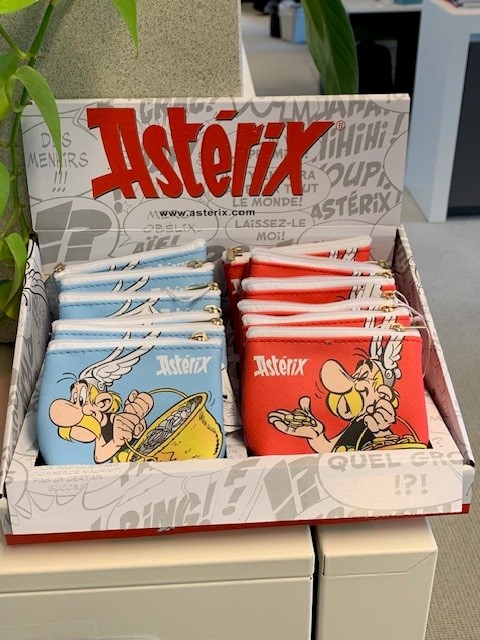
The expiry of contracts with chain parties created the need to redesign the clearing function for handling cash deposits and orders by Brink’s. That ‘clearing’ involves processing transaction information for banks’ administrations. It was decided to run the clearing for Brink’s through a partnership of ABN AMRO, ING and Rabobank (‘The Community’), which had previously been set up to support the clearing of Geldmaat. Because of its neutral role, the Payments Association was asked to carry out the project management for this project which was named Copper Kettle, named after an Asterix and Obelix comic strip.
The implementation from 23 October last went well and The Community took over full clearing for Brink’s. On 7 December, the project’s steering committee discharged the project team and the project could be formally closed. From now on, the management of the specifications is in the hands of Geldmaat. This brings an end to a process that lasted more than two years, in combination with two earlier phases that were also coordinated by the Payments Association (under the names NHTO and DGV-2).
With the introduction of Copper Boiler, a fine foundation has been laid for the current and future handling of cash in the Netherlands.
EPC publishes business conditions for SPAA fee model
The European Payments Council (EPC) has published the business terms for a fee model of the SEPA Payment Account Access (SPAA) arrangement scheme. This marks an important step in the further development of Open Banking in Europe.
SPAA includes rules and agreements for account information services and value-added payment initiation services (‘premium’ services). These services build on PSD2, which describes the ‘free’ basic services. The premium services can be offered by account providers (usually banks) to parties licensed to offer payment or account information services. With the publication of the fee model, these parties can already come up with interesting business models.
Online consumer spending increases, mainly due to run on holidays
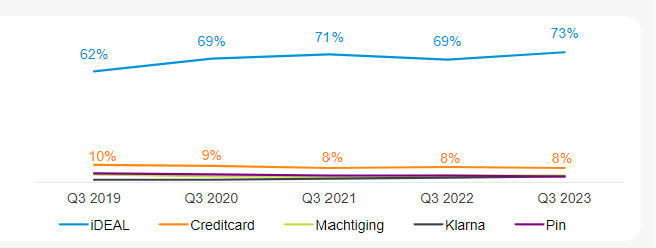
In the third quarter of 2023, Dutch consumers spent €7.44 billion online. This is 4% more than in the same quarter of 2022. This growth is driven by an increase in online spending on services ( 16%), driven by growth in package holidays ( 32%) and single airline tickets and accommodation ( 20%). The total number of online purchases is fairly stable at 81.7 million compared to Q3 2022 ( 1%). The online share in the total retail market remained the same. Like last year in Q3, 29% of all consumer spending is spent online and 11% of all purchases are made online.
When it comes to paying for online purchases, it is notable that the share of iDEAL has increased relatively much ( 4%) and that this has not been at the expense of any one specific payment method.
Members will be sent the basic report and from now on also have access to the online dashboard via their Infonet account. In this dashboard, comprehensive information is available on developments over the past few years, with the option to delve deeper into specific industries or payment methods. Please note that access to this dashboard requires logging in with an Infonet account and corresponding password.
Provisional agreement on Instant Payments Regulation
The European Commission, Council and Parliament reached a provisional agreement on the Instant Payments Regulation on 7 November 2023. To reach a final agreement, the European Parliament and the Council must also give their agreement within their own institutions; the Parliament has now given such agreement. The regulation aims to make instant payments in euro accessible to all citizens, businesses and institutions in the EU and EEA. The regulation requires payment service providers offering regular credit transfers for payment accounts to also offer instant payments, as well as a Confirmation of Payee (in the Netherlands this is the IBAN Name Check). Payment service providers are expected to have to comply by the end of 2025 at the latest. The content of the bill is discussed in more detail in a previously published press release.
In the Netherlands, instant payments have already been available at all retail banks for several years. Therefore, Dutch consumers will notice little difference for domestic transfers. However, transfers to other European countries will also always be lightning-fast in the future. If you want to read more about instant payments and the possibilities, read the articles on instant payments by our specialists.
Information session in January 2024
Payments Association Netherlands will organise an information session on the Instant Payments Regulation in early 2024. This session will focus on the impact for banks, payment institutions and electronic money institutions and the approach needed to comply with the obligations.
Invitation: ‘Legal aspects of payments’ introductory course
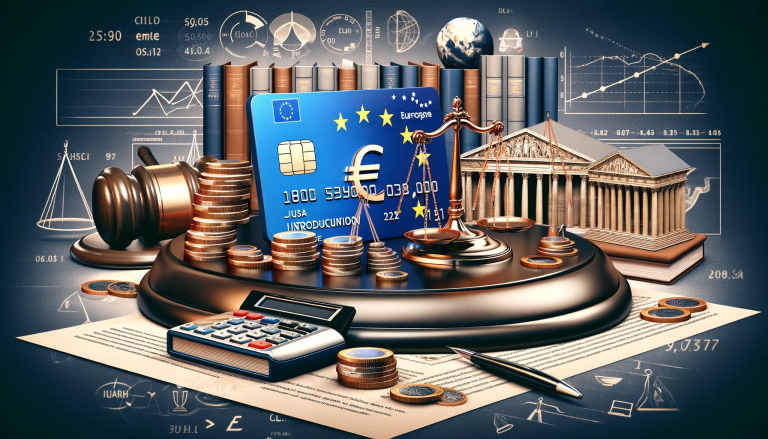
On Friday 9 February 2024, the Erasmus School of Law, in cooperation with Betaalvereniging Nederland, will organise an introductory course on the legal aspects of payment transactions. This one-day course will provide an overview of the latest regulations and developments in payment transactions, such as PSD2 and the Wire Transfer Regulation.
The course is designed for lawyers, compliance officers, and payment services professionals. Among others, director Gijs Boudewijn of the Payments Association and Emanuel van Praag, professor at the Erasmus School of Law and attorney at Kennedy Van der Laan, offer valuable insights into topics such as security, fraud and the Money Laundering and Terrorist Financing Act (Wwft).
Cost: €600 excluding VAT, including course material and lunch.
Member discount for conference Future of Payments
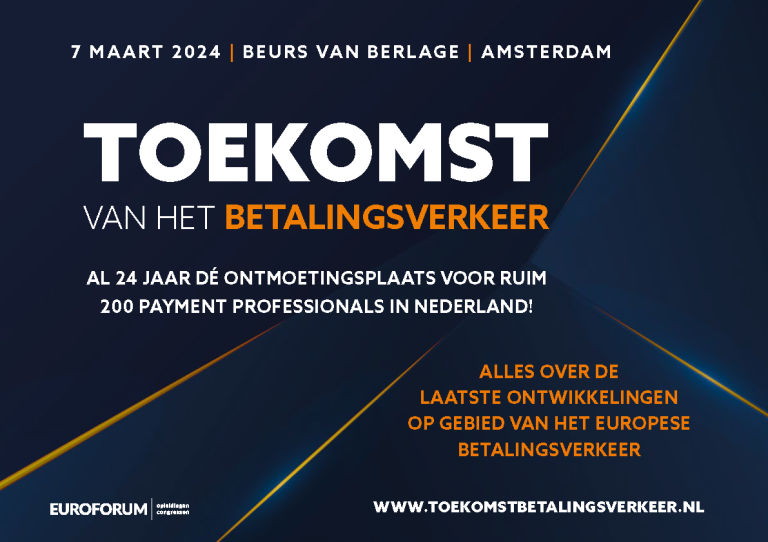
Attend the 24th edition of the congress Toekomst van het Betalingsverkeer on 7 March 2024 at the Beurs van Berlage, Amsterdam. Bringing together more than 200 payments professionals, this event is the ideal opportunity to discuss the latest trends and challenges in payments. Topics such as the impact of digital currencies and AI will be covered this year. The conference is a platform for everyone involved in the future of financial transactions.
Exclusive discount for members of Betaalvereniging Nederland
As a member of the Payments Association, you will benefit from a special 20% discount. Register before 8 January and pay only €680 excluding VAT, instead of €850.
Even more discount forYoung Professionals
Are you under 30 and working at a financial institution? Then you can attend the conference at an even much lower rate of only €99 excl. VAT. Seize the opportunity to expand your network and deepen your knowledge. Places are limited, so register quickly .
Association news

Revolut recently became a member of Betaalvereniging Nederland. Revolut offers accounts with Dutch IBANs and provides payment cards of both Visa and Mastercard. Welcome Revolut!
Geldland

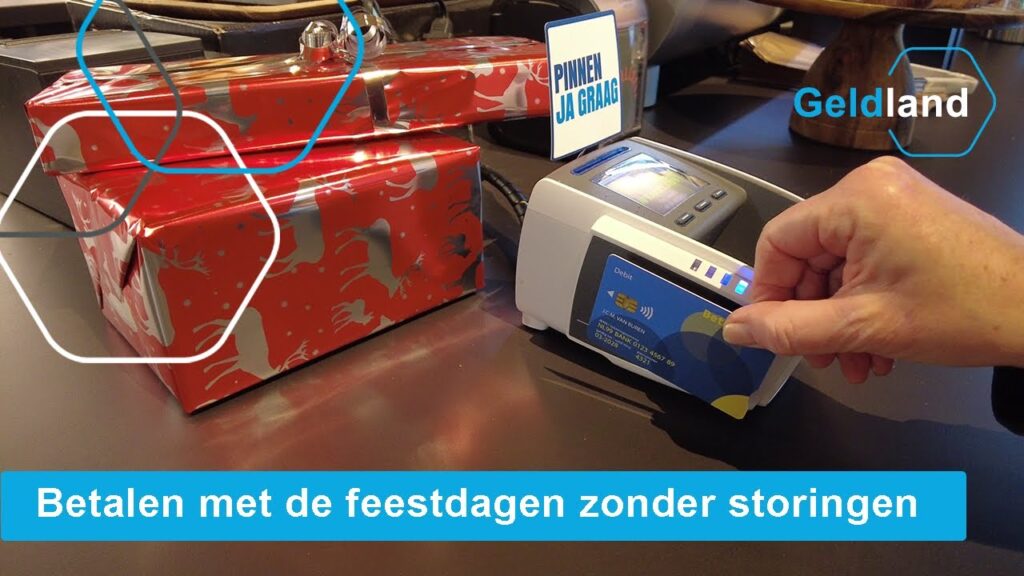
Watch our latest videos here:
Figures
468 million debit card payments at the counter in November. Of these, 90.8 were contactless.
More key figures on pin.nl
Agenda
- 15 January – Webinar Accessible Banking
- 16 January – Member meeting Instant Payments Regulation, Gustav Mahlerplein 33-35
- 9 February – Legal aspects of payment transactions , Gustav Mahlerplein 33-35
- 4 March – Stakeholder forum, Amsterdam
- 7 March – Future of payments , Beurs van Berlage
- 17 March – ISO 20022 migration
Member Bulletin
In addition to this Payment Journal, the Payments Association also publishes Member Bulletins. In these, we inform members about practical matters of interest. The bulletins usually appear a few times a month and cover a specific topic. Are you a member but not yet receiving these bulletins? You can get yourself placed on the mailing list at secretariaat@betaalvereniging.nl.
Subscribe to Payment Journal
Also curious about the latest developments in payments? Stay informed via Betaaljournaal. You can register here.
Related articles
-
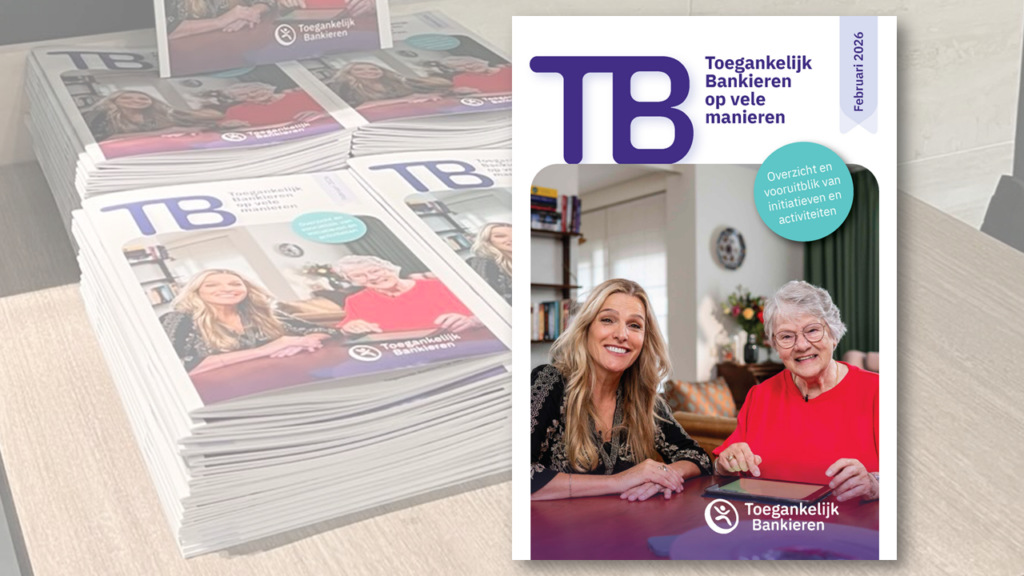
Magazine Accessible Banking in many ways
-
News
-
Payments for all
-
-

Lower travel spending is putting pressure on overall online spending
-
News
-
Online payments
-
-

Payments newsletter: Betaaljournaal 38
-
Payments newsletter
-
-
Six out of ten retail business owners say they are prepared for card payments failures
-
News
-
Card payments
-
-
Growing number of people are satisfied with handling their daily banking affairs
-
News
-
Payments for all
-
-
Make sure you have (digital) fallback options in case of a potential card payments failure!
-
News
-
Card payments
-