
Online purchases and spending appear to stabilise after a period of growth
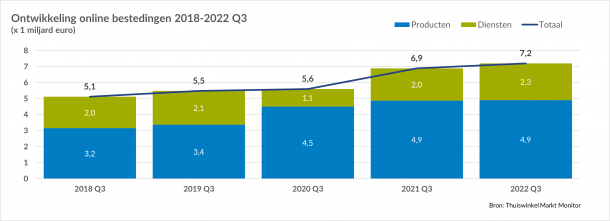
Online consumer spending rose slightly in the third quarter of 2022. Dutch consumers spent a total of €7.2 billion online in Q3 2022, 4% more than in Q3 2021. The increase was driven by 14% growth in online spending on services, supported by growth in package holidays (+20%) and tickets for attractions and events (+19%). The number of service purchases remained fairly stable (+1%), but because consumers bought fewer products, the total number of online purchases fell by 5% compared with Q3 2021. These findings come from the latest Thuiswinkel Markt Monitor, a study of online consumer spending in the Netherlands. GfK conducts the study on behalf of Thuiswinkel.org and co-client Retail Insiders, in cooperation with PostNL, Currence and the Dutch Payments Association.
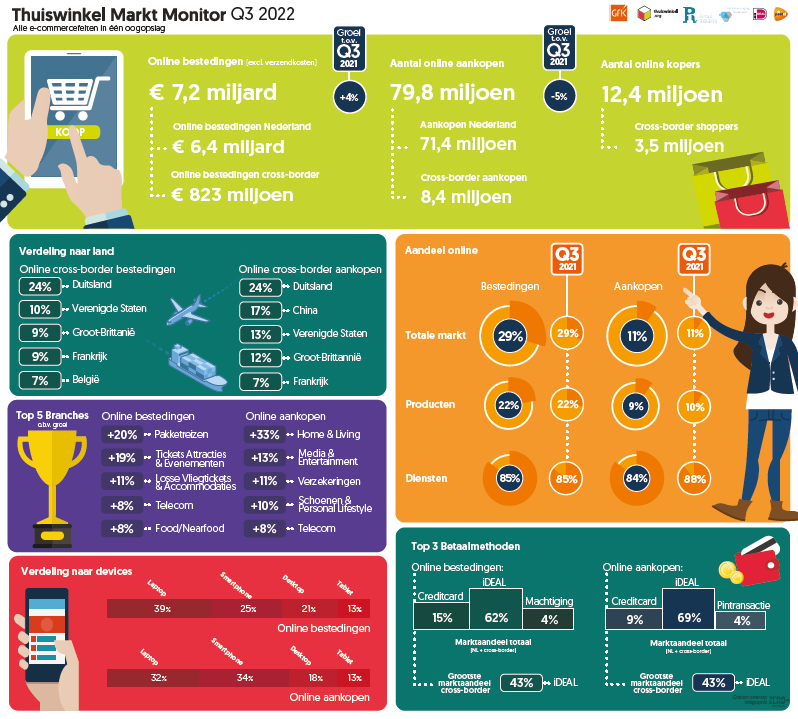
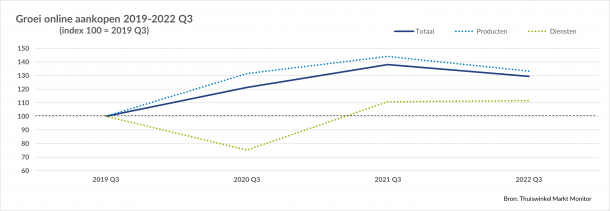
In Q3 last year, almost three times as many package holidays were purchased as in the previous year, but growth stabilised this year. “In 2021, society reopened from June onwards and consumers travelled abroad in large numbers again. Online services then grew sharply and are now stabilising at that level,” says Marlene ten Ham, managing director of Thuiswinkel.org. “Compared with recent quarters, growth in total spending is less extreme and the decline in the number of purchases is also less pronounced. The extremes of the past two years have now disappeared. Compared with 2019, before the coronavirus pandemic, the number of purchases and online spending on both products and services are still higher on average,” Ten Ham adds.
Average amount spent per purchase rises
Consumers spent more per purchase in Q3 2022 than in Q3 2021: the average amount spent per online purchase increased by 9%. This was due mainly to higher average spending per service purchase: tickets for attractions and events rose by 21%, package holidays by 14%, and individual airline tickets and accommodation by 8% compared with the previous year.
Cross-border spending increases
Cross-border spending rose by 12% compared with the third quarter of 2021. This was driven by a 28% increase in spending on services, particularly package holidays and individual airline tickets and accommodation abroad. “Most cross-border spending takes place within Europe, but in Q3 we saw the share of non-European countries in cross-border spending on services increase. For example, people in the Netherlands spent more online on services in the United States,” says Ten Ham.
Cross-border spending on products remains stable
Smartphones increasingly popular, iDEAL remains the most widely used payment method
In the third quarter of 2022, 87% of people in the Netherlands aged 15 and over made an online purchase, a proportion comparable with the previous year. Desktops and laptops remained the dominant devices for online shopping, but the share of purchases made by smartphone increased compared with the previous year. iDEAL remained by far the most widely used payment method for online purchases, although its share edged down from 71% to 69%. Credit cards and Klarna both increased their share by one percentage point. Credit card use grew fastest for purchases of individual airline tickets and accommodation, while Klarna grew in clothing. The rise in the credit card share can also be attributed to the increase in cross-border purchases, although iDEAL remained the most widely used payment method there too.
Related articles
-

High confidence in Dutch payment system
-
News
-
Card payments
-
-
Next Phase of iDEAL Migration to Wero Begins in October
-
News
-
Online payments
-
-

Lower travel spending is putting pressure on overall online spending
-
News
-
Online payments
-
-

The Digital Euro and Stablecoins: Apples and Oranges
-
News
-
European legislation
-
-
Banks are calling out social media platforms for their role in fraud and scams
-
News
-
Online payments
-
-

First online lunch session updates members on current developments in the payments sector
-
News
-
European legislation
-