
Almost three-quarters of oliebollen stalls have a payment terminal
Two years ago, only 10% of oliebollen stalls had a payment terminal. Last year the figure was 40%, and it has now risen to no less than 71%. Two out of three terminals support hygienic contactless payments, and debit card payments are almost always free of charge.
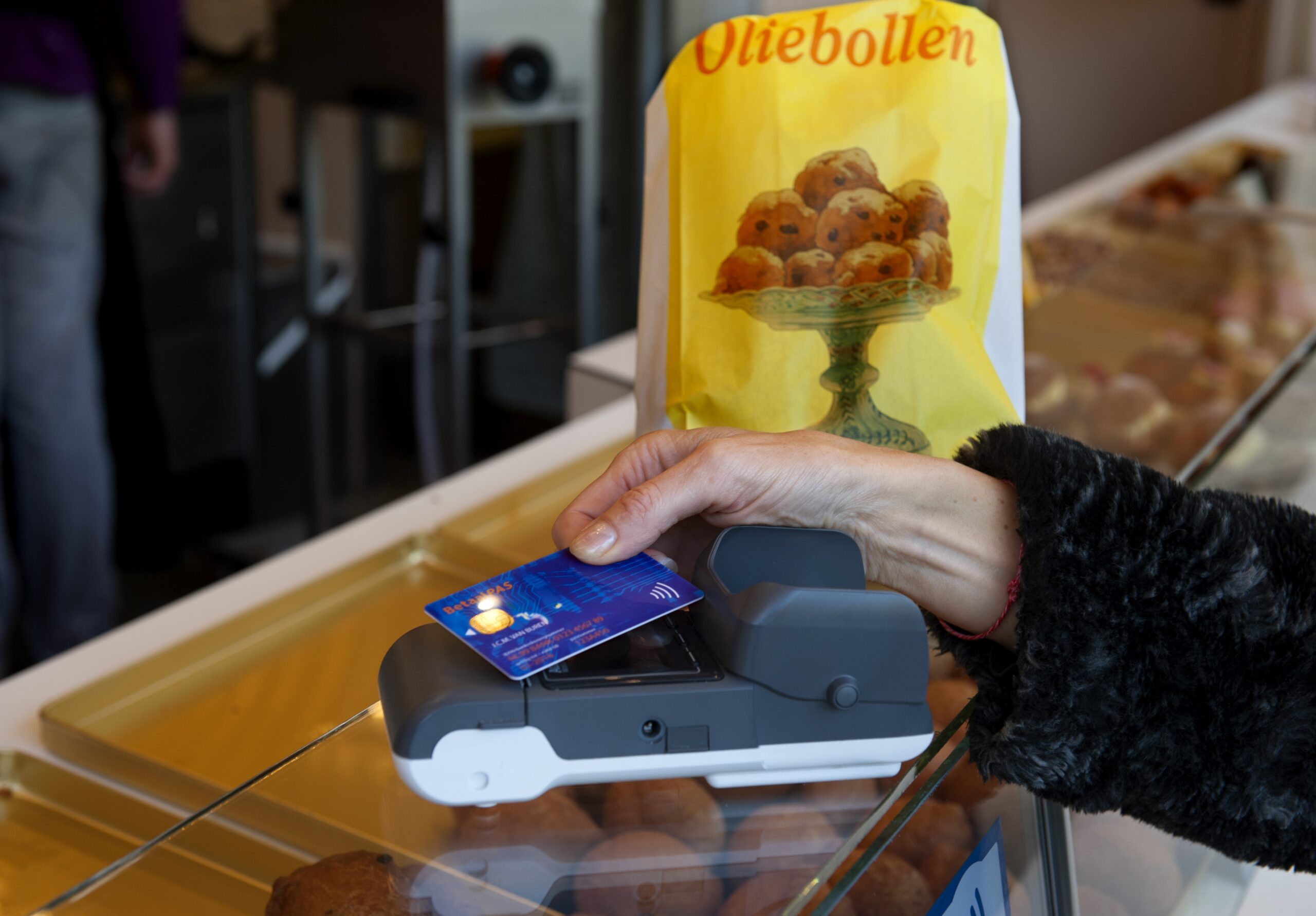
Stalls also clearly indicate that debit card payments are accepted. This is shown by the annual survey of Dutch oliebollen stalls conducted by Roamler Retail Analytics(opens in new window) on behalf of the Foundation for the Promotion of Efficient Payments and the Dutch Payments Association. Stalls that accept debit cards generally make this clearly visible with stickers or signs. Almost none charge extra for debit card payments; 5% of stalls do charge a fee, for example for amounts under €10.
Easy and fast contactless payments
Most oliebollen stalls with a payment terminal accept contactless payments, at 68%. This is a clean, fast and secure way to pay, and usually requires no PIN for amounts up to and including €25. Contactless payments are particularly convenient at busy points of sale, such as oliebollen stalls around the festive season.
Oliebollen score an average of 8 out of 10
Half of those surveyed eat fewer than ten oliebollen a year, while 10% eat 21 or more. More than two-thirds, 69%, prefer oliebollen with currants, which cost an average of 94 euro cents each. Last year, the average price was 91 euro cents. The least expensive oliebollen, at 60 euro cents each, are available in Slagharen. Oliebollen are most expensive in North Brabant, where they cost an average of 97 euro cents. They received an average score of 8 out of 10 for both appearance and taste. In 2015, taste received a score of 7.7. All findings are mapped at www.oliebollenkaart.nl.
Research while shopping
The survey of oliebollen stalls was conducted by Roamler(opens in new window) , a retail-insights research firm that uses crowdsourcing: consumers collect market information across different channels through a mobile app.
Related articles
-
Dutch abroad pay most with cards in Spanish hospitality
-
News
-
Card payments
-
-

High confidence in Dutch payment system
-
News
-
Card payments
-
-
Checking In and Out on Public Transportation Is Now Even Smoother with Your Smartphone
-
News
-
Card payments
-
-
More travelers very satisfied about traveling with payment card
-
Press release
-
Card payments
-
-
Six out of ten retail business owners say they are prepared for card payments failures
-
News
-
Card payments
-
-
Make sure you have (digital) fallback options in case of a potential card payments failure!
-
News
-
Card payments
-