Dutch Payments Association members look beyond PSD2 to Open Banking
Following its General Meeting on 16 May, the Dutch Payments Association organised a debate for members about PSD2: where are we, what are we seeing and what do we expect?
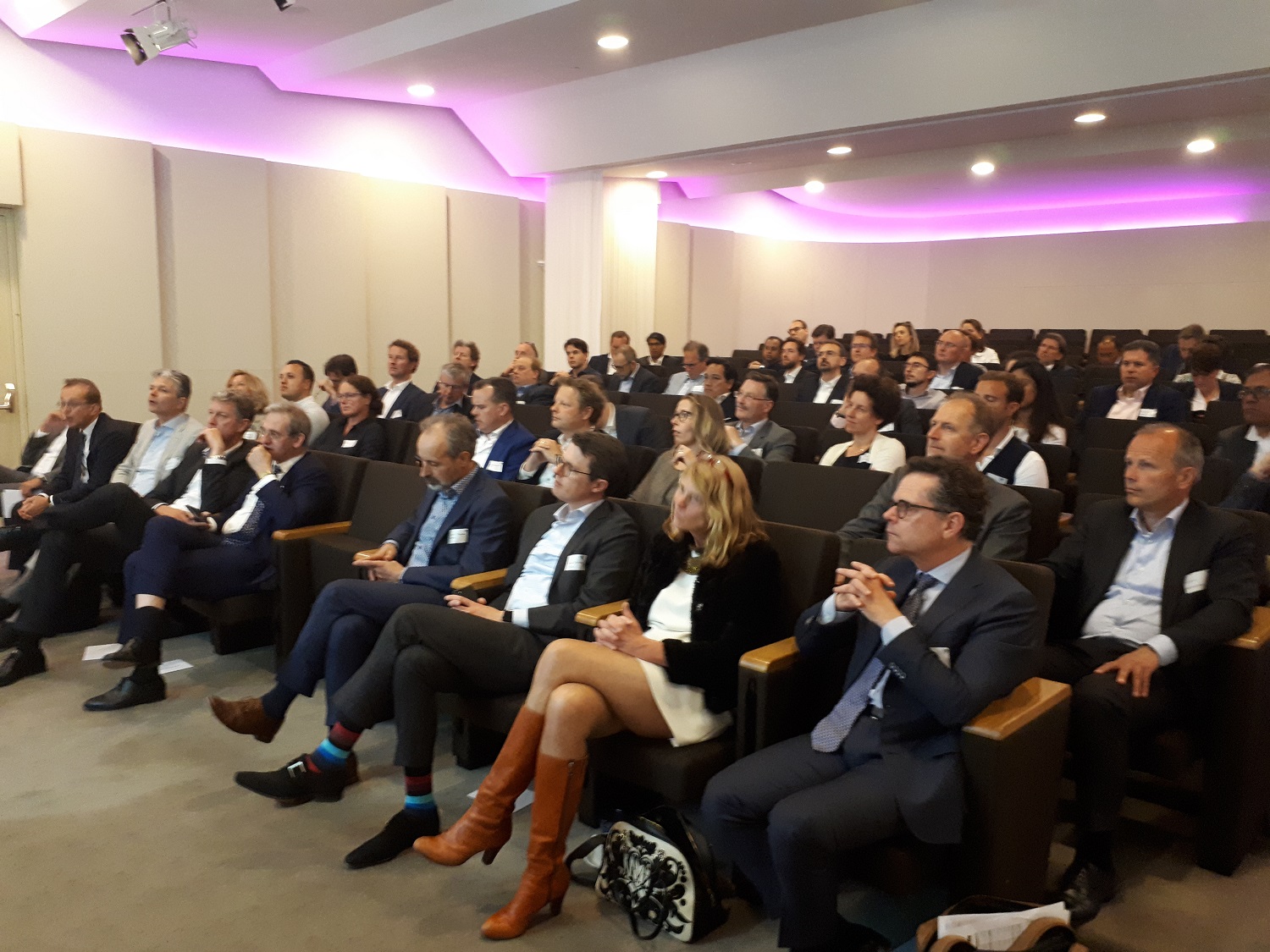
Members learned about the activities of the National Implementation Support Platform NL (NISP-NL) and exchanged observations and opinions about what PSD2 has already brought about and what is still to come. They also looked ahead to the possible development of Open Banking in the Netherlands and the rest of Europe, and discussed whether PSD2 will make Europe stronger or instead pave the way for Big Tech companies from outside Europe.
Valuable stakeholder platform
Presentations by Max Geerling of the Dutch Payments Association and Evert Fekkes of De Nederlandsche Bank on NISP-NL and EBA RTS Article 33(6) showed that both banks and third-party providers (TPPs) are working hard to implement APIs and obtain exemptions from the requirement for a fallback option. NISP-NL is proving to be a valuable stakeholder platform for all participants, enabling TPPs and banks to find one another and share their experiences with the core PSD2 services.
Consumers in control and frictionless payments?
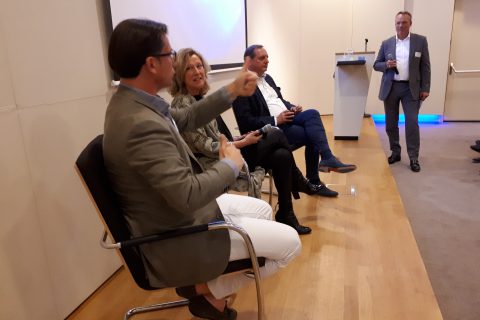
During the panel discussion with Esther Stegman of de Volksbank, Jeroen van Glabbeek of CM.com and Eric Tak of ING , moderator Gijs Boudewijn asked to what extent PSD2 genuinely puts consumers in control and what this means for payment convenience. Stegman envisages a ‘PSD2 master switch’ for every customer. The switch would allow customers to close their payments account completely to PSD2 service providers—or leave it open. Whether this is permitted is still under investigation. ING is not currently prepared to adopt such a broad interpretation of the legislation, but is monitoring developments closely and also recognises customers’ need for control.
Van Glabbeek of payment service provider CM.com expressed strong support for PSD2, legislation and supervision. These give parties other than banks the opportunity to offer payment services. He envisages a future in which customers no longer obtain every service from a single bank, but choose the best provider for each service—payments, mortgages and insurance—and those could certainly include new providers. In the past, his grandparents were told by the predecessor of KPN that other telecoms providers were unreliable and delivered poor quality. We have seen how the telecoms market developed, and the same will happen to banks, Van Glabbeek argued. The panel discussed the meaning and value of the trust that customers currently place in banks. Trust that their money will still be there tomorrow? That they will receive the best offer? That they will benefit from innovation as quickly as possible?
Van Glabbeek is concerned about the impact on payment convenience of the strict requirements that PSD2 imposes on consumer authorisation through the rules for Strong Customer Authentication. Under those rules, even for a relatively small amount of €30 or €50, consumers must explicitly approve a transaction such as a mobile payment using two separate authentication factors. This makes payments anything but frictionless, contrary to what payment service providers and businesses would like. In Van Glabbeek’s view, it creates unnecessary barriers for customers in shops and online.
APIs, APIs and more APIs
The panel then concluded that the immediate challenge centres on clear and reliable interfaces between banks and PSD2 service providers: APIs. With roughly 6,000 different banks in the EU, the absence of sound agreements could lead to just as many different interfaces. Big Tech companies such as Google and Apple have the resources and people to develop and offer new pan-European services quickly despite this multitude of APIs. For smaller fintechs in particular, such an excess of APIs could create an almost insurmountable barrier. The Dutch Payments Association, DNB, banks and payment service providers are therefore working together in NISP-NL to facilitate a smooth implementation of APIs in the Netherlands.
Scheme and platforms for Open Banking
Once the hurdle of clear and reliable interfaces has been overcome, broader opportunities for Open Banking come into view. Can European banks and fintechs use Open Banking to hold their own against Big Tech companies from the United States and China? Was that not the intention of the European legislation, and what would be needed to achieve it? The panel explored the opportunities for a collective European scheme: a system of agreements for Open Banking that would underpin home-grown pan-European transaction platforms capable of competing with American card schemes and China’s all-encompassing mobile commerce platforms. A European system of agreements should create a level playing field for European transaction platforms. Opinions within the panel differed on the feasibility and prospects of such a European scheme and its associated ecosystems.
Payments in one minute
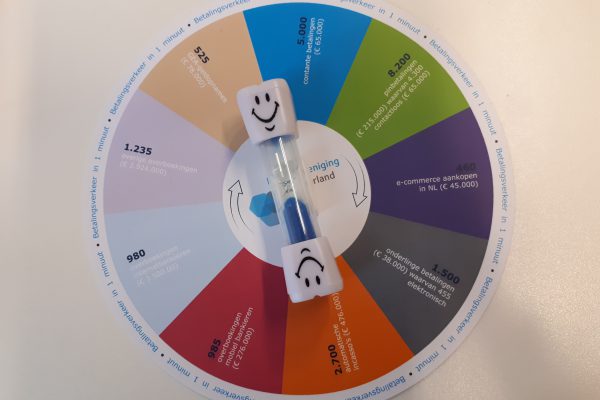
We look back on a well-attended and lively meeting. Afterwards, members received the ‘Payments in one minute’ game as a small memento.
Related articles
-

High confidence in Dutch payment system
-
News
-
Card payments
-
-
Make digital euro useful, simple and affordable
-
News
-
European legislation
-
-
EU trilogue on the digital euro begins
-
News
-
European legislation
-
-
The Digital Euro and Stablecoins: Apples and Oranges
-
News
-
European legislation
-
-

Payment orders with unstructured address data will be rejected starting November 14 or 15, 2026
-
News
-
European legislation
-
-
First online lunch session updates members on current developments in the payments sector
-
News
-
European legislation
-