Recieving payments

Payment methods for merchants
Merchants who sell over the counter typically use debit card payments. This requires a payment terminal and a processor agreement with a bank or payment service provider. Online stores usually allow customers to pay with iDEAL or payment card. These are one-time purchases and the retailer does not need to know the customer.
When a merchant does know their customer and provides ongoing remote services, direct debit is often the preferred payment method. The customer issues an authorization allowing the retailer to periodically collect a certain amount. This is commonly used for subscriptions, gas and electricity, insurance, rent, and other ongoing services. There is also a direct debit specifically for recurring payments between businesses (B2B).
Recent developments in society
- Banks are issuing new debit cards that can be used to make payments in more countries outside Europe, as well as for online payments. For online payments, these new debit cards offer a method for periodic payments, in addition to direct debits.
- When paying with debit cards over the counter, resilience is an important issue: in the event of card payments failures, consumers should still be able to make digital payments.
- For direct debits, there is currently an initiative to improve the Digital Mandate Service, which is recognized by banks. Certified digital mandates offer merchants better protection against reports of incorrect direct debits by customers. This is separate from the unconditional 8-week right of reversal for customers with ‘regular’ direct debits (not B2B).
Role of the Dutch Payments Association
- The Dutch Payments Association collaborates with its members and stakeholders to develop reliable and affordable collective payment methods for merchants and their customers.
- We inform umbrella organizations representing various types of businesses about developments in debit card payments, direct debits, and online payment methods, such as new legislation and regulations and innovations.
- We actively collaborate with members and stakeholders on the future of Digital Mandate Service.
Our vision for the future
- The Dutch Payments Association expects that paying with a debit card will remain the most commonly used payment method at the counter for the time being (alongside cash payments). In the long term, other forms of payment may be introduced at the counter, such as Wero (the successor to iDEAL) and perhaps the digital euro.
- An easy digital direct debit authorization for one-time direct debits at the counter can offer an additional fallback option in certain situations in the event of card payments disruptions.
- Dutch companies and institutions are not expected to use the new debit card en masse as a replacement for direct debits. The Netherlands has been accustomed to easy, reliable, and inexpensive direct debits for many years.
Facts and figures
-
5.77billion In 2024, as many as 5.77 billion debit card payments have been made in the Netherlands.In 2024, as many as 5.77 billion debit card payments have been made in the Netherlands.
-
94% By the end of 2024, 94% of all debit card payments in the Netherlands were contactless.By the end of 2024, 94% of all debit card payments in the Netherlands were contactless.
-
At the end of 2024, 4 out of 10 consumers said they preferred to pay with a mobile phone or smartwatchAt the end of 2024, 4 out of 10 consumers said they preferred to pay with a mobile phone or smartwatch
Latest news
-
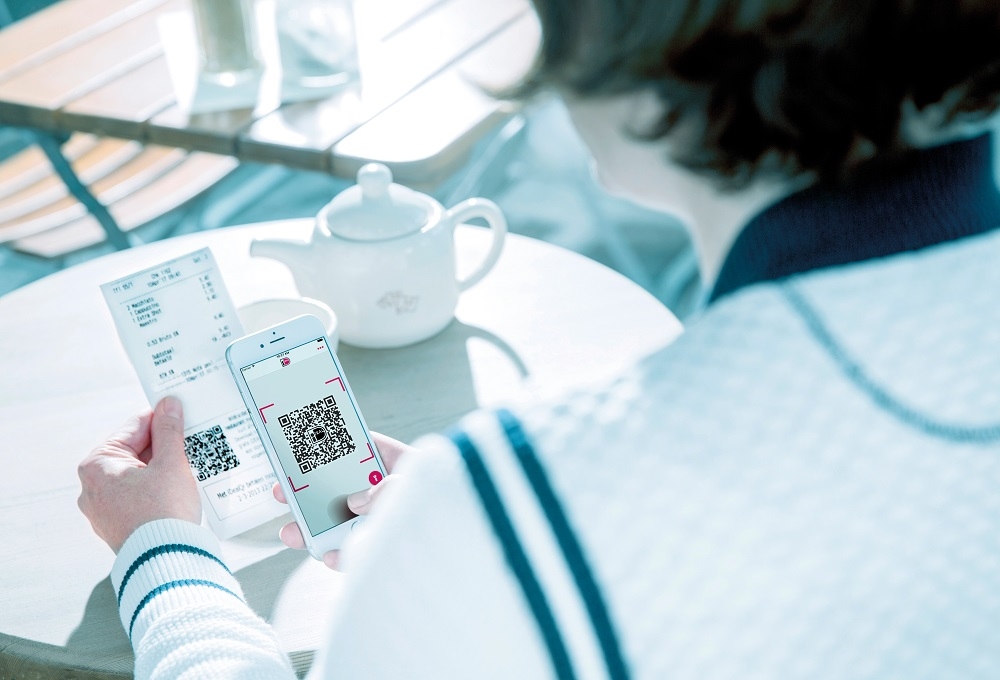
DNB presents ‘Payments Strategy’ until 2028
-
News
-
Availability and disruptions
The pillars underpinning DNB’s strategy are greater European autonomy and stronger resilience in payment transactions, and promoting innovation in the payments market. -
A list of articles
-
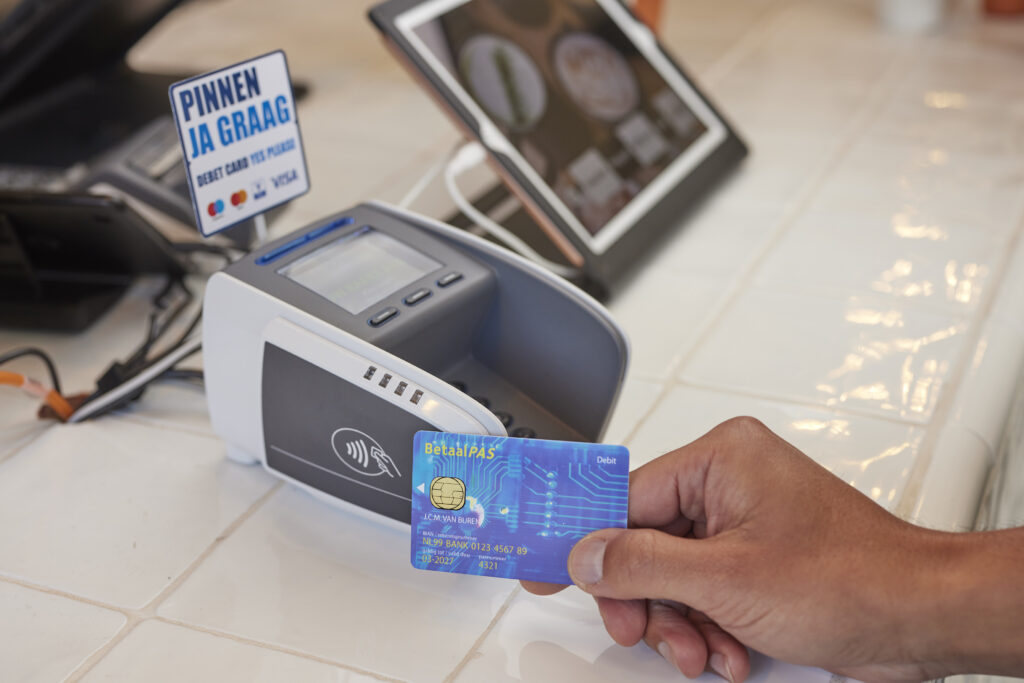
Arjan Bol on Radio 5 about deferred card payments
-
News
-
Availability and disruptions
-
-

Continued growth of instant payments
-
News
-
Account-to-Account payments
-
Frequently asked questions
-
How does Return Debit Card work on the payment terminal?
- Select Return Debit Card/Refund from the payment terminal menu. An access code/password is required to access this function.
- The customer inserts their debit card into the payment terminal and confirms the transaction amount. This can also be done contactless. The debit card may be different from the one originally used to make the payment. This means that someone else can return a product and use their own debit card for the return transaction.
- The message “refund” or “repayment” on the payment terminal and the return receipt indicate that the return payment has been successful.
- An authorized cashier signs this return receipt. The cashier gives this return receipt to your customer.
- The amount will be credited to their bank account the next business day.
Your bank will settle your return PIN transaction with your PIN turnover. Please contact your bank for details. You can view all transactions, both incoming and return PINs, in detail in your payment terminal’s journal.
-
Which banks can I sign a debit card contract with?
Merchants can sign a contract with card payment service providers. Card payment service providers can be banks, but also other parties besides banks. Your own bank can help you get started.
-
What is tap-to-pay?
Tap-to-pay is a quick and easy way to pay by briefly holding your debit card, credit card, mobile phone, or smartwatch close to the payment terminal at the counter. If you pay tap-to-pay with a physical card, you usually don’t need a PIN code for amounts up to €50; for amounts above €50, you always have to enter your PIN code.
Downloads
Let's shape the future of payments together
Join the network of payment service providers working together to create a secure, reliable, accessible, and efficient payment ecosystem in the Netherlands.
- Access to up-to-date knowledge and developments in payments
- Influence on policy and standards in the Netherlands and Europe
- Representing the sector to stakeholders
- Part of the Dutch payment ecosystem