
Consumers and businesses in Leiden positive about mobile payments
Consumers are very positive about mobile payments at the point of sale. They find them fast and easy, and the service exceeded the expectations of more than half of participants. Businesses also regard the payment method as innovative. Customers of ING, ABN AMRO and Rabobank have recently gained experience with mobile payments in Leiden. Consumers mainly use their mobile phones for low amounts of up to €25, particularly at large supermarkets, department stores and shops at railway stations.
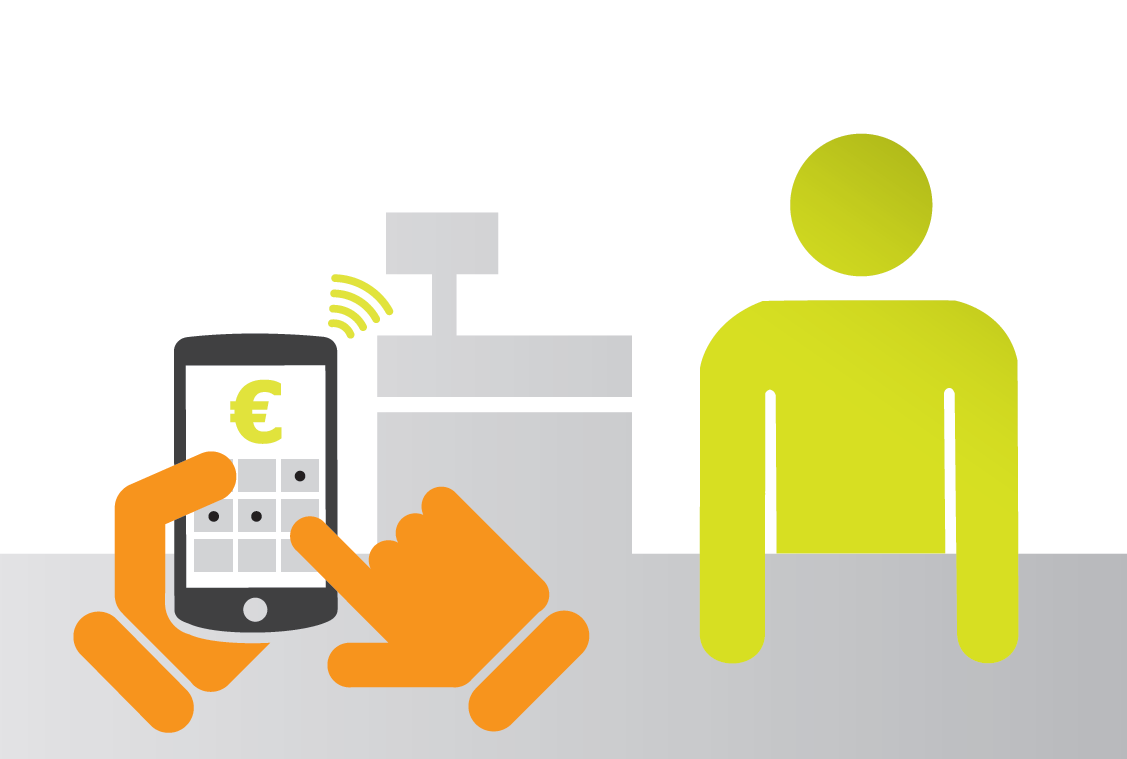
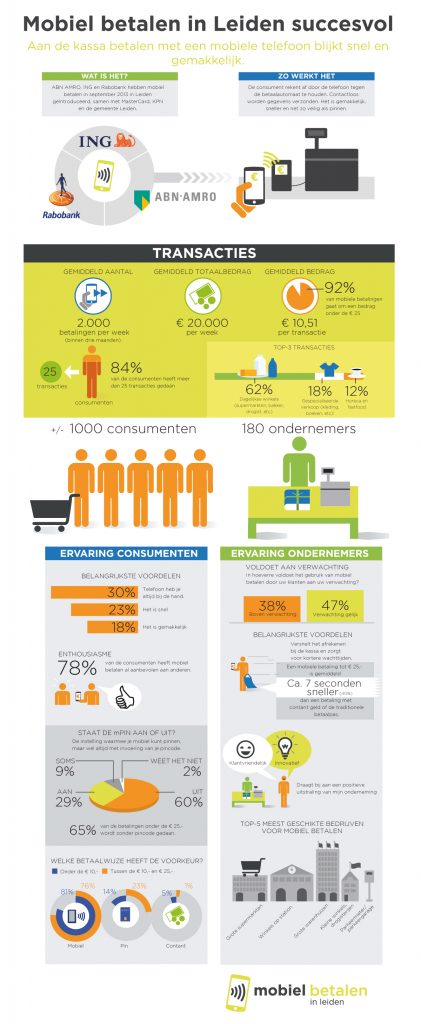
ABN AMRO, ING and Rabobank introduced mobile phone payments in Leiden in September 2013 together with MasterCard, KPN and the municipality of Leiden. Around 1,000 consumers and 180 businesses participated. An average of 2,000 payments were made each week during the three-month trial, with a total value of around €20,000 per week. Four out of five consumers made more transactions than the 25 required to participate during the three months.
Strong result
“This is a very strong result,” says Jeroen Verrijdt, Director of Payments and Savings at Rabobank, on behalf of the cooperating parties. “People made extensive use of the new payment option, giving us valuable insight into the preferences and wishes of consumers and businesses. That is important for improving mobile payments.”
Consumers
Research by Maastricht University found that 92% of all mobile payments were for amounts below €25. For these payments, 65% of participating consumers did not enter a PIN, although they could do so for amounts up to €25. Speed, convenience and having a phone readily available were the main reasons for using mobile payments below €25. For these transactions, consumers strongly preferred mobile phones to cash or traditional debit cards. Seventy-eight per cent had already recommended mobile payments to others.
Businesses
Speed was also the main advantage for businesses. Transaction speed research found that a mobile payment took an average of around seven seconds, 40% faster than a cash or traditional debit card payment. This contributes to shorter queues and cost savings. Businesses also felt that mobile payments gave their shop a positive image, although they experienced some technical problems during the trial. These experiences will inform the further rollout of contactless payment terminals.
Now that the joint trial in Leiden has ended, each Dutch bank will decide whether and how to offer mobile payments to its customers. Participating businesses in Leiden will continue to accept mobile phones, existing debit cards and contactless debit cards. ABN AMRO, ING and Rabobank have also individually announced that they will continue with mobile or contactless payments.
Related articles
-
Dutch abroad pay most with cards in Spanish hospitality
-
News
-
Card payments
-
-

High confidence in Dutch payment system
-
News
-
Card payments
-
-
Checking In and Out on Public Transportation Is Now Even Smoother with Your Smartphone
-
News
-
Card payments
-
-
More travelers very satisfied about traveling with payment card
-
Press release
-
Card payments
-
-
Six out of ten retail business owners say they are prepared for card payments failures
-
News
-
Card payments
-
-
Make sure you have (digital) fallback options in case of a potential card payments failure!
-
News
-
Card payments
-