
Chipknip ends, including in vending machines
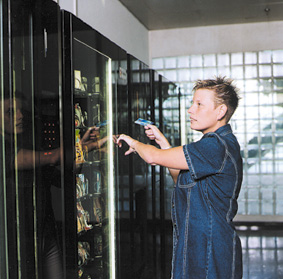
Chipknip ends on 1 January 2015
Chipknip use will end permanently on 1 January 2015. Chipknip relies on the obsolete X.25 telecommunications network and outdated domestic payment infrastructure, both of which will soon be decommissioned. The closure of Chipknip therefore cannot be postponed. Businesses accepting Chipknip are strongly advised to offer their customers alternative electronic payment methods before 1 October 2014.
Alternatives to Chipknip, including for vending
Debit card payments are the most widely used electronic payment solution in every sector. Businesses accepting Chipknip should therefore consider whether debit cards would be a suitable replacement in their situation.
Debit cards may not always be an appropriate alternative, partly because of the relationship between margins and costs and because of technical or physical constraints on installing a payment terminal. This may be the case in the vending sector, for example. The issue was discussed during recent consultations between banks and Dutch Payment System Suppliers (NLB). The following electronic alternatives were identified:
- A closed-loop payment system, with top-ups and payments managed by the operator.
- A three-party payment system, offered by a single provider to both payers and operators.
- Contactless Maestro and V PAY, a bank-based solution for contactless payments.
Contactless payments are the future, starting in 2015
Contactless payments extend the capabilities of debit cards. Because no PIN is required for small amounts, contactless transactions are very fast. Contactless terminals also do not need a full numeric keypad, which is a major advantage for vending machines in particular.
From 2015, all Dutch retail banks will offer contactless payments to their customers. Initially, however, not everyone in the Netherlands will be able to pay contactlessly. Each bank determines the order and speed of its rollout and may prioritise customers who indicate that they want to start using contactless payments. Depending on the bank, customers may be able to pay contactlessly with a debit card, a mobile phone or both.
Non-bank providers will offer contactless Maestro or V PAY payment methods that consumers can use on a prepaid basis without a bank account.
The rapid introduction of contactless payments allows vending machine operators to accept contactless Maestro and V PAY only. A combination of debit card payments and closed-loop or three-party systems is also possible, either temporarily or permanently.
No ‘dip & go’ for vending
In some countries, ‘dip & go’, where a debit card is inserted into the reader without entering a PIN, is offered as a payment solution for vending machines. For Dutch cardholders, this option is available only for parking and toll roads. It will not be extended to vending or other sectors, as the rapid introduction of contactless payments makes this unnecessary.
More information
For more information, contact your bank, your payment terminal supplier or the Dutch Payments Association.
Related articles
-
Dutch abroad pay most with cards in Spanish hospitality
-
News
-
Card payments
-
-

High confidence in Dutch payment system
-
News
-
Card payments
-
-
Checking In and Out on Public Transportation Is Now Even Smoother with Your Smartphone
-
News
-
Card payments
-
-
More travelers very satisfied about traveling with payment card
-
Press release
-
Card payments
-
-

Six out of ten retail business owners say they are prepared for card payments failures
-
News
-
Card payments
-
-
Make sure you have (digital) fallback options in case of a potential card payments failure!
-
News
-
Card payments
-