
More and more oliebollen stalls accept debit cards
Customers could pay by debit card at around four in ten oliebollen stalls. That was a sharp increase from the previous year, when an estimated 10% of stalls accepted debit card payments. This was shown by a survey of Dutch oliebollen stalls conducted by Roamler Retail Analytics at the request of the Foundation for Promoting Efficient Payments and the Dutch Payments Association.
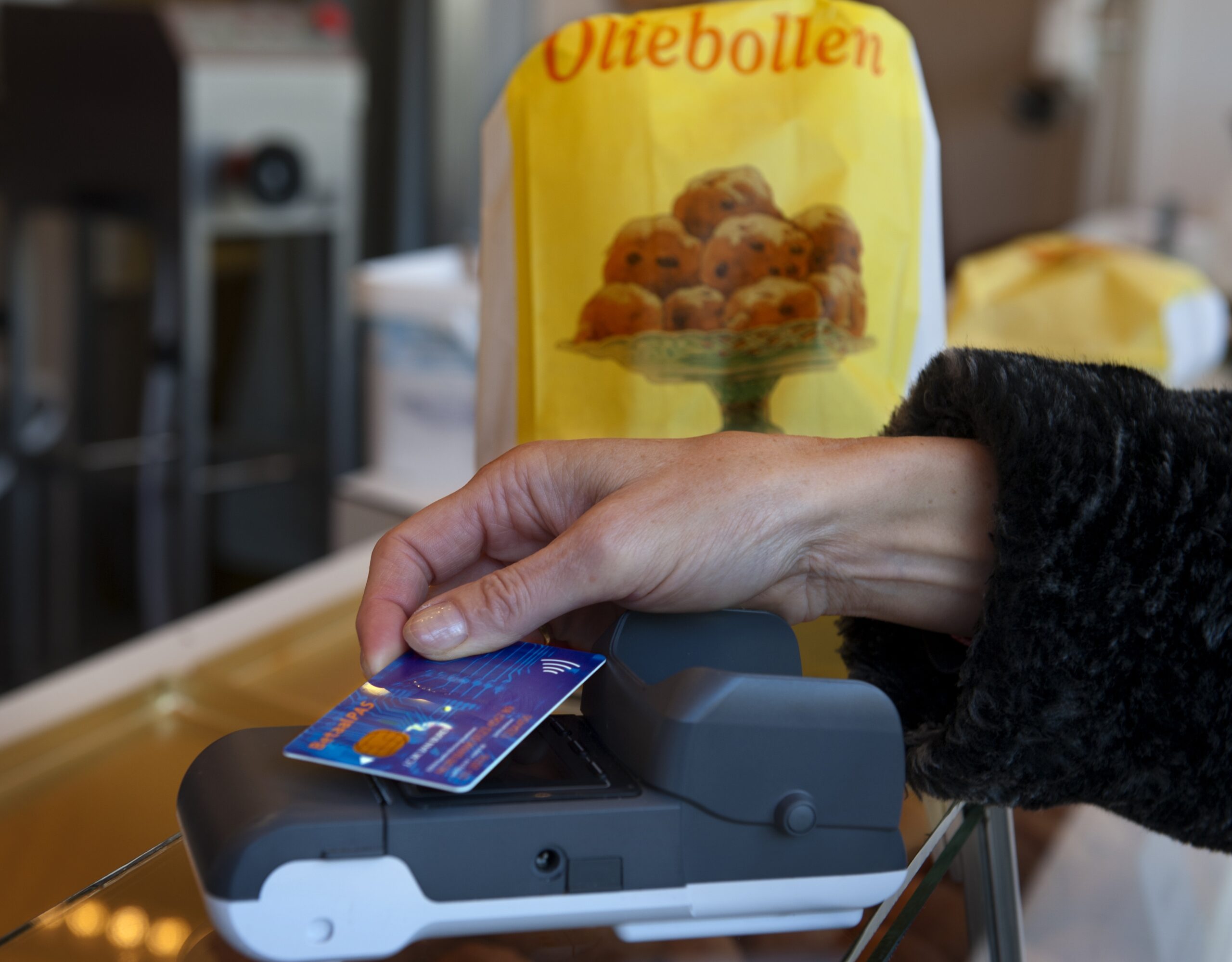
Customers had come to regard paying by debit card everywhere as entirely normal and often no longer carried cash. Whenever possible, they therefore preferred to pay for their oliebollen — traditional Dutch doughnuts — by debit card too. This was possible at 147 of the 369 stalls visited, almost 40%. Oliebollen stalls were rapidly catching up in accepting debit card payments. Flevoland, Utrecht, North Holland, South Holland and Overijssel scored well above average. In the southern half of the country and in Drenthe, customers had fewer opportunities to pay by debit card at stalls.
Every second counts
It was often not clear that debit card payments were accepted at a stall, as the payment terminal was out of sight and promotional material was frequently absent. Another notable finding was that many stalls accepted contactless payments(opens in new window) (in Dutch). Customers made these payments by briefly holding their debit card or mobile phone against the payment terminal. A PIN was usually not required for amounts up to and including €25. This fast and easy payment method is ideal wherever speed matters, especially at oliebollen stalls at that time of year. They were often so busy that every second counted.
On the rise
Contactless payments were on the rise. More than 14.5 million debit cards and mobile phones that consumers could use for contactless payments were in circulation. Not all consumers realised they had a contactless card; these cards could be identified by the contactless payment symbol(opens in new window) (in Dutch), which resembles a Wi-Fi symbol. The cards could, of course, also be used for regular debit card payments. More than a third of the 300,000 payment terminals in use supported contactless payments, and that number was growing every day.
High marks for oliebollen
The survey looked at more than whether stalls accepted debit cards. It also provided information about the price and taste of the oliebollen. On average, stalls scored 7.7 for taste and almost 8 for appearance. The average price of an oliebol with currants was €0.91 and one without currants cost €0.89. A bag of ten oliebollen with currants cost an average of €8.25. They were most expensive in Limburg and North Brabant and least expensive in Friesland. Results for each stall were available at www.oliebollenkaart.nl.
How the survey was conducted
The survey of oliebollen stalls was conducted by Roamler, a smartphone application that mobilised consumers to carry out paid retail audits. This method was used to visit hundreds of supermarkets, chemists and hospitality venues every day and assess matters such as availability, promotions and freshness. Consumers earned money while doing their shopping.
Related articles
-
Dutch abroad pay most with cards in Spanish hospitality
-
News
-
Card payments
-
-

High confidence in Dutch payment system
-
News
-
Card payments
-
-
Checking In and Out on Public Transportation Is Now Even Smoother with Your Smartphone
-
News
-
Card payments
-
-
More travelers very satisfied about traveling with payment card
-
Press release
-
Card payments
-
-
Six out of ten retail business owners say they are prepared for card payments failures
-
News
-
Card payments
-
-
Make sure you have (digital) fallback options in case of a potential card payments failure!
-
News
-
Card payments
-