
Payment fraud losses fall sharply again
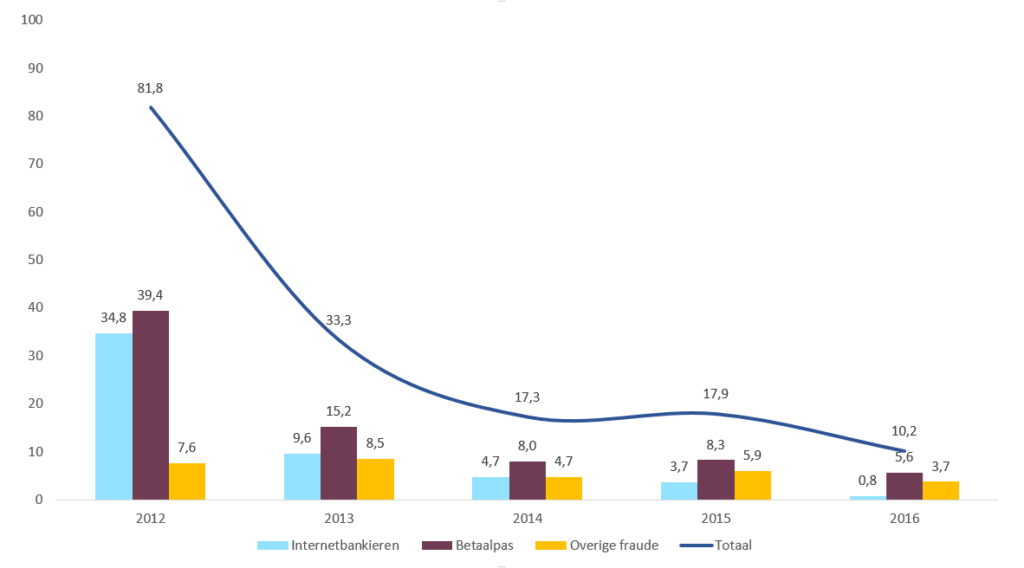
Losses from fraud in payments fell by 43% in 2016, from €17.9 million to €10.2 million, according to figures from the Dutch Payments Association and the Dutch Banking Association.
The largest decrease was in online banking fraud, where losses fell by 78% to €822,000. Banks reimbursed victims for 98.6% of that amount. Losses from debit card fraud fell by 32% to €5.6 million.
Consumers more aware of risks
The decrease in losses from online banking fraud shows that banks are becoming increasingly successful at detecting fraud in time. Consumers are also becoming more aware of potential risks. The advice for debit cards remains the same: never let your debit card out of your possession, never send it by post, and never disclose your login details or PIN to anyone, including by telephone, email, messaging apps or social media.
Importance of effective cooperation
Effective cooperation and the sharing of knowledge and information between financial institutions, cybersecurity companies and public authorities also play an important role in reducing fraud in payments. Within the National Cyber Security Centre and the Financial Institutions Information Sharing and Analysis Centre, this cooperation focuses mainly on preventing and detecting cybercrime. In the Electronic Crimes Task Force, the judiciary, police and banks work together to investigate and prosecute cybercriminals. Other EU countries are very interested in this collective Dutch approach to cybersecurity.
Banks also help combat non-banking fraud
Despite banks’ success in limiting fraud in payments, vigilance remains essential. Criminals are increasingly targeting other, non-banking forms of fraud, such as scams on online marketplaces and invoice fraud. To prevent incorrect transfers and invoice fraud, Dutch banks are offering their customers the IBAN Name Check. This innovative service checks the beneficiary name entered by the customer when making a transfer through online or mobile banking. Rabobank developed the IBAN Name Check and will introduce it in the second quarter of 2017, with the other banks to follow. Dutch banks are leading Europe with this service.
Related articles
-

The Payments Association at GDC26: digital identity and payments
-
News
-
Digital identity
-
-

Industry organisations: involve the financial sector in the roll-out of digital wallets
-
News
-
Digital identity
-
-
Digital Resilience and AI
-
News
-
Digital identity
-
-
Workshop on agentic payments and the EUDI Wallet
-
News
-
Digital identity
-
-

BIC and identifier ‘SNNNNL2A’ added to the SEPA BIC list
-
IBAN/BIC list
-
IBAN and BIC
-
-
Tackling ATM attacks with ink, glue and synthetic DNA
-
News
-
Cash payments
-