Mobile payments on the rise
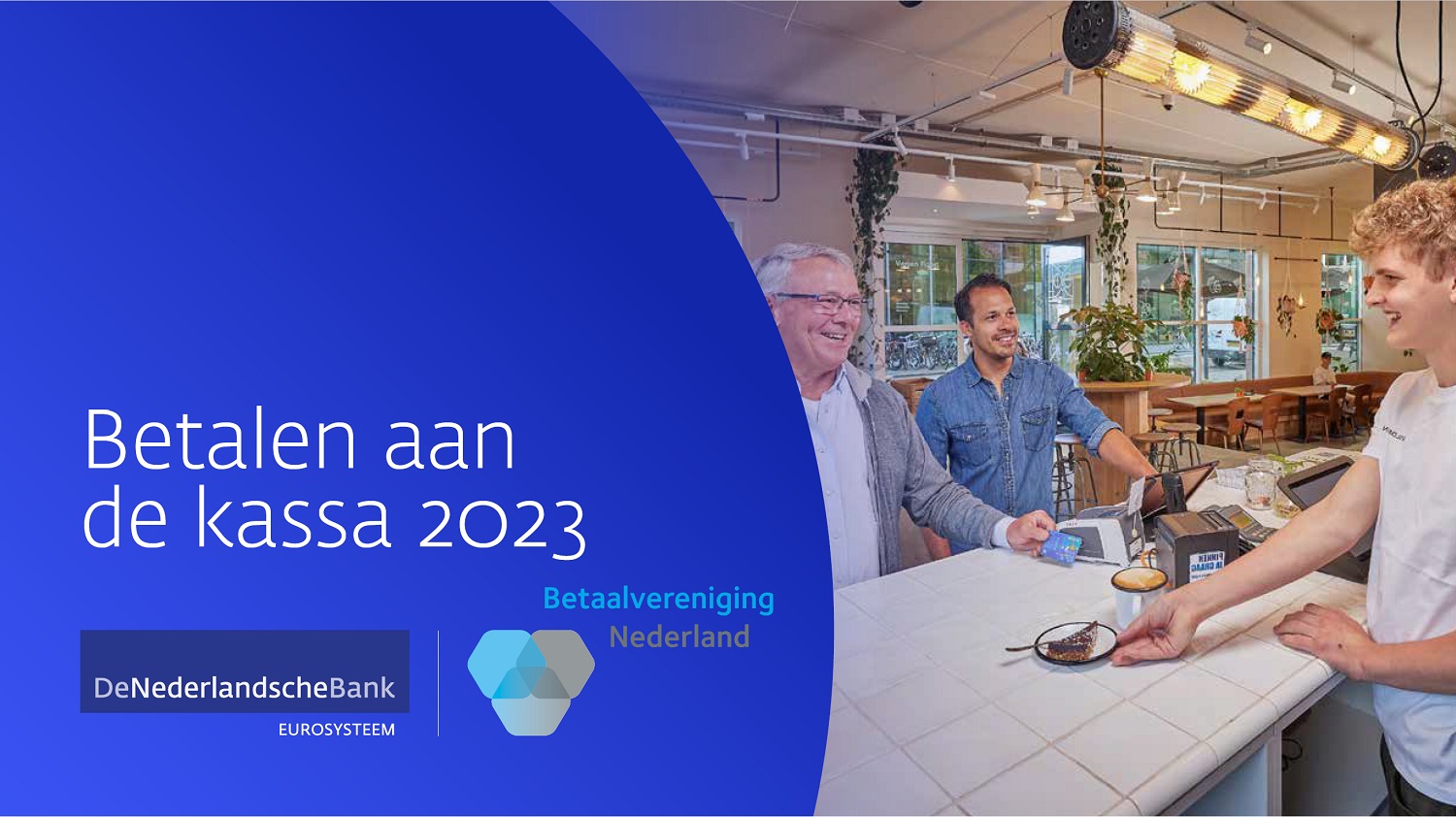
More than seven out of 10 payments at the checkout will be contactless by 2023. More and more contactless payments are made with a mobile phone or smartwatch, without a physical debit card. The traditional insertion of a debit card we do less and less. This is according to annual joint research by Betaalvereniging Nederland and De Nederlandsche Bank.
Mobile payments increasingly popular, at the expense of other debit card methods
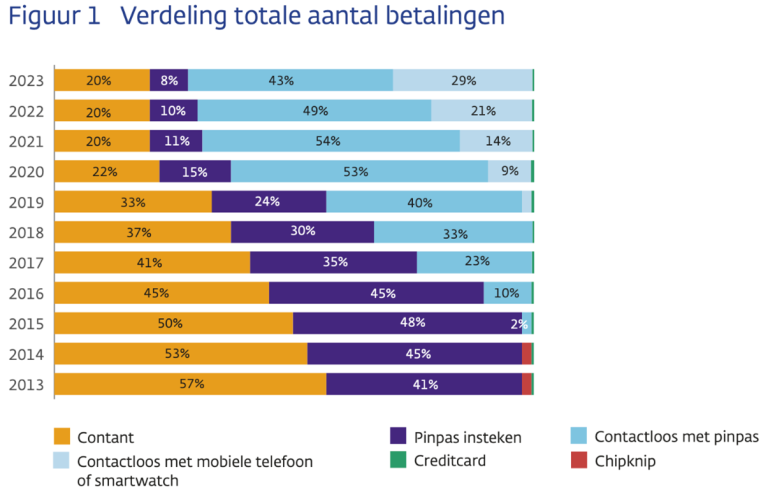
The share of contactless payments at the checkout with a mobile phone or smartwatch has increased sharply, from 21% in 2022 to 29% in 2023. In particular, this increase has come at the expense of the share of debit card payments, both contactless and by inserting the debit card. This shift will also be visible throughout 2023: in the first month of 2023, 23% of all POS payments were paid by mobile or smartwatch, while in the last month of the year this was 33%. If this trend continues, contactless payment with mobile or smartwatch will be the most commonly used way to pay at the checkout during 2024.
The higher the amount, the more often we keep inserting our debit card
The proportion of payments at the checkout where a debit card is inserted has fallen by a fifth, from 10% to 8%. Use depends partly on the amount. In 2023, for instance, for amounts lower than €5, the debit card was inserted into the payment terminal in only 4% of purchases. For amounts between €20 and €50, this happened more than twice as often (9%) and for amounts higher than €50 even four times as often (18%). A possible explanation for the relatively high proportion of inserted debit cards for amounts above €50 is that not so long ago, we were always obliged to insert our debit cards for those amounts. Some consumers continue to do so habitually, even though in principle it is no longer necessary.
Especially at petrol stations, payments were often made this way: more than one in four payments (26%) were made there by inserting a debit card into the payment terminal. There are two possible explanations for this: on the one hand, relatively often more than €50 is paid for fuel, and on the other hand, contactless payment at many unstaffed petrol stations has not been introduced very long ago; we are not yet used to making contactless payments there.
We use cash relatively often for small amounts
A quarter of the amounts below €5 were paid at the checkout with cash (25%). For amounts between €50 and €100, this was almost half as much (13%). Above €100, 16% paid with cash. This is slightly more frequent than in 2022. The use of cash is stable; for three years now, two out of 10 purchases at the shop checkout have been paid with cash.
See the full fact sheet Paying at the Checkout 2023, with all the results of the joint survey by DNB and the Payments Association on the use of cash and electronic payment methods in the Netherlands, for payments at the checkout and mutual payments in 2023.
Related articles
-
Stakeholder Forum looks (far) ahead
-
News
-
European legislation
-
-
DNB presents ‘Payments Strategy’ until 2028
-
News
-
Availability and disruptions
-
-
Arjan Bol on Radio 5 about deferred card payments
-
News
-
Availability and disruptions
-
-

Super-fast and secure transfers between all euro countries from now on
-
News
-
Market infrastructure
-
-
New agreements should improve access to business checking account
-
News
-
Special accounts and services
-
-

Continued growth of instant payments
-
News
-
Account-to-Account payments
-