
Launch of IBAN Acceptgiro
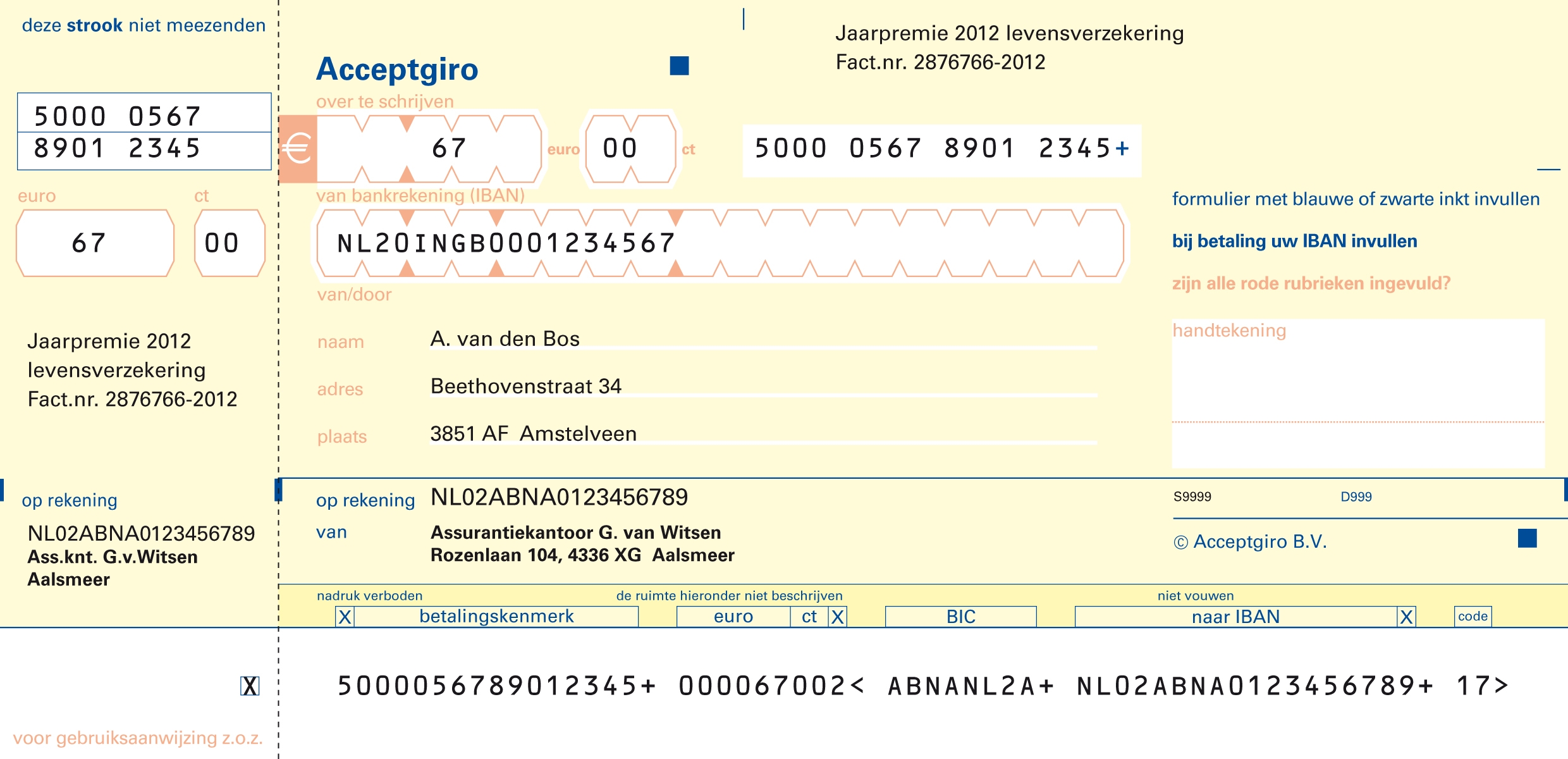
IBAN Acceptgiro launches today: an important step towards IBAN payments
The Netherlands is taking another important step towards IBAN payments. From today, 1 July 2013, certified organisations, including Acceptgiro printers, service agencies and creditors, may issue IBAN Acceptgiros. Acceptgiro has been adapted for IBAN, and the new form is called the IBAN Acceptgiro.
There is no point delaying
Businesses that have not yet moved from Acceptgiro to IBAN Acceptgiro should begin preparing now. There is no point delaying, as the necessary adjustments can easily take several months. After 31 December 2013, businesses may no longer issue the old Acceptgiro and must have switched to the IBAN Acceptgiro or an alternative.
Two types of Acceptgiro temporarily
Businesses decide when to move from the Acceptgiro to the IBAN Acceptgiro or an alternative. Between 1 July and 1 January 2014, the IBAN Acceptgiro and the old Acceptgiro will exist side by side in a dual period.
Consequences for consumers
The dual period affects consumers because they may receive two types of Acceptgiro that must be paid in different ways. One company, association or foundation may issue an IBAN Acceptgiro, in which case the consumer uses an IBAN for the payment. Another company may issue the current Acceptgiro, which consumers pay using the account number they have used until now. It is therefore important for consumers, members and donors to know which type they have received. If they use the wrong number, the Acceptgiro may not be processed.
Features of the IBAN Acceptgiro
Consumers can recognise an IBAN Acceptgiro by nine features. The principal difference from the current Acceptgiro is the number of boxes for the account number: the Acceptgiro has ten, while the IBAN Acceptgiro has eighteen. More information is available on the English Acceptgiro page or from your bank.
A list of articles
-
Pay-by-Bank, what is it?
-
News
-
Online payments
-
-
A2A payments continue to grow
-
News
-
Online payments
-
-
Your bank is always nearby!
-
News
-
Payments for all
-
Related articles
-
Pay-by-Bank, what is it?
-
News
-
Online payments
-
-
A2A payments continue to grow
-
News
-
Online payments
-
-

High confidence in Dutch payment system
-
News
-
Card payments
-
-

BIC and identifier ‘SNNNNL2A’ added to the SEPA BIC list
-
IBAN/BIC list
-
IBAN and BIC
-
-
BIC and identifier ‘BUXANL22’ added to the SEPA BIC list
-
IBAN/BIC list
-
IBAN and BIC
-
-
BIC and Identifier “XTAFNL2A” Added to the SEPA BIC List
-
IBAN/BIC list
-
IBAN and BIC
-