
Do not use the last ten digits of a Dutch IBAN separately from 2020
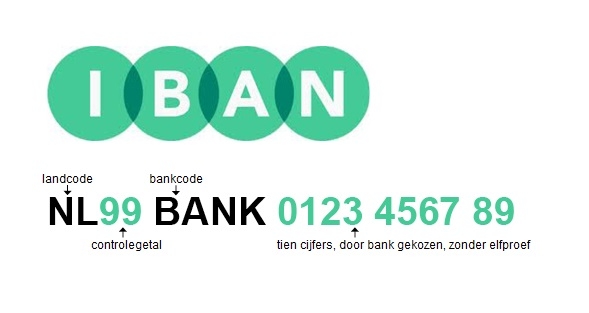
From 1 January 2020, each Dutch bank will be able to determine the last ten digits of a new IBAN itself. At present, those last ten digits are allocated from a central Dutch pool of unique ten-digit numbers that satisfy the so-called eleven test. This system will end in 2020, meaning these numbers will no longer be guaranteed to be unique for each IBAN. They will no longer need to satisfy the eleven test either.

UPDATE 1 July 2020: supplementary Dutch agreements on NL IBANs have expired
UPDATE 29 April 2019: revised date for banks to begin issuing their own IBANs
Ending conversion and the eleven test
Dutch IBANs, which consist of 18 digits and letters, must no longer be truncated to the final ten digits. Conversely, old Dutch account numbers of ten digits or fewer must no longer be converted automatically into full IBANs. Continuing to do so can cause errors when Dutch IBANs are processed and may even result in payments being sent to the wrong accounts or beneficiaries. The eleven test was already redundant for IBANs and must now be discontinued altogether.
Every complete Dutch IBAN of 18 digits and letters will, of course, remain unique. In addition, every valid IBAN already satisfies a mod-97 check, making the eleven test unnecessary. Ending the central allocation of the last ten digits of each Dutch IBAN and abolishing the eleven test will bring the Netherlands fully into line with the international IBAN standard from 2020.
Update administrative systems in time
This change has no consequences for personal account holders, and existing IBANs will not change. Businesses may, however, notice the change. Some administrative systems were only partially updated when IBAN was introduced in 2014. As a result, these systems work correctly only with Dutch IBANs whose final ten digits are unique for each bank account. They also still apply the eleven test. These administrative systems must be updated before 2020 so that complete IBANs are processed correctly and consistently everywhere.
The Dutch Payments Association calls on business users and software companies to review their systems and processes promptly and update them where necessary. All IBAN input fields must allow 18 positions for Dutch IBANs and up to 34 positions for foreign IBANs. The validity of an IBAN entered must be checked only with the mod-97 calculation.
Greater efficiency through a wider range of account numbers
Full alignment with the international IBAN standard, without restrictions, is necessary to meet the rapidly growing demand for account numbers. Under the new approach, each bank or payment institution will be able to issue IBANs itself, and IBANs belonging to closed accounts will not need to be reused far into the future. This wider range will allow businesses in particular to manage their cash flows more efficiently with multiple virtual bank accounts.
Business banking customers can contact their bank or the Dutch Payments Association for more information.
Related articles
-

High confidence in Dutch payment system
-
News
-
Card payments
-
-

BIC and identifier ‘SNNNNL2A’ added to the SEPA BIC list
-
IBAN/BIC list
-
IBAN and BIC
-
-
BIC and identifier ‘BUXANL22’ added to the SEPA BIC list
-
IBAN/BIC list
-
IBAN and BIC
-
-
BIC and Identifier “XTAFNL2A” Added to the SEPA BIC List
-
IBAN/BIC list
-
IBAN and BIC
-
-
New bank account numbers Dutch Tax Administration
-
News
-
Account-to-Account payments
-
-

BIC List Now Accessible
-
News
-
IBAN and BIC
-