
COVID-19 causes mixed online consumer spending in Q1 2020
Travel sector hit hard, strong growth in most product categories
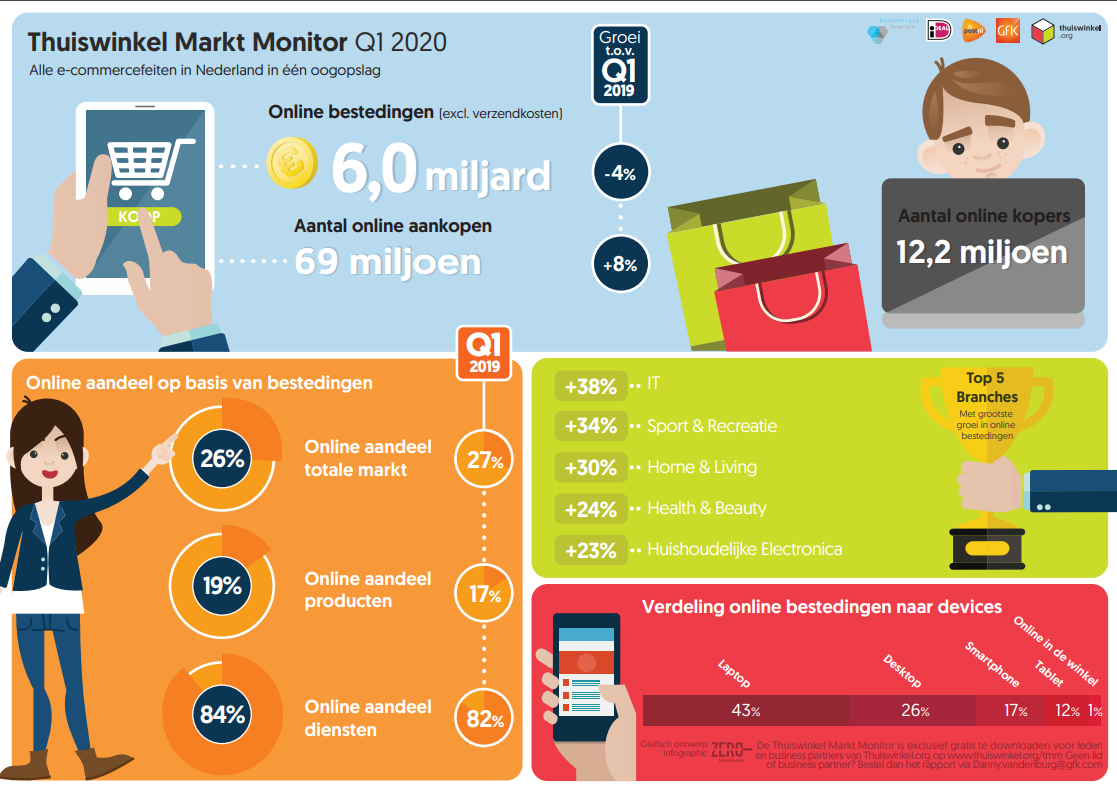
The impact of the COVID-19 outbreak on online consumer spending was already evident in the first quarter of 2020. The travel sector was particularly badly affected, causing total online spending to fall for the first time in years: down 4% to €6.0 billion. The number of online purchases did increase, rising by 8% to 69 million. These figures come from the latest edition of the Thuiswinkel Market Monitor, the study of online consumer spending in the Netherlands. The study is conducted by GfK on behalf of Thuiswinkel.org and Retail Insiders , in collaboration with PostNL , the Dutch Payments Association and Currence .
The decline in online consumer spending was mainly caused by the sharp fall in spending on services in the first quarter (-29%). Spending on products grew by 19%. This growth in product spending was not enough to offset the decline in services, resulting in negative overall growth in the first quarter of 2020. The number of online purchases shows a similar picture: consumers made 30% fewer online purchases of services than in the first quarter of 2019, while the various product categories grew by an average of 17%. Overall growth in the number of purchases was nevertheless positive, as services account for only 10% of the online market by number of purchases.
Travel sector down, most products up
The categories hit hardest in the first three months of 2020 were tickets for attractions and events, package holidays, and standalone flights and accommodation. The COVID-19 restrictions caused the number of buyers in this sector to fall sharply. Online spending on package holidays, for example, fell by 50% compared with the same period a year earlier, while spending on standalone flights and accommodation declined by 28%.
The picture was different for products. With the exception of clothing, online spending grew in every product category. The strongest growth was recorded in IT (+38%), sports and recreation (+34%), home and living (+30%), and food and near-food (+23%). More Dutch consumers also started buying online in these categories, and the number of online purchases increased.
COVID-19 already having a major impact on online spending in Q1
“Although the Netherlands had only entered a partial lockdown and it did not take effect until mid-March, COVID-19 had already had a major impact on online consumer spending in the first quarter of this year,” says Wijnand Jongen, Managing Director of Thuiswinkel.org. “The main reason is the disappearance of demand for travel and related products and services. This was already being felt in February, as the coronavirus was spreading in other countries by then. The partial lockdown did drive growth in online spending on and purchases of products in the first quarter, but this will become particularly noticeable in the second quarter.”
iDEAL continues to grow as the leading payment method
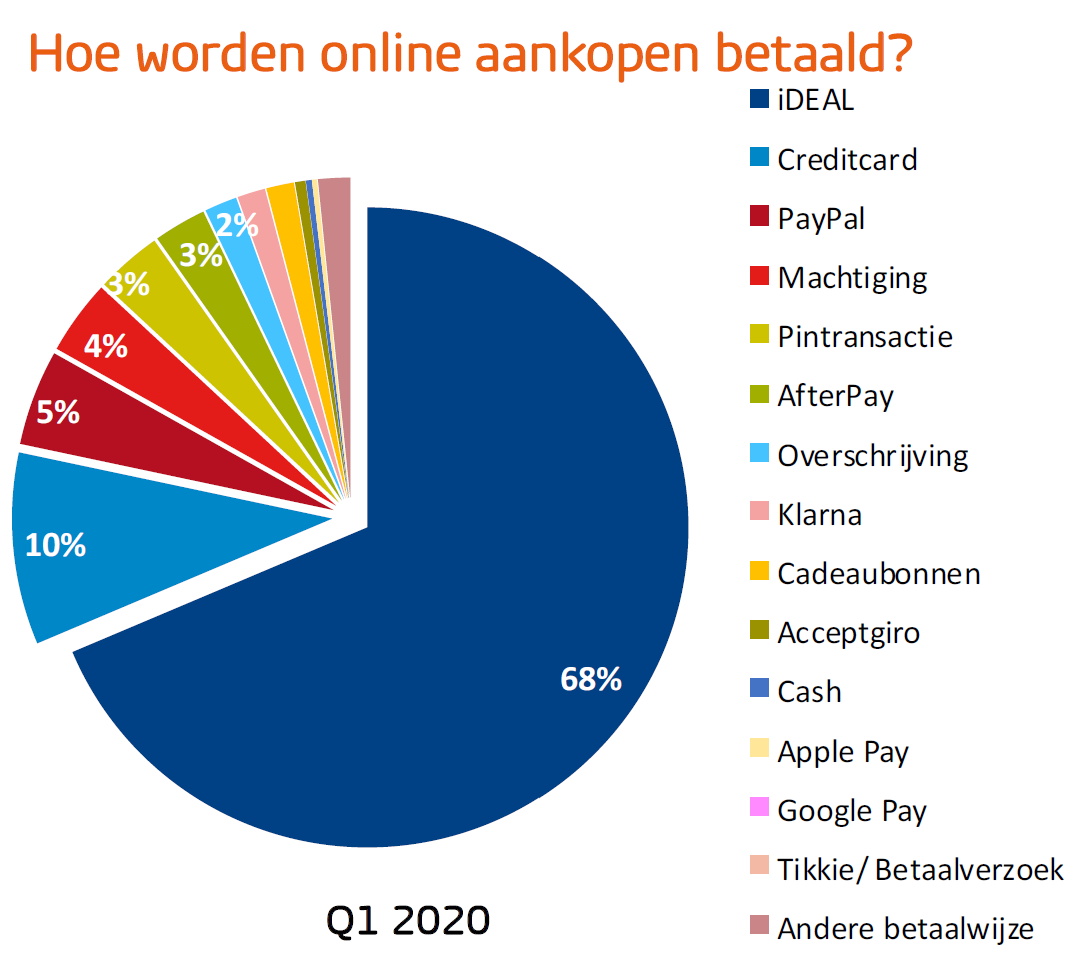
iDEAL remained as popular as ever among payment methods. Its share of online spending rose from 59% to 68%, as products came to account for a larger proportion of total online spending. The sharp fall in online spending on services greatly changed the balance between services and products. It was 51% versus 49% in the first quarter of 2019 and 63% versus 47% in the first months of 2020.
Purchases by smartphone on the rise
The proportion of consumers using a smartphone to make an online purchase also continued to rise this quarter. In the first quarter of last year, 37% of online buyers had purchased something using their phone; this year the figure was 42%. Laptops remained the most popular device, although the proportion of people using one for an online purchase fell slightly from 50% to 49%.
Download the Thuiswinkel Market Monitor Q1 2020 infographic
Related articles
-
Pay-by-Bank, what is it?
-
News
-
Online payments
-
-
A2A payments continue to grow
-
News
-
Online payments
-
-
Dutch abroad pay most with cards in Spanish hospitality
-
News
-
Card payments
-
-

High confidence in Dutch payment system
-
News
-
Card payments
-
-
Next Phase of iDEAL Migration to Wero Begins in October
-
News
-
Online payments
-
-

Lower travel spending is putting pressure on overall online spending
-
News
-
Online payments
-