
Who will decide how to pay, AI or the customer?
That is one of the questions addressed in the first ‘Payments Trend Report‘ from the Dutch Payments Association. People who ask AI for news and information increasingly only read the AI summary rather than consulting the original sources. According to the trend report, something similar could happen with online purchases: in the future, an AI assistant might choose how and when you pay. As a result, the actual payment process would shift to the background even more for the customer.
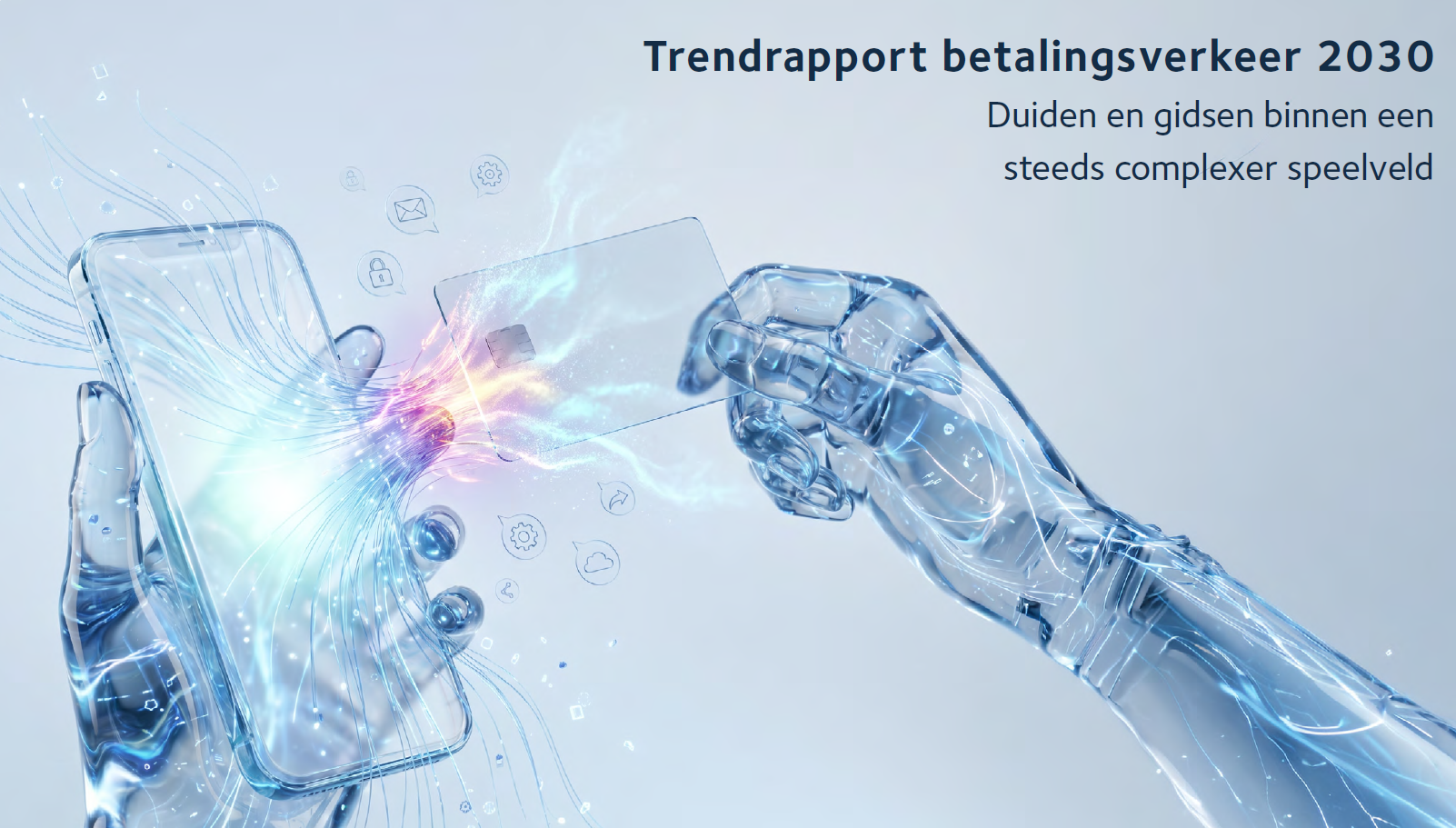
The trend report outlines this as one of thirteen possible trends leading up to 2030 and beyond. AI could play an increasingly significant role in this trend. In AI-assisted commerce, AI helps compare options and make choices, but ultimately the customer decides what to buy and how to pay. In agentic commerce, AI is given a broad mandate — such as monitoring a budget or selecting the best deals — and acts on it independently. The human user sets the goals and parameters, and the AI then independently determines which services or products to order on the customer’s behalf and even how and when to pay for them.
Level Playing Field
The trend report also shows how customer relationships and commercial value within payment chains may shift further toward non-European fintechs and platforms. As a result of AI, digitization, and an increasing number of international players, the payments market is changing rapidly and competition is intensifying. Precisely in such an increasingly international market, providers must be able to compete under the same conditions and obligations throughout the EU as much as possible.
Arjan Bol, general manager of the Dutch Payments Association: “We see further fragmentation of the European payments landscape, with more global players capturing a piece of the value chain and profiting from it. Large non-European service providers benefit from the robust infrastructure that is primarily developed, maintained, and funded by European banks and payment institutions, yet they do not bear the same social burdens and responsibilities. Regulation must ensure a level playing field within the EU.”
Trend Radar and Future Scenarios
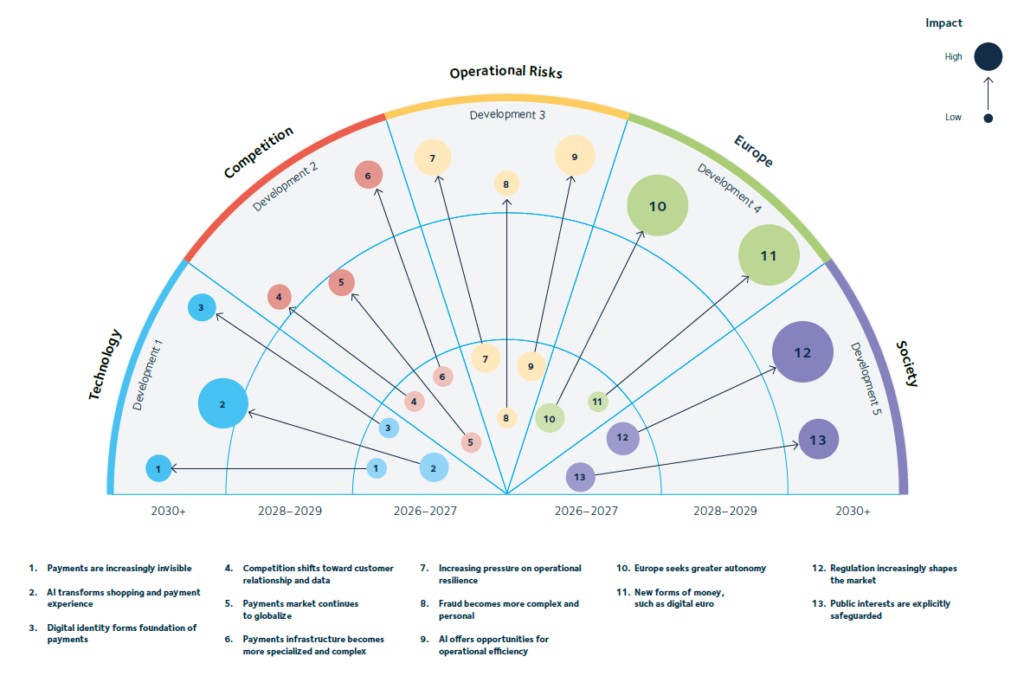
The Payments Trend Report 2030 also features a clear trend radar that provides an overview of all thirteen trends, grouped into five broad developments in the Dutch and European collective payments sector. The trend radar shows at a glance what impact each trend could have on the payments sector and when. Finally, the trend report outlines four strategic future scenarios that address the opportunities and challenges posed by all these developments and trends.
Related articles
-

‘Don’t be fooled online’: Dutch awareness campaign
-
News
-
Online payments
-
-
Card payments at Albert Heijn and other shops are secure!
-
News
-
Card payments
-
-
Pay-by-Bank, what is it?
-
News
-
Online payments
-
-
A2A payments continue to grow
-
News
-
Online payments
-
-

Dutch abroad pay most with cards in Spanish hospitality
-
News
-
Card payments
-
-

Cross-border online purchases continue to grow: now one in seven
-
News
-
Online payments
-