
Cross-border online purchases continue to grow: now one in seven
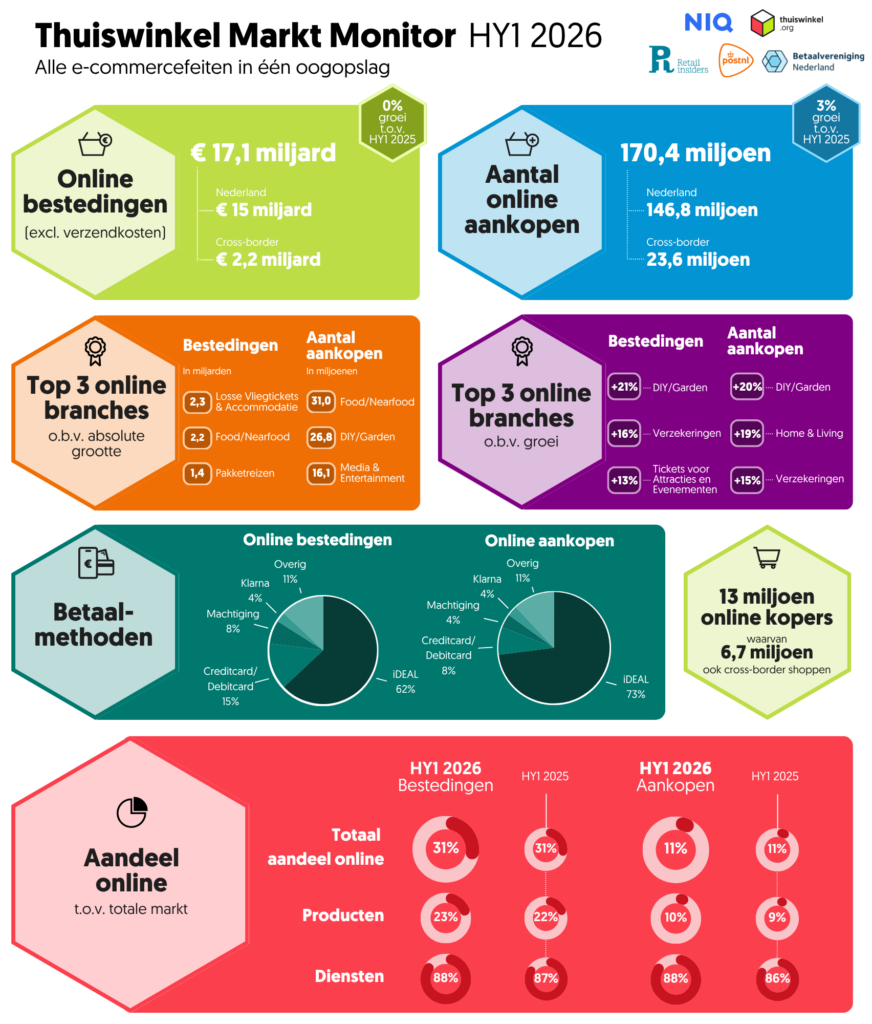
Dutch consumers made more than 170 million online purchases in the first half of 2026, up 3% on a year earlier. Total online spending remained virtually unchanged at €17.1 billion. The average amount spent per purchase was therefore €100. For the first time since COVID, spending per online order fell, down 3% compared with the same period last year. An increasing share of online purchases is made from foreign webshops. Over the past year, the share of cross-border purchases rose to 14%, representing 23.6 million purchases. These are the latest findings from the Thuiswinkel Markt Monitor, a study of online consumer purchases in the Netherlands. The research is carried out by NielsenIQ (NIQ), commissioned by Thuiswinkel.org and Retail Insiders, in collaboration with PostNL and the Dutch Payments Association.
Growth in products, decline in services
Growth in the online market is entirely driven by products. Online spending on products rose by 2% to €10.9 billion, while the number of online product purchases increased by 4% to 147 million. DIY/Garden stood out in particular, with online spending up 21% and the number of online purchases up 20%. This was mainly due to strong growth in power garden tools, garden furniture and decorative paving, possibly helped by favourable spring weather.

Compared with the first half of 2025, online spending on services fell by 3% to €6.3 billion, while the number of online service purchases fell by 5% to 23 million. The decline was mainly driven by the travel sector. Both spending and the number of purchases fell for flights and accommodation booked separately, as well as for package holidays. This downward trend has been evident since early 2025.
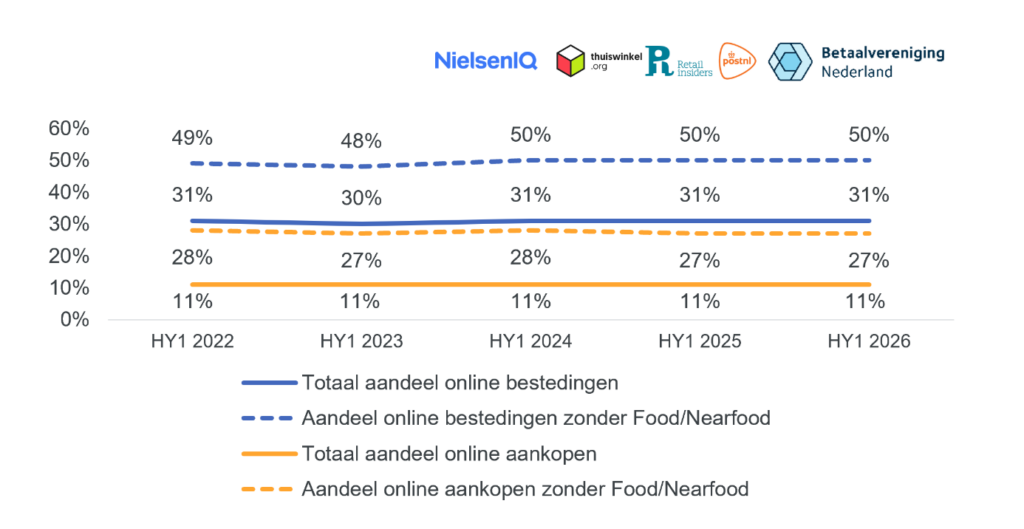
For several years, online purchases have accounted for 11% of all consumer purchases. The online share of consumer spending also remained unchanged at 31%. Marlene ten Ham, director of Thuiswinkel.org, explains: “For many products, online has become an established sales channel. However, this is not yet the case for groceries, the largest category by number of purchases, which brings down the overall online share. Excluding this category makes clear just how important online shopping has become: consumers then spend half their money online, while more than a quarter of all purchases are made over the internet.”
Cross-border online purchases continue to grow
The share of purchases from foreign webshops has grown for several years in a row. In the first half of 2026, 14% of all online purchases were made abroad, compared with 10% in 2022. China showed the strongest growth and is the country where Dutch consumers make the most cross-border online purchases. For DIY/Garden, Home & Living and Clothing, Chinese retailers are the most popular choice for Dutch consumers shopping across borders. Ten Ham: “Since 1 July, a €3 customs duty has applied to parcels from outside the EU. Until 1 July, parcels worth less than €150 were exempt. Removing this threshold ensures equal tax treatment, encourages bulk imports and strengthens enforcement. It protects consumers from products entering the market without proper checks. Customs figures for July and August show a decline in the number of small parcels arriving from outside the EU.”
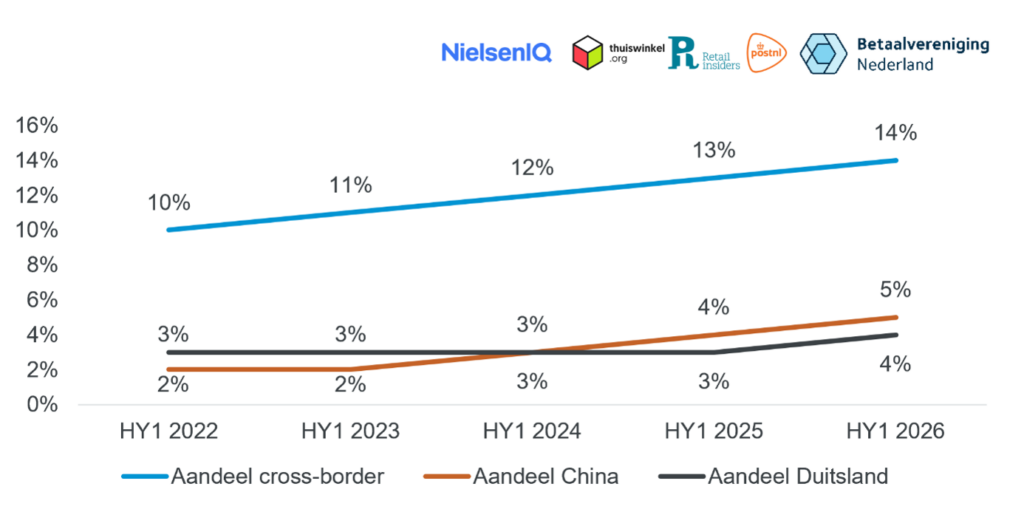
Figure 2. Trend in the share of cross-border online purchases (in Dutch).
Smartphones most used for online purchases
In the first half of 2026, 45% of online purchases were made using smartphones, compared with 42% using laptops and desktop computers. Smartphones have therefore become consumers’ most frequently used device for online shopping. Higher-value purchases are still more often made on a laptop or desktop computer. The average purchase value was €80 on a smartphone and €126 on a laptop or desktop computer.
Almost three quarters of online purchases paid for with iDEAL|Wero
iDEAL|Wero remained the most widely used online payment method, accounting for 73% of online purchases. Credit and debit cards followed with 8%. iDEAL|Wero was also by far the most widely used payment method for cross-border purchases, with a share of 56%. Credit and debit cards were used for 18% of cross-border online purchases.
Related articles
-
‘Don’t be fooled online’: Dutch awareness campaign
-
News
-
Online payments
-
-
Pay-by-Bank, what is it?
-
News
-
Online payments
-
-
A2A payments continue to grow
-
News
-
Online payments
-
-
Dutch abroad pay most with cards in Spanish hospitality
-
News
-
Card payments
-
-

High confidence in Dutch payment system
-
News
-
Card payments
-
-
Next Phase of iDEAL Migration to Wero Begins in October
-
News
-
Online payments
-