
Payments newsletter: Betaaljournaal 33

At Gijs Boudewijn’s memorable farewell on 15 May, I literally and figuratively took over from him. In recent weeks, I have already had the opportunity to meet many of our members and stakeholders. Among other things, I had the opportunity to explain the latest developments in collective payment transactions at the four largest municipalities in our country. During Money20/20, I addressed many domestic and foreign payments experts during a breakfast session. That same morning, I stood alongside several Dutch public transport representatives on the stage of the German public transport congress of Kontiki e.V. in Amsterdam. Everywhere I go, I notice that payments are in the spotlight. This well-filled 33rd Payment Journal testifies to that again.
The Netherlands leads the way in terms of safety, efficiency, accessibility and reliability of the collective payment system. Geopolitical, technological and other developments mean that we must continue to work closely with the various players in the payments system to keep it that way.
I wish everyone a happy sunny summer and I am already looking forward to introducing the next Payment Journal after the holidays.
Arjan Bol, managing director
- From 2026 ban on cash payments from €3000 onwards
- EU Digital Identity Wallet for payments appears to be in breach of PSD2 for now
- Growth in online spending on products for the first time in years
- Substantial steps taken for accessible payment services for consumers
- Digital euro plans could put huge strain on banks’ people and resources
- Payment cards umbrella organisation ECPA calls for European card sovereignty
- Prepare for major payment failure with good fallback options
- Credit card exemptions needed in new EU consumer credit legislation
- New Dutch chairman of EPC takes office
- About payments
- Also interesting
- Association news
- Agenda
From 2026 ban on cash payments above €3000

Cash payments of €3000 or higher are expected to be banned from 1 January 2026 at the latest. This ban will apply to the payment of goods to professional traders (such as shopkeepers). Private individuals will be allowed to continue paying amounts higher than €3000 in cash to each other.
EU Digital Identity Wallet for payments appears to conflict with PSD2 for now
The new European eIDAS 2.0 regulation for digital identification will require payment service providers (PSPs), among others, to accept EU Digital Identity Wallets (EUDIWs) for the purpose of Strong Customer Authentication (SCA) for payments. However, it seems unfeasible for PSPs to accept EUDIWs for two-factor authentication (2FA) on the one hand and meet the stringent SCA requirements in PSD2 and in the Regulatory Technical Standards (RTS) for SCA of the European Banking Authority (EBA) on the other.
The Payments Association is participating in a Large Scale Pilot (LSP) with EUDIWs in payments. Within this LSP of the so-called WE BUILD Consortium, we, with Visa as co-lead, have a coordinating role for the use case ‘consumer payments‘. With over 65 participating parties from all over Europe, we are working on pilots that show practical implementations of using the EUDI Wallet infrastructure in payment initiation. The project is expected to last two years.
Growth in online spending on products for the first time in years

Dutch consumers spent over €9 billion online in the first quarter of 2025, a growth of 4% compared to the same quarter in 2024; this growth comes mainly from spending on products ( 8%).
The average amount spent per online purchase rose 6% to €110.
Substantial steps taken towards accessible payment services for consumers

On 27 May, the Accessible Banking programme presented the joint ‘Plan of Action Intensifying Accessible Banking 2025 and Beyond’ at the Social Consultation on Payment Transactions (MOB). The plan focuses on improving the accessibility of banking and payment services. The MOB is confident that the extra efforts will have a positive impact.
Digital euro plans could put significant strain on banks’ people and resources
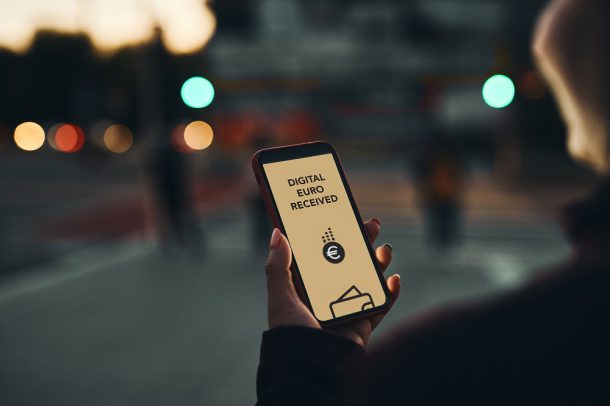
The European Commission (EC) is working on legislation to issue and use a digital euro to complement the cash euro of tangible coins and notes. The EC’s bill includes an implementation task for European banks. A study by consultancy PwC foresees a major impact on banks of the current plans for the digital euro.
Payment cards umbrella organisation ECPA calls for European card sovereignty
The European Card Payment Association (ECPA) has published its report ‘Safeguarding Europe’s Financial Future‘, on the crucial role of European national payment cards, including the French Cartes Bancaires and the German Girocard. The report shows that more than 263 million national payment cards were in circulation in the EU in 2024, making 31.5 billion payments.
Prepare for major payment disruption with good fallback options

The Maatschappelijk Overleg Betalingsverkeer (MOB), with Betaalvereniging Nederland and other participants, has issued advice for consumers and business owners on how they can prepare for payments emergencies that last for three days.
Credit card exemptions needed in new EU consumer credit legislation
credit legislation

Dutch credit card issuers are concerned about the future accessibility and cost of credit cards for consumers. Dutch credit cards are at risk of soon falling under revised EU consumer credit legislation, known as theConsumer Credit Directive 2, or CCD2. This would make credit cards significantly more expensive and out of reach for some consumers.
New Dutch chairman of EPC takes office

On 11 June, Gijs Boudewijn took office in Brussels as the new chairman of the European Payments Council (EPC). Boudewijn was director of Betaalvereniging Nederland until 1 June this year.
Association news
From 1 July, Volksbank and SNS will continue under the ASN Bank name and brand. RegioBank and BLG Wonen will continue for a while under their own names.
Revolut will join the Transfer Service for private individuals. From this summer, this will make it easier for consumers to switch to or from an account with Revolut, just like with other banks that have been participating in the Transfer Service for some time.
Agenda
- 3 July – Board meeting
- 4 September – Advisory Council
- 9 September – Payment Institutions Advisory Council
- 2 October – Board meeting
Member Bulletin
In addition to this Payment Journal, the Payments Association also publishes Member Bulletins. In these, we inform members about practical matters of interest. The bulletins usually appear a few times a month and relate to a specific topic. Are you a member but not yet receiving these bulletins? You can get yourself placed on the mailing list at secretariaat@betaalvereniging.nl.
Subscribe to Payment Journal
Also curious about the latest developments in payments? Stay informed via Betaaljournaal. You can register here.
Related articles
-
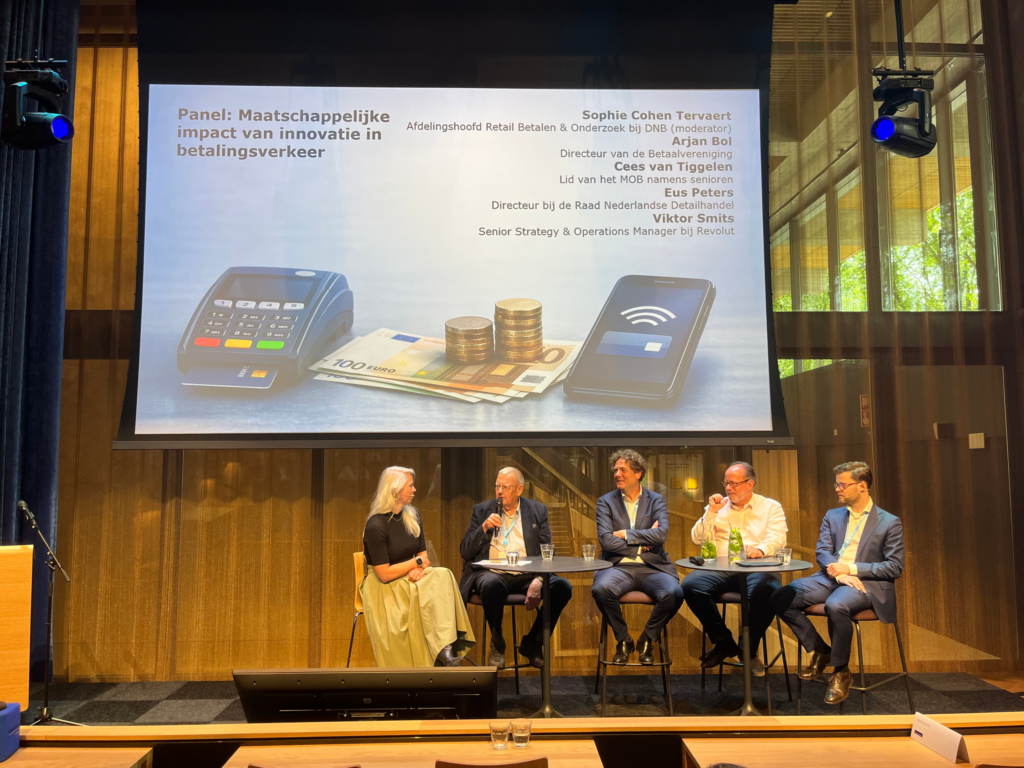
Innovation Takes Center Stage at Annual DNB Symposium on Payments
-
News
-
Payments for all
-
-
EU trilogue on the digital euro begins
-
News
-
European legislation
-
-

Accessible Banking Wins the ABC Trophy
-
News
-
Payments for all
-
-

The Digital Euro and Stablecoins: Apples and Oranges
-
News
-
European legislation
-
-

First online lunch session updates members on current developments in the payments sector
-
News
-
European legislation
-
-
Elderly increasingly pay with debit card
-
News
-
Card payments
-