Growing number of stakeholders in payments in 2018
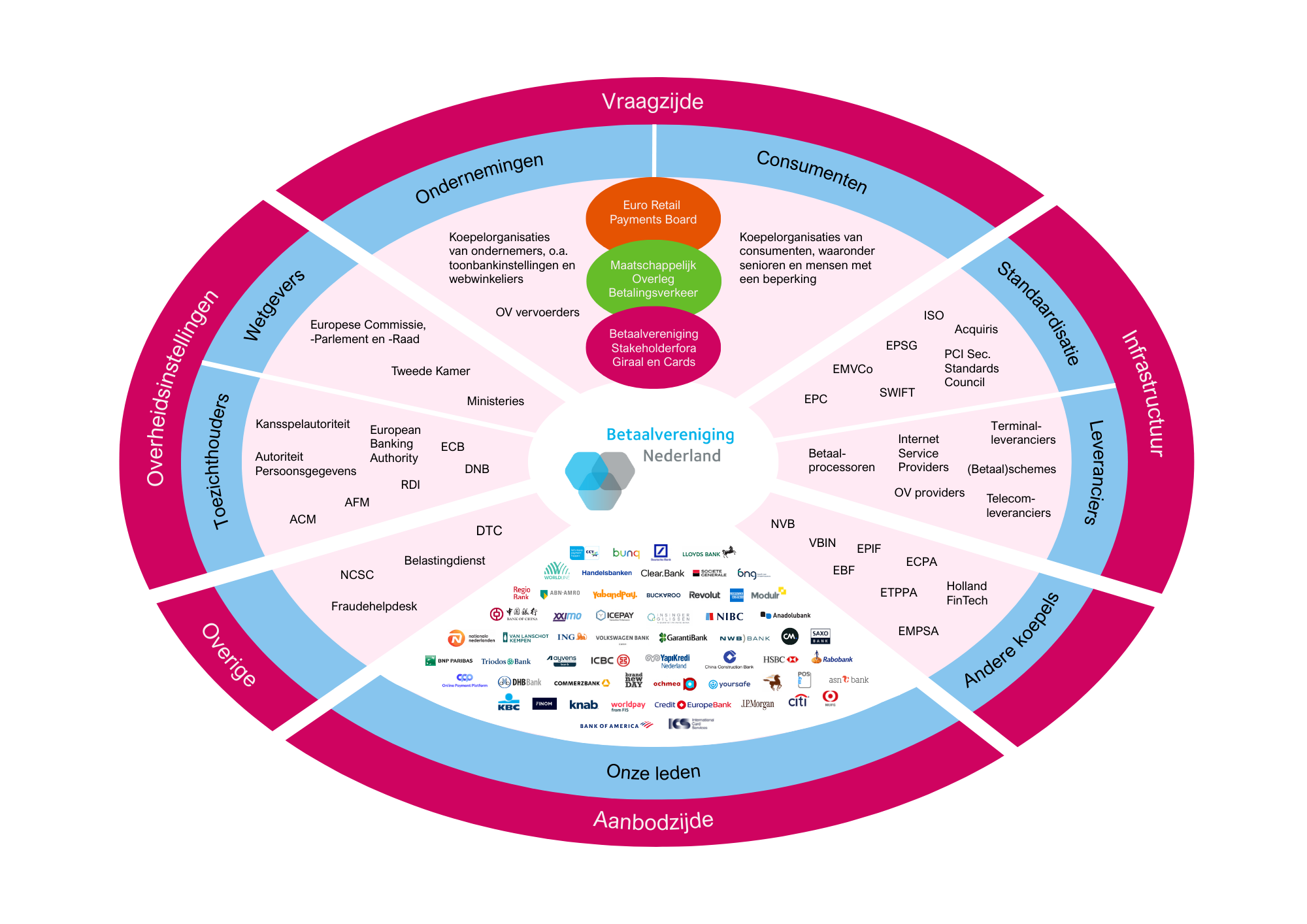
The number of stakeholders in payments continued to grow over the course of 2018. This was driven by new laws and regulations, further digitalisation, the rise of mobile payment apps and preparations for Instant Payments. The Dutch Payments Association’s 2018 annual report highlights the need to continue cooperating on non-competitive aspects of payments as competition and fragmentation increase.

PSD2 and GDPR
In 2018, payments were shaped in part by the introduction of the General Data Protection Regulation (GDPR) and the revised Payment Services Directive (PSD2). A key provision of PSD2 requires all European banks to give other regulated service providers digital access to the payment accounts of customers who have given their consent. Through this access, other service providers can initiate payments from a payment account or retrieve balance and transaction information, subject to the account holder’s consent. The GDPR particularly affects account information services covered by PSD2. “Although PSD2 did not enter into force until this year, it already prompted extensive public debate in 2018 among academics, journalists, consumer organisations, business organisations, elected representatives, supervisors and other stakeholders,” says Piet Mallekoote, director of the Dutch Payments Association.
Digitalisation, mobile technology and Instant Payments
The use of debit cards and credit cards continues to increase, including for retailer refunds to consumers via reverse card payments. As a result, fewer cash payments are being made at points of sale. Contactless payments and the range of payment instruments that support them—such as smartphones and jewellery—continue to grow. In 2018, more than half of all debit card payments were contactless.
Most credit transfers and online payments are now initiated on smartphones or tablets, putting the Netherlands at the forefront in Europe. Consumers are increasingly using smartphones to make payments to one another, including through convenient payment requests shared via social media. Several new mobile payment service providers entered the market in 2018.
By mid-2019, customers of seven Dutch banks will be able to transfer money to each other within five seconds via mobile and internet banking, including to recipients at other banks, in the evenings, at weekends and on public holidays. The Dutch Payments Association coordinates the collective development and rollout of Instant Payments in the Netherlands. Instant Payments are on the agenda in most European countries. The Netherlands stands out for its large-scale collective approach involving all stakeholders. Ahead of the rollout of Instant Payments, existing and new payment service providers were able to prepare for them in 2018.
Read the Dutch Payments Association’s full 2018 annual report…
Visit the Dutch Payments Association’s online factsheet on Dutch payments in 2018…
Related articles
-

The Payments Association at GDC26: digital identity and payments
-
News
-
Digital identity
-
-

High confidence in Dutch payment system
-
News
-
Card payments
-
-
Make digital euro useful, simple and affordable
-
News
-
European legislation
-
-

Industry organisations: involve the financial sector in the roll-out of digital wallets
-
News
-
Digital identity
-
-
EU trilogue on the digital euro begins
-
News
-
European legislation
-
-
Next Phase of iDEAL Migration to Wero Begins in October
-
News
-
Online payments
-