
Point-of-sale payments in 2019: shift from cash to debit cards continues
In 2019, consumers in the Netherlands paid for 32% of their purchases at shops, hospitality businesses and similar locations in cash. This was down from 37% in 2018.
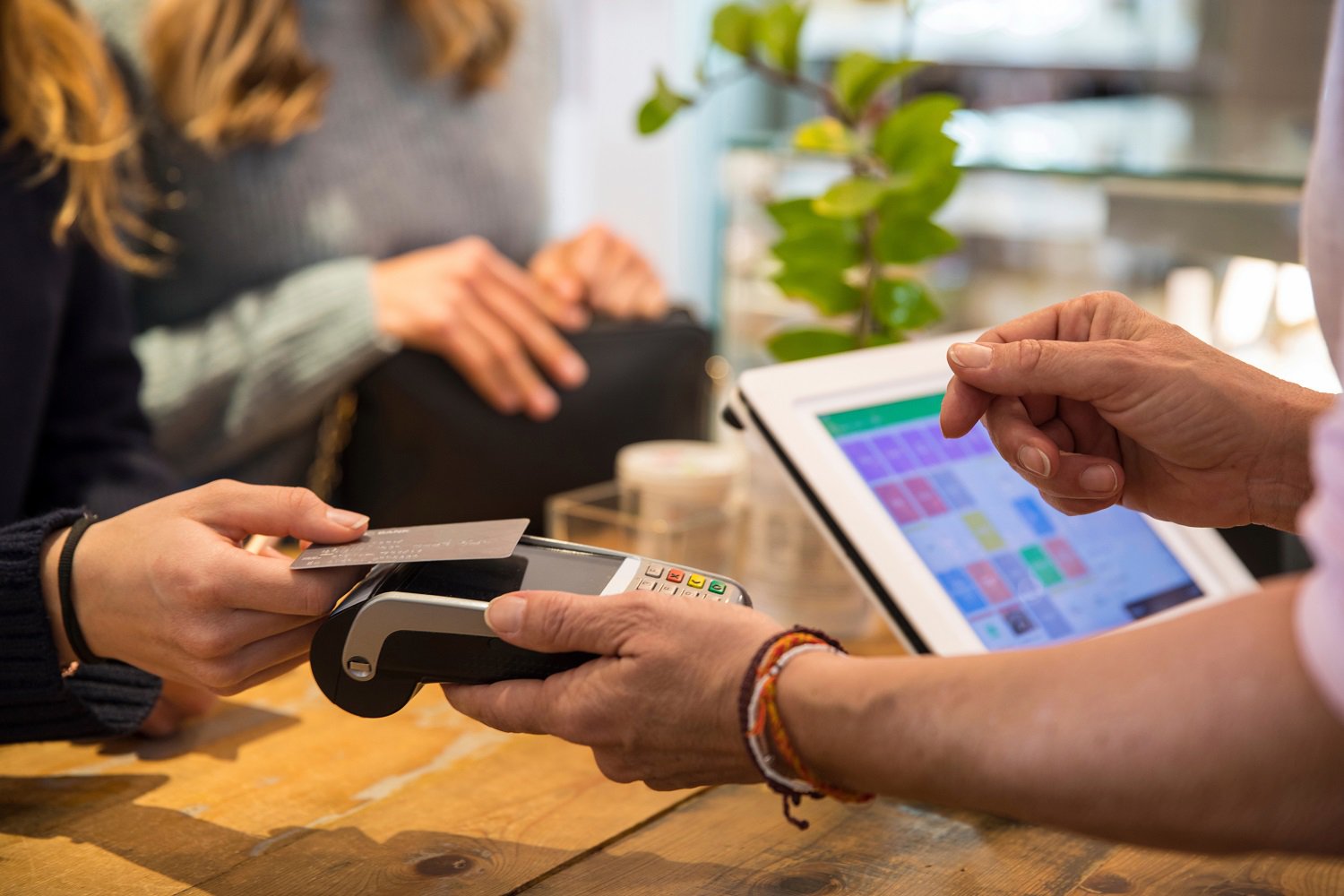
Two-thirds of purchases (67%) were paid for by debit card. At 43%, the share of contactless debit card payments was higher for the first time than both the share of cash payments and the share of chip-and-PIN debit card payments (24%). These findings come from joint research by the Dutch Payments Association and De Nederlandsche Bank .
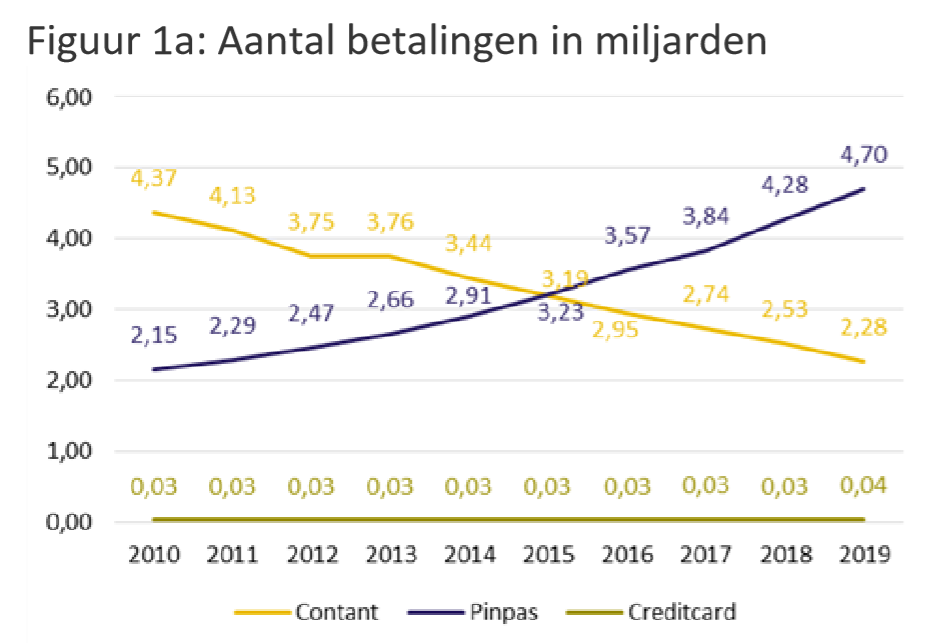
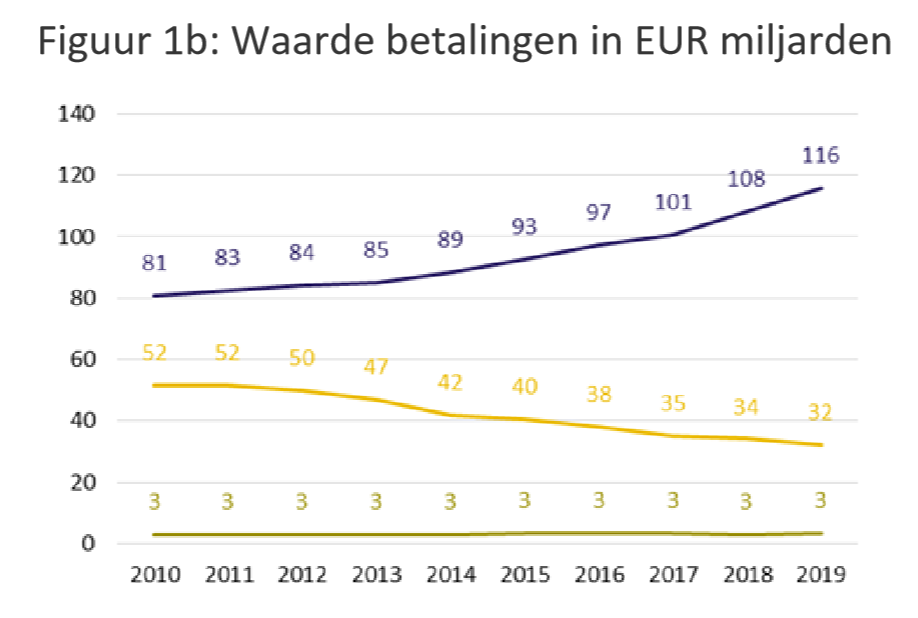
The number of cash payments at points of sale fell again. Between 2018 and 2019, the total number of cash payments made by consumers at shops, hospitality businesses, petrol stations, markets and service providers declined from 2.53 billion payments worth €34 billion to 2.28 billion payments worth €32 billion. Over the same period, the number of debit card payments rose from 4.28 billion payments worth €108 billion to 4.70 billion payments worth €116 billion. Consumers made the majority of debit card payments – 3.02 billion in total – contactlessly using a debit card or smartphone. The continuing shift from cash to debit cards was therefore largely due to contactless payments replacing cash, particularly for small amounts. More and more consumers are paying contactlessly, mainly with a debit card. It is striking that just under a quarter of consumers say they do not have a contactless debit card, even though more than 90% of all debit cards are now contactless. Some consumers may be unaware that their debit card supports this option.
Further shift from cash to electronic person-to-person payments
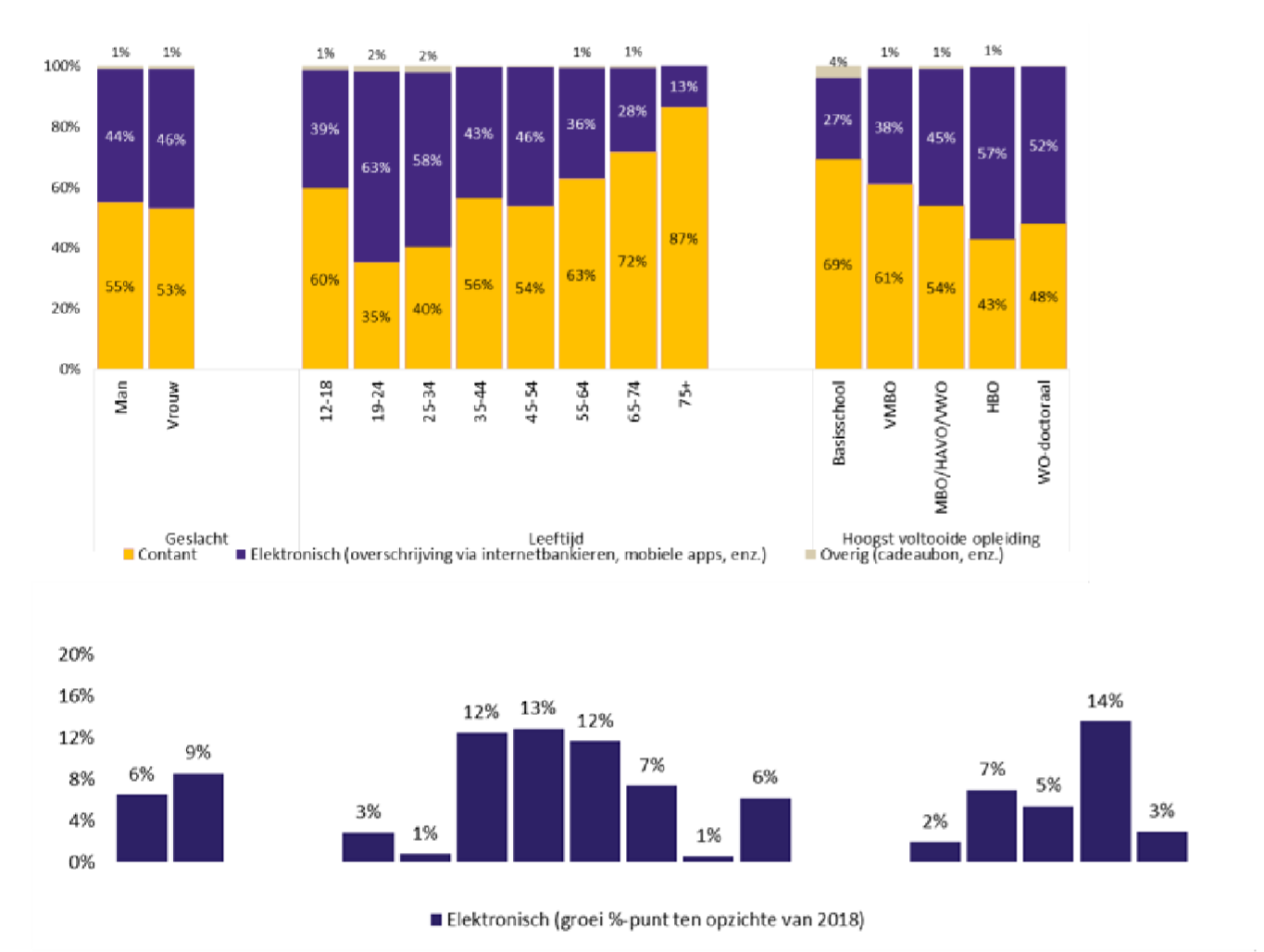
In 2019, Dutch consumers made almost 570 million person-to-person payments with a total value of €23 billion. These included transactions between relatives, friends, colleagues and acquaintances (485 million transactions), as well as transactions for school- or sports-related activities, such as gifts for a teacher and contributions to parties and similar events (82 million transactions). Cash was used for 54% of person-to-person payments and an electronic payment method for 45%, such as Tikkie or another payment request, or a credit transfer made through a mobile banking app. Between 2018 and 2019, the share of cash fell by 5 percentage points, while the share of electronic transfers rose by 7 percentage points. In 2018, 59% of person-to-person transactions were still made in cash, 38% electronically and 3% using another payment method, such as a gift card.
Young adults pay electronically most often
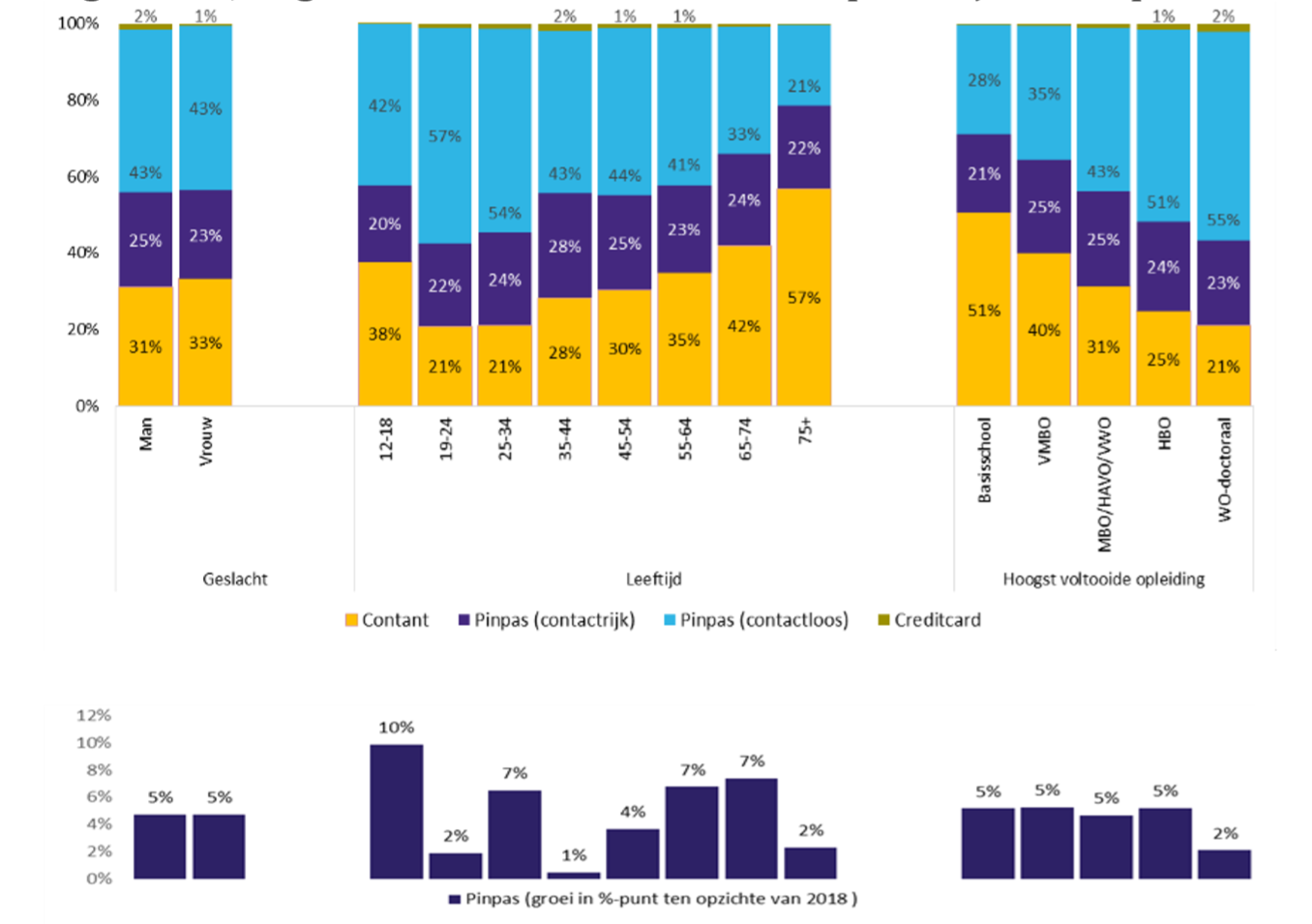
Of all age groups, young adults used cash least and electronic payment methods most in 2019. Consumers aged 19 to 34 paid the highest proportion of their point-of-sale purchases by debit card (Figure 2), while those aged 19 to 24 made the highest proportion of person-to-person transactions electronically (Figure 3).
Consumers of all ages paid by debit card more often in 2019. As in 2018, teenagers led the growth in the share of point-of-sale debit card payments, with an increase of 10 percentage points. Older people also used debit cards for purchases much more often, with the strongest increase among those aged 55 to 74. Like teenagers, they mainly made more contactless payments. People aged 75 and over were the only group to pay more often in cash (57% of purchases) than electronically (43%), although they too showed a shift towards more debit card payments, up 2 percentage points.
Figure 2: Young adults pay for four out of five point-of-sale purchases by debit card
For person-to-person transactions, the increase in electronic transfers was largest among Dutch consumers aged 25 to 54, at 12 to 13 percentage points. In 2019, those aged 25 to 34 transferred money to others electronically more often for the first time (58% of their person-to-person payments) than they gave cash (40%). People aged 75 and over still made by far the most person-to-person payments in cash, although they too increasingly used electronic methods. The share of electronic transactions among this group almost doubled from 7% in 2018 to 13% in 2019.
Figure 3: Young adults usually make person-to-person payments electronically
COVID-19 measures reduce cash use in 2020
Cash use by Dutch consumers was expected to decline further in 2020. In addition to continuing digitalisation, measures introduced during the COVID-19 crisis also played a role. Consumers were encouraged to pay contactlessly more often to minimise the risk of transmitting the virus through hand contact. Banks temporarily raised contactless payment limits so that consumers would need to enter their PIN less often. As a result, people who would normally pay in cash increasingly paid by debit card, often contactlessly. An early indication was the roughly 30% decline in cash withdrawals from ATMs in recent weeks. It remained to be seen to what extent this change would persist after the COVID-19 crisis.
For all results of the joint study by De Nederlandsche Bank and the Dutch Payments Association into the use of cash and electronic payment methods in the Netherlands in 2019, download the ‘Point-of-sale payments, 2019’ factsheet (in Dutch). The factsheet includes information on the use of cash and electronic payment methods for point-of-sale and person-to-person payments by Dutch consumers, broken down by transaction amount, sector or purpose, demographic characteristics and month of the year.
Related articles
-
A2A payments continue to grow
-
News
-
Online payments
-
-
Dutch abroad pay most with cards in Spanish hospitality
-
News
-
Card payments
-
-
Tackling ATM attacks with ink, glue and synthetic DNA
-
News
-
Cash payments
-
-

High confidence in Dutch payment system
-
News
-
Card payments
-
-
Make digital euro useful, simple and affordable
-
News
-
European legislation
-
-
Cash accepted at 96% of points of sale
-
News
-
Cash payments
-