
Dutch Payments Association, police and Fraudehelpdesk join forces against friend-in-need fraud
Members of the Dutch Payments Association, the police and Fraudehelpdesk are joining forces against so-called friend-in-need fraud. Facebook is supporting these organisations with advice and assistance. In this type of fraud, a scammer impersonates a close friend or relative by email, text message or chat app and asks the recipient for financial help.

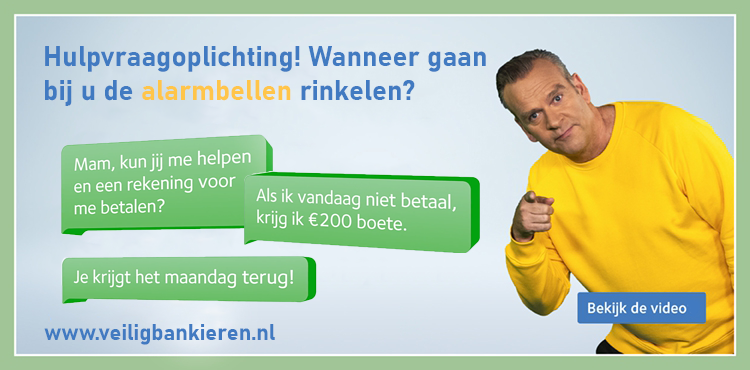
Banks and payment institutions monitor suspicious transactions and bank accounts, and inform customers through VeiligBankieren.nl , mobile banking and online banking. The police are tackling online fraud and scams firmly through prevention and investigation. Victims can now report this type of fraud online quickly and easily . These reports have recently helped the police arrest several suspects. Fraudehelpdesk advises victims and warns others about the methods used by fraudsters. With help and support from Facebook, Fraudehelpdesk will distribute warnings and information to users via social media.
Sharp recent rise in friend-in-need fraud
The number of reports and victims of friend-in-need fraud has risen sharply in recent months. Fraudsters have been operating on a large scale, particularly since the COVID-19 lockdown led us to use social media much more intensively to stay in touch with friends and family. In the first four months of 2020, Fraudehelpdesk received more reports of this type of fraud than in the whole of 2019. Since it became possible to report friend-in-need fraud online at the end of April, the number of reports has risen from 300 to 700 per week. During the lockdown months of March, April and May, Dutch banks received roughly three times as many reports of fraud via social media as in the final three months of 2019. In May, the banks received an estimated 70 reports a day.
Most victims of friend-in-need fraud are over the age of 50, and eight out of ten are women. Helpful parents of adult children are particularly likely to be deceived by fraudsters who pose as a son or daughter in distress in emails, text messages or chat apps. The fraudsters search social media for personal information about their victims. For example, they take a profile photo and personal messages posted online by a loved one to make the sender appear genuine, thereby deceiving a mother, father or partner.
Read the full press release with useful tips and advice (in Dutch)…
Related articles
-
Your bank is always nearby!
-
News
-
Payments for all
-
-

The Payments Association at GDC26: digital identity and payments
-
News
-
Digital identity
-
-

High confidence in Dutch payment system
-
News
-
Card payments
-
-

Industry organisations: involve the financial sector in the roll-out of digital wallets
-
News
-
Digital identity
-
-
Growing number of people are satisfied with handling their daily banking affairs
-
News
-
Payments for all
-
-
Digital Resilience and AI
-
News
-
Digital identity
-