
E-commerce turnover rises 12% in Q2 2020
Online consumer spending in the Netherlands rose by 12% to €6.36 billion in the second quarter of 2020. Strong growth in product sales offset the heavy impact of COVID-19 on the travel and leisure sectors.
As expected, the COVID-19 outbreak had a greater impact on e-commerce in the second quarter of 2020 than in the first three months. Online spending on services such as travel and tickets fell even more sharply, by 45% compared with Q2 2019, but this was more than offset by 52% growth in online spending on products. Total online consumer spending therefore rose by 12% to €6.36 billion and by 4% to €12.40 billion in the first half of 2020. These figures come from the latest Thuiswinkel Market Monitor, the study of online consumer spending in the Netherlands. GfK conducts the study on behalf of Thuiswinkel.org and Retail Insiders , in cooperation with PostNL, the Dutch Payments Association and Currence .
The total number of online purchases also grew strongly because of COVID-19: by 36% in the second quarter and by 22% in the first half of the year. As with online spending, products and services showed opposite trends. In the second quarter, online purchases of services such as airline tickets, accommodation and package holidays were down 35% compared with the same period a year earlier, while purchases across product categories rose by an average of 52%. Over the first half of the year, service purchases fell by 32% and product purchases increased by 34%.
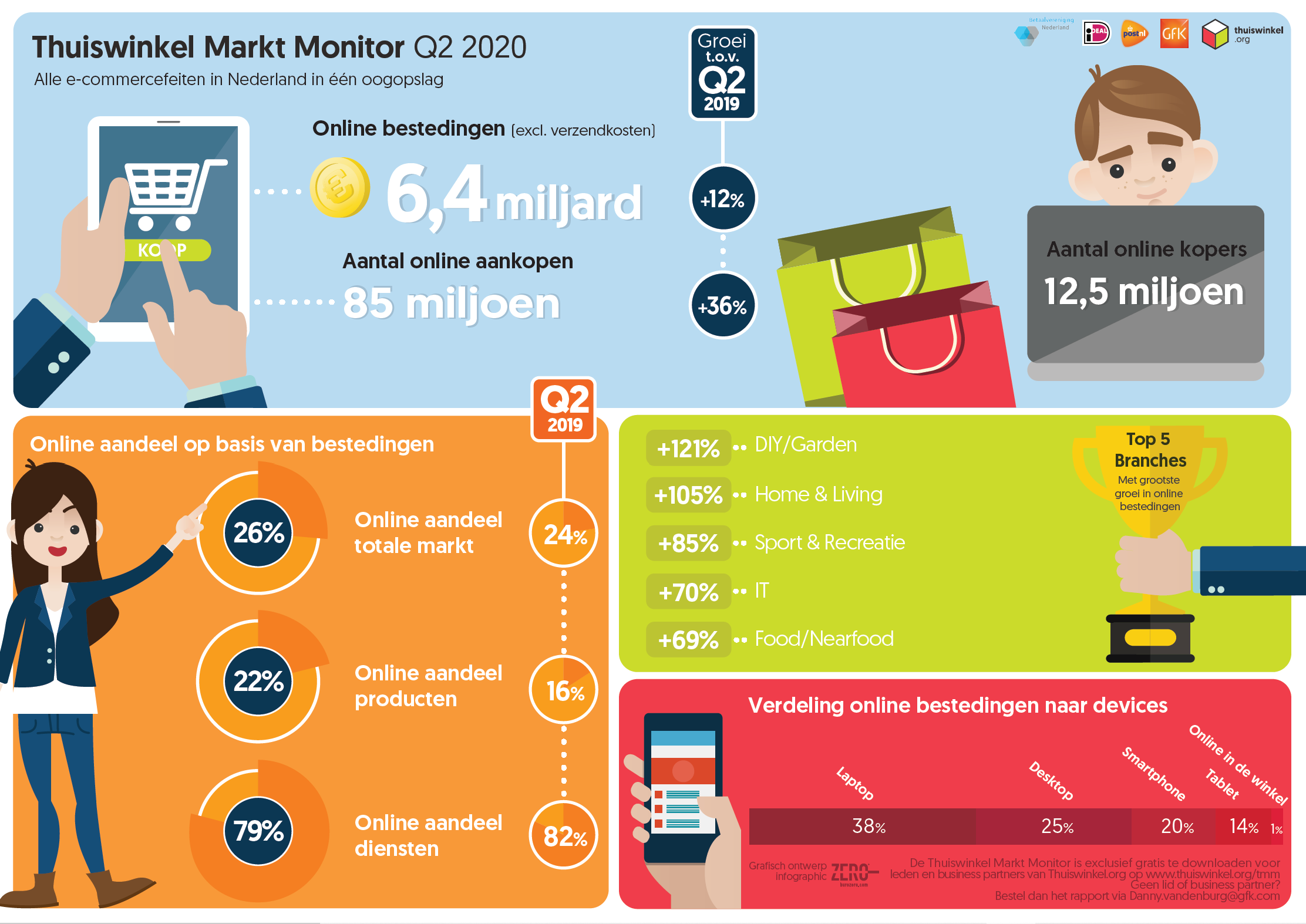
The partial lockdown earlier in the year increased the number of online shoppers. Figures from the Thuiswinkel Market Monitor show that there were 7% more online shoppers in the second quarter of 2020 than a year earlier, rising from 11.7 million to 12.5 million.
“Recent months have shown that e-commerce plays a vital role in the Dutch economy,” says Wijnand Jongen, CEO of Thuiswinkel.org. “Many people had to stay at home and turned to online shops for their purchases, resulting in many new online shoppers and higher spending per shopper. This is also supported by the growth in online product purchases and spending, and consequently by the increased online share of total retail. This share reached 12.3% in the first half of 2020, an increase of 2.2 percentage points compared with a year earlier.”
View the Thuiswinkel Market Monitor for the first half of 2020
Sharp decline in services, food largest product category
Online spending and purchases in the travel and leisure sectors fell further. Restrictions imposed to curb the spread of COVID-19 reduced the number of online purchasers of airline tickets, package holidays and tickets for attractions and events. Online spending on package holidays fell by 81% and spending on individual airline tickets and accommodation by 24% compared with the second quarter of 2019.
Product categories, by contrast, recorded growth in both online spending and purchases during the second quarter. The strongest growth in online spending was seen in DIY/Garden (+121%), Home & Living (+105%) and Sport & Recreation (+85%). Online penetration in these categories also nearly or fully doubled, meaning that many more people in the Netherlands began buying these products online.
Food/Nearfood was another product category that grew rapidly. People in the Netherlands ordered more groceries online again, partly because of COVID-19. Nearly 12,000 online purchases were made in this category during the second quarter, an increase of 57% compared with the same period a year earlier. Total consumer spending on online groceries amounted to €704 million, up 69%.
“This means Food/Nearfood overtook Clothing (€646 million) as the product category with the highest online spending in the second quarter,” says Wijnand Jongen. “The online share of total spending on Food/Nearfood products also rose from 4% to 6% during this period.”
Smartphone and iDEAL growth continues
Looking at the devices used to buy products or services online, smartphones continued their advance. In the second quarter of 2019, 37% of online shoppers used their mobile phone for a purchase; in 2020, this rose to 43%.
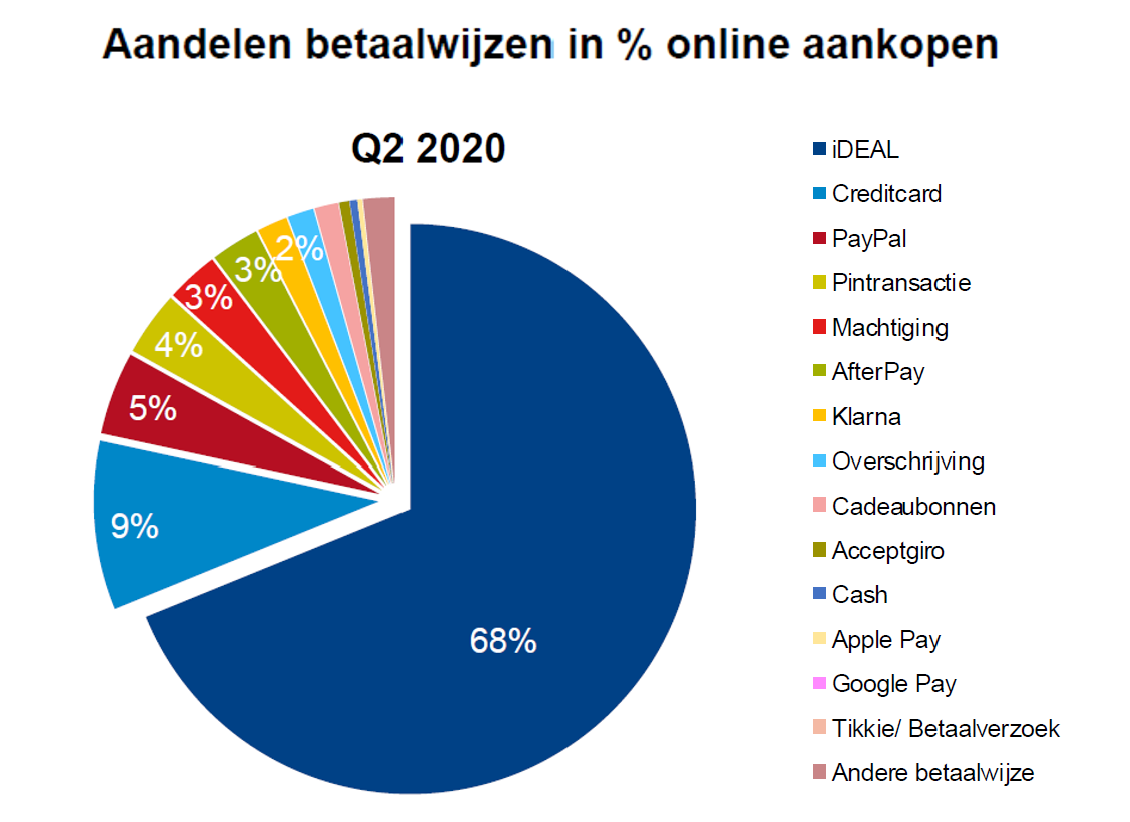
The COVID-19 outbreak also affected the online payment methods used. As online spending on products increased while spending on services declined, products gained a larger share of total online spending. This also increased the share of iDEAL , which is particularly popular for product purchases, from 61% in the second quarter of 2019 to 68% in 2020.
Related articles
-
Dutch abroad pay most with cards in Spanish hospitality
-
News
-
Card payments
-
-

High confidence in Dutch payment system
-
News
-
Card payments
-
-
Next Phase of iDEAL Migration to Wero Begins in October
-
News
-
Online payments
-
-

Lower travel spending is putting pressure on overall online spending
-
News
-
Online payments
-
-

The Digital Euro and Stablecoins: Apples and Oranges
-
News
-
European legislation
-
-
Banks are calling out social media platforms for their role in fraud and scams
-
News
-
Online payments
-