Payments newsletter: Betaaljournaal 17
After an exceptionally sunny summer holiday, most colleagues and members are already hard at work again. During the summer, we were particularly busy with the major study into the costs and revenues of payments, together with our members, DNB and McKinsey. A great deal of consultation is now also taking place on the introduction of public transport travel using debit and credit cards, the distribution of cash, payment options for Ukrainians and debit card acceptance, to name but a few topics. We are also working hard on responses to a range of consultations from Brussels. Since the end of the coronavirus restrictions, we have seen electronic payments increase again. Many of these developments are covered in this newsletter. We also update you on the rise of cardless payments and the much-needed opportunities for payment institutions to share fraud information. I hope you enjoy reading it.
The meeting season is about to begin again, and we hope to meet many of you in person. I also hope to see you at the online members’ meeting about the cost study on 29 September and at the other events we have planned.
Gijs Boudewijn, Acting Managing Director
- Use of wallets at the point of sale continues to grow
- NS pilot: travel using a debit card
- Free Debit Card Acceptance promotional materials
- Agreements on sharing fraud information between payment institutions
- Accessibility activities gather pace
- ECPA puts quantum computing on Community Meeting agenda
- Consultations
- Six in ten peer-to-peer payments are digital
- Figures
- Agenda
- Association news
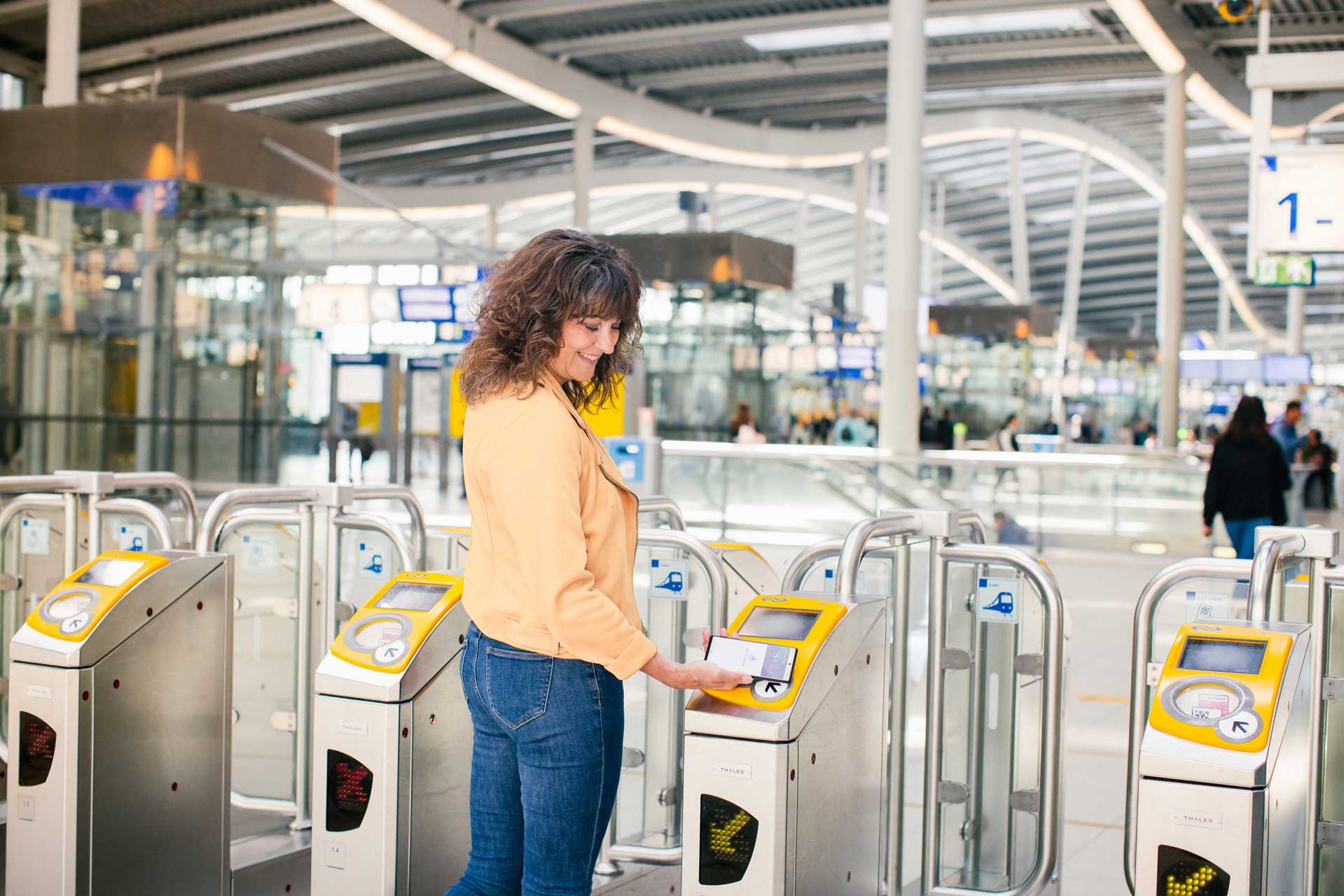
Use of wallets at the point of sale continues to grow
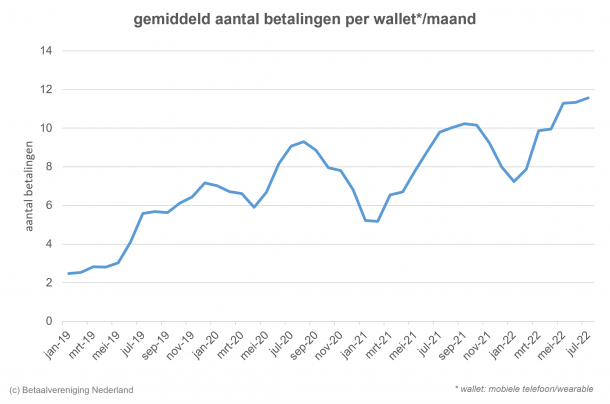
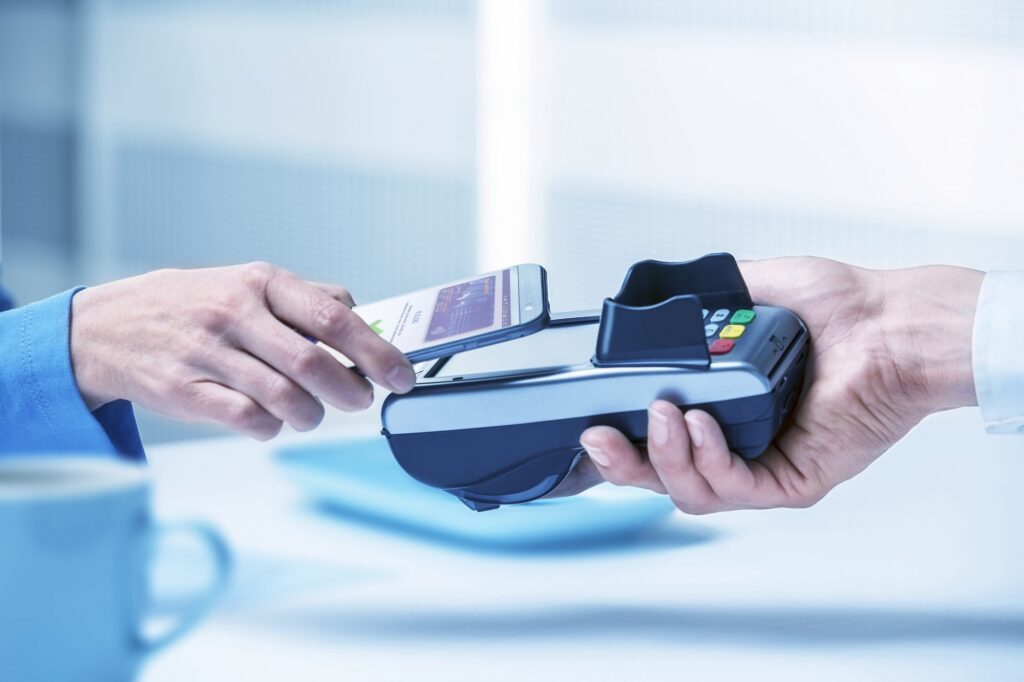
A quarter of debit card transactions are now made using a smartphone or wearable device through mobile NFC. This is due both to a growing number of users and to those users paying this way more often, nearly twelve times a month. Across all consumers, the average number of debit card payments is thirteen a month, just under eleven of which are contactless. This suggests that mobile debit card users hardly use their physical cards any more. See more debit card payment figures at www.pin.nl…
NS pilot: travel using a debit card
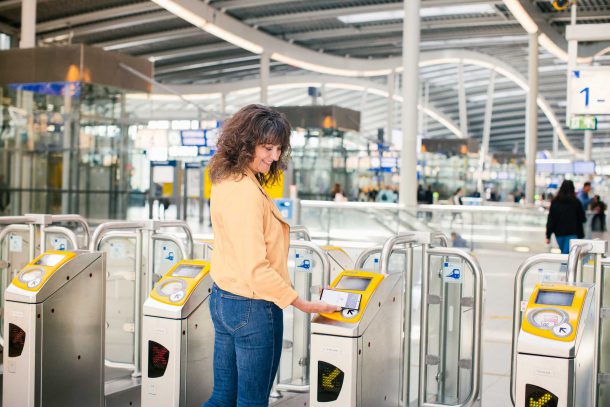
Several regional public transport operators had already introduced travel using a debit or credit card, and this is gradually becoming available nationwide. At the end of August, NS launched a pilot enabling train passengers to check in and out contactlessly with a debit or credit card at every station in the Netherlands served by NS. This naturally also includes a digital debit card on a smartphone or wearable device. NS aims to make train travel even easier and more flexible, especially for occasional passengers, by offering them an alternative to a separate ticket or OV-chipkaart. Read more…
Free Debit Card Acceptance promotional materials
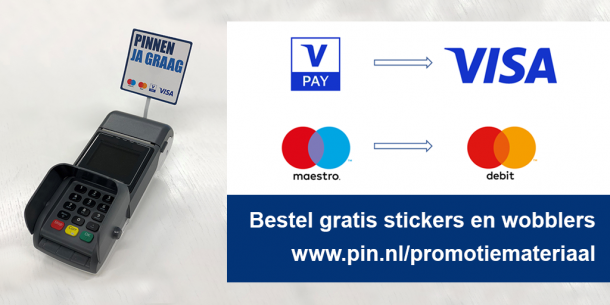
By the end of the year, payment terminals will accept not only Maestro and V PAY but also Visa Debit and Debit Mastercard. This is currently most relevant to customers and visitors from abroad. It will also become relevant to Dutch consumers once Dutch banks begin issuing cards bearing these brands on a large scale. Nothing will change for Dutch cardholders at the point of sale. That is precisely why it is important for businesses to show clearly that they accept the new brands. We are therefore making free promotional materials available: window stickers, regular stickers and wobblers in both English and Dutch. Businesses can also view the frequently asked questions about the new cards.
Agreements on sharing fraud information between payment institutions

Earlier this year, payment institutions expressed a desire through the Advisory Council for Payment Institutions to cooperate more closely on fraud prevention. Like banks, payment institutions face increasing fraud, particularly in e-commerce. Banks have made mutual arrangements for this purpose and developed the PIFI protocol, the Protocol for Incident Warning Systems for Financial Institutions, which they have integrated into their KYC processes. The Dutch Data Protection Authority (AP) approved this protocol. Payment institutions wanted something similar and asked us to help them.
The Dutch Payments Association therefore set up a project group involving several payment institutions. We held discussions with the AP to establish the scope provided by the General Data Protection Regulation (GDPR) for sharing fraud information between payment institutions. Unfortunately, it soon became clear that developing a separate PIFI-style protocol for payment institutions was not a viable path for several reasons. We therefore examined existing initiatives that could still enable fraud information to be shared. The National Internet Fraud Reporting Centre (LMIO) of the Dutch National Police emerged as a promising option. The LMIO already manages two fraud registers: Check seller details and Known fraudulent trading parties .
We found that the processes used to populate these registers still needed to be optimised. This will be done before the end of this year. The connection with the Financial Intelligence Unit (FIU) will be expanded, for example, and the API for both registers will be improved. The payment institutions in the project group can then integrate the information from the registers into their own KYC processes. In time, we intend to encourage all payment institutions to integrate these registers. With more participants and more data, fraud prevention results across the sector will continue to improve. Interested payment institutions can contact p.kleppe@betaalvereniging.nl.
Accessibility activities gather pace

Dutch banks want their services to be available to everyone, including vulnerable groups such as older people and people with disabilities. To make banking services even more accessible to these groups, a collective action plan was approved by the National Forum on the Payment System (MOB) in mid-2021. The plan is coordinated by a core team comprising representatives of DNB, the secretary of the interbank Working Group on Accessibility and Inclusivity (WTI), who is an employee of the Dutch Payments Association, and a representative of people in vulnerable situations. Banks are taking action in many forms, both individually and collectively, to implement the plan.
The action plan aims to raise awareness of banks’ existing initiatives for vulnerable groups, including mobile care coaches, dedicated customer services, courses, websites and telephone numbers. It also aims to improve banks’ services where necessary through personal attention at local level. Finally, the plan seeks to work with civil society organisations to identify the needs of vulnerable groups and devise additional solutions where necessary.
Several actions have now been implemented successfully. Read more in our report on the action plan and other accessibility initiatives…
ECPA puts quantum computing on Community Meeting agenda
Changes to the payments infrastructure take a long time to implement, so the necessary preparations to make it resistant to quantum computing must begin in good time. That starts with awareness. Oscar Covers of the Dutch Banking Association chairs the Security Working Group of the European Card Payments Association (ECPA), of which the Dutch Payments Association is a member. At the PCI Community Meeting North America from 13 to 15 September, he will alert attendees that it is now time to start making the international card payments infrastructure resistant to quantum computing. The enormous computing power of a quantum computer could break the security protecting today’s payments. Opinions differ, however, on when quantum computing will become a genuine threat to secure and reliable payments.
As you know, preparations have already begun in the Netherlands, but an international approach is essential. International payment schemes such as Mastercard, Visa and American Express will attend the PCI Community Meeting, as will other major stakeholders involved in the international payments infrastructure, from evaluation laboratories and point-of-sale and ATM suppliers to major retailers such as Walmart, Shell and Google. Oscar also represents the Dutch Payments Association in the Security Working Group.
Consultations

Until 12 September, the European Payments Council (EPC) is holding a public consultation on the draft rulebook for the new SEPA Payment Account Access Scheme (SPAA). The Dutch Payments Association’s Open Banking Working Group, chaired by Rob van Bergen of ING, is preparing a response that will be published on our website. SPAA aims to create an open-payments ecosystem that adds value and distributes value and risks fairly throughout the chain. This is expected to give open banking in Europe a positive boost.
VAT fraud remains a concern. From 2024, payment service providers will therefore be required to report certain cross-border payments they facilitate to the Dutch Tax Administration to help combat VAT fraud. Banks, payment institutions and electronic money institutions may all be affected by this new obligation. In preparation for establishing a European database, the Central Electronic System of Payment Information (CESOP), in which payment data on cross-border transactions will be stored, the Dutch Tax Administration is starting an information programme for payment service providers. Its aim is to ensure that payment service providers can implement the obligations smoothly.
For more information about the national information session planned for 13 September, please contact Ed Slob, account manager for financial institutions at the Dutch Tax Administration, at e.slob@belastingdienst.nl. The European Commission is holding an information meeting on 23 September. In-person attendance in Brussels is limited, but online participation is also possible. Interested parties can register by providing their name, role, telephone number and email address to TAXUD-CESOP@ec.europa.eu. The meeting will provide information about CESOP, answer participants’ questions and gather feedback on the implementation process.
In January 2022, the Dutch Payments Association also submitted a response to the consultation on this new legislation, drafted by the Dutch Banking Association, explaining the impact on the parties concerned.
Six in ten peer-to-peer payments are digital

In 2021, consumers made a total of 531 million peer-to-peer payment transactions with a combined value of €21.5 billion. Most were payments to family members, friends, colleagues and other acquaintances, accounting for 469.5 million transactions. The remaining transactions were payments for school, sport and other informal activities.
Consumers used cash for 39% of these transactions, while 61% were made electronically through online or mobile banking, with some initiated by payment requests sent through mobile apps. Electronic peer-to-peer payments had a value of €14.9 billion, or 69% of the total value. Nearly all population groups used electronic payment methods for peer-to-peer payments more often than cash. The exceptions were people with relatively low levels of education and people aged over 65.
This information comes from the publication Payment Behaviour at the Point of Sale in 2021, published in April by the Dutch Payments Association and DNB. The publication contains a wealth of information about the use of cash and electronic payments at the point of sale in the Netherlands. Highly recommended!
Figures
Only 55,000 paper Acceptgiro payments per week in July 2022
439 million debit card payments at the point of sale in August 2022
Agenda
- 29 September – Online members’ meeting about the cost study
- 9 October – Dutch SIBOS Drinks, Amsterdam
- 10–13 October – SIBOS, RAI Amsterdam
- 12–13 October – European Card Payment Association (ECPA) conference, Amsterdam
- 13 October – Stakeholder meeting
- 17 November – General Meeting of Members followed by a programme and drinks, Amsterdam
Association news
We have said goodbye to Payvision as a member of the Dutch Payments Association. The company is ending its activities as a payment service provider and has therefore had to terminate its membership.
Members’ bulletin
In addition to Betaaljournaal, the Dutch Payments Association publishes members’ bulletins. These usually appear a few times a month and cover a specific topic. You may be a member but not yet receive these bulletins. Contact secretariaat@betaalvereniging.nl to be added to the mailing list.
Subscribe to Betaaljournaal
Would you also like to know about the latest developments in payments? Keep up to date through Betaaljournaal. You can subscribe here.
Related articles
-

BIC and Identifier ‘YABNNL22’ added to the SEPA BIC list
-
IBAN/BIC list
-
IBAN and BIC
-
-
Cash accepted at 96% of points of sale
-
News
-
Cash payments
-
-
Trial with €100 banknotes at Geldmaat
-
News
-
Cash payments
-
-
Payments newsletter: Betaaljournaal 36
-
Payments newsletter
-
-

Payments newsletter: Betaaljournaal 38
-
Payments newsletter
-
-
Six out of ten retail business owners say they are prepared for card payments failures
-
News
-
Card payments
-