
Point-of-sale payments in the first half of 2020
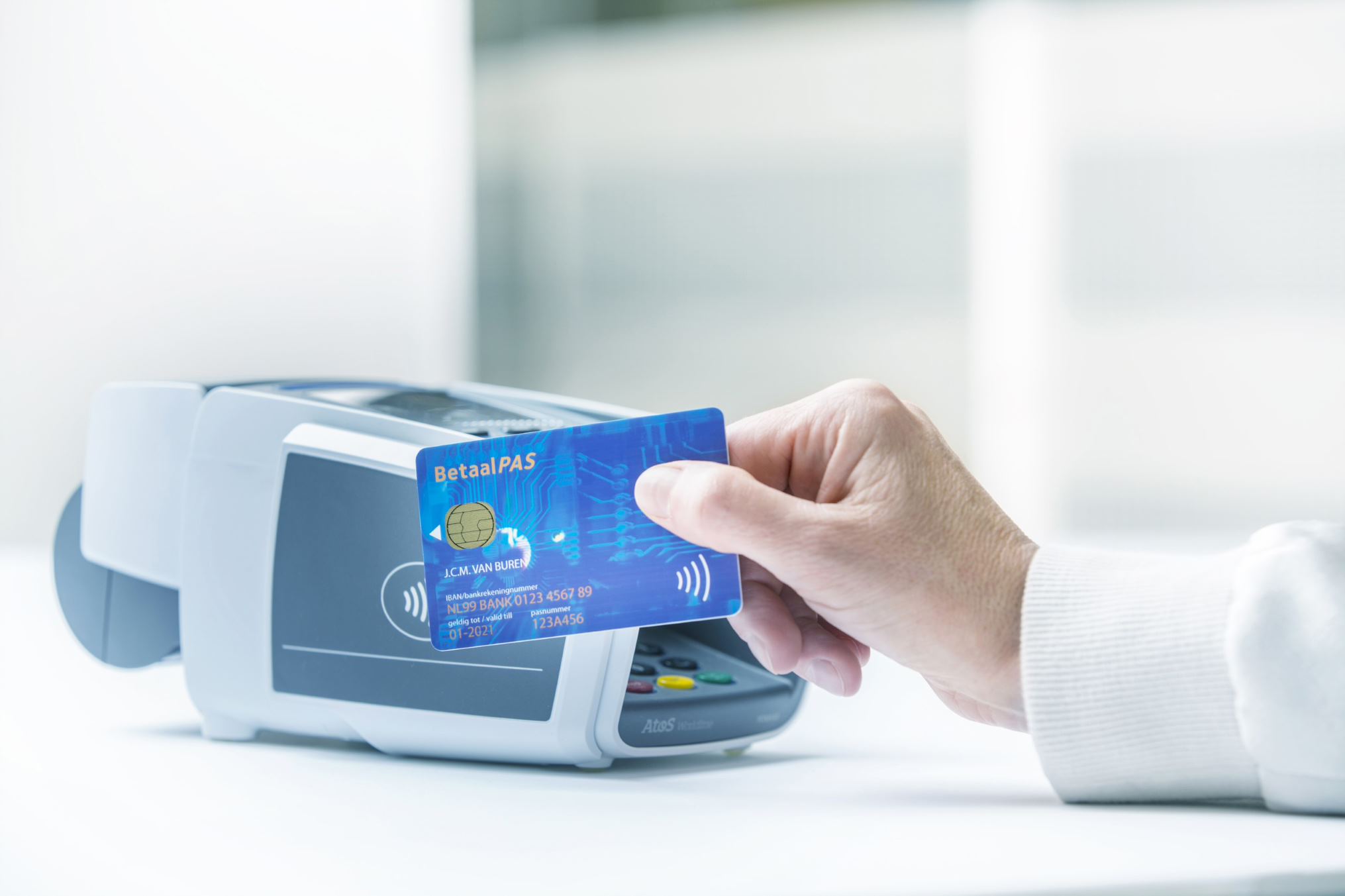
During the COVID-19 pandemic, retailers encouraged consumers to make more contactless payments to minimise the risk of transmitting the virus through hand contact. Consumers responded in large numbers, as shown by the interim results of joint research by the Dutch Payments Association and De Nederlandsche Bank (DNB) into point-of-sale payments.
Value of cash payments halves
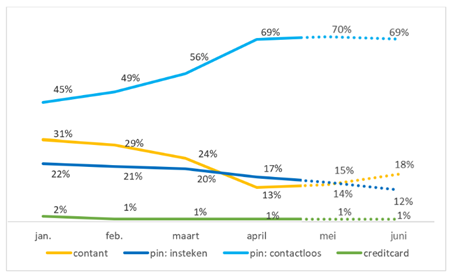
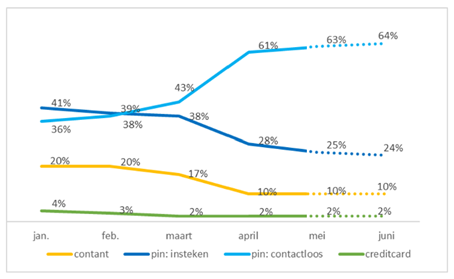
The share of contactless payments has risen sharply since the lockdown began on 16 March. This increase came partly at the expense of traditional debit card payments, in which the card is inserted into the payment terminal, but mainly at the expense of cash. In the first months of the year, cash still accounted for around 30% of all point-of-sale payments; in April, its share fell to less than half that level. The value of cash payments also halved during the COVID-19 crisis.
Increase in contactless payments
It remains to be seen whether this decline in cash use will persist. The first preliminary data for May and June show a modest increase in the share of cash. At 18% of all point-of-sale payments in June, however, it was still considerably lower than before the lockdown. The sharp increase in the share of contactless payments and its stabilisation in recent months show that consumers are increasingly embracing this payment method.
See also the COVID-19 bulletin (in Dutch).
Related articles
-
Dutch abroad pay most with cards in Spanish hospitality
-
News
-
Card payments
-
-
Tackling ATM attacks with ink, glue and synthetic DNA
-
News
-
Cash payments
-
-

High confidence in Dutch payment system
-
News
-
Card payments
-
-
Make digital euro useful, simple and affordable
-
News
-
European legislation
-
-
Cash accepted at 96% of points of sale
-
News
-
Cash payments
-
-
Vote on the Design of New Euro Banknotes
-
News
-
Cash payments
-