
Payment costs for businesses fell only slightly despite 14% fewer payments
Differences in costs between payment methods are increasing
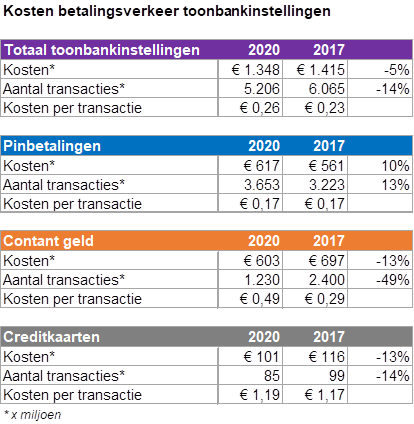
The total cost of payments for point-of-sale businesses (retail, hospitality, attended filling stations and market traders) amounted to €1.35 billion in 2020, compared with €1.42 billion in 2017. The number of point-of-sale transactions fell from 6 billion in 2017 to 5.2 billion in 2020. Payment costs as a percentage of turnover declined slightly to 1.1% in 2020. However, there are large differences between payment methods. Cash payments became considerably more expensive, while the average cost of a debit card payment remained roughly unchanged. These findings come from research by Panteia commissioned by the Dutch Payments Association and Dutch point-of-sale sectors (retail, filling stations and hospitality).
COVID-19 causes number of transactions to fall
The total number of point-of-sale payment transactions fell by 14% in 2020 compared with 2017, to 5.2 billion transactions. This decline was a result of the COVID-19 measures. Hospitality businesses had to close for months in 2020, while shops faced a range of capacity restrictions.
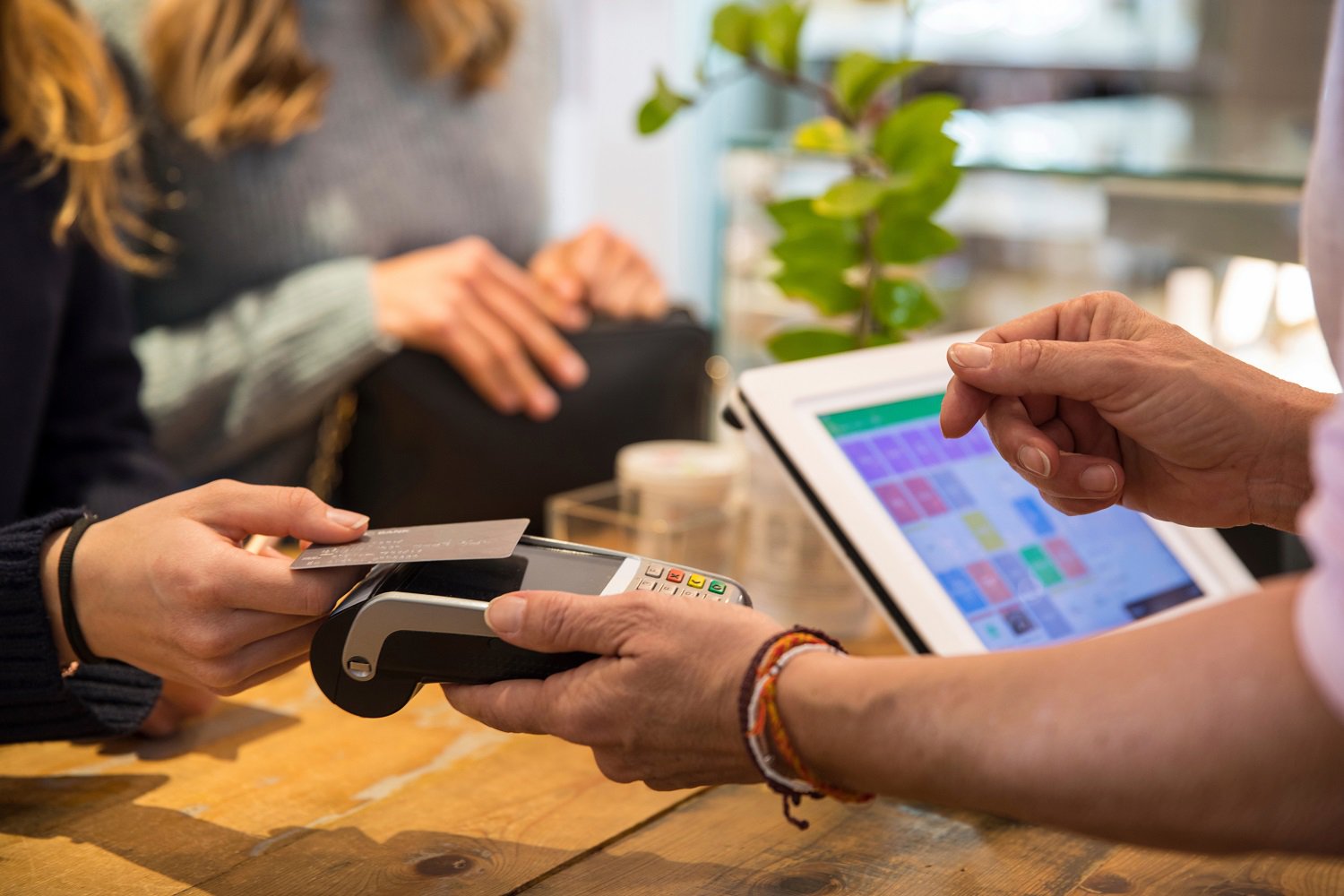
The number of cash transactions fell more sharply, declining by 49% over the preceding three years. Consumers used cash considerably less from the first lockdown in spring 2020 onwards, partly because they were encouraged to make contactless debit card payments wherever possible. Banks made contactless payments easier by adjusting the security limits so that consumers had to enter their PIN less often. Those changes have since been made permanent.
Cash payments nearly three times more expensive than debit card payments
The total cost of payments fell by €67 million between 2017 and 2020, from €1.42 billion to €1.35 billion. One important reason was the decline in the number of payment transactions during the pandemic year of 2020. Another was consumers’ increasing preference for relatively inexpensive debit card payments. Although debit card payments accounted for more than 70% of all payments in the sectors studied, they represented only 46% (€617 million) of total costs in 2020. Cash payments accounted for almost as much (€603 million, or 45% of the total), despite representing just 24% of transactions.
At the point of sale, a cash payment currently costs a business an average of 2.8 times as much as a debit card payment. A cash payment costs a business €0.49 on average, up 69% from €0.29 three years earlier. The average cost of a debit card transaction remained €0.17. This did not decline because debit card payment costs are largely variable (82%). In addition, slightly higher debit card fees were offset by lower costs due to the faster processing of contactless payments.
Credit card payments are generally the most expensive for businesses, averaging €1.19 per transaction (compared with €1.17 in 2017). This is because businesses pay a percentage of the transaction amount for credit card payments.
Fixed costs spread over fewer cash transactions;
solutions are needed
The increase in the cost per cash payment is largely due to the relatively high fixed cost of the cash infrastructure as the use of cash declines. This trend began years ago and was reinforced by COVID-19. The high fixed cost of cash is now spread over an ever-smaller number of cash transactions. In spring 2020, businesses that deposit their own cash also faced bank measures against explosive attacks, including the temporary closure of many cash deposit machines. This resulted in additional travel time and therefore additional costs for those businesses.
Given the large difference in total cost to businesses between a cash payment and a debit card payment (€0.49 versus €0.17), solutions are needed to keep the cost of cash manageable for point-of-sale businesses so that consumers who depend on cash can continue to use it for payments.
Related articles
-
Dutch abroad pay most with cards in Spanish hospitality
-
News
-
Card payments
-
-
Tackling ATM attacks with ink, glue and synthetic DNA
-
News
-
Cash payments
-
-

High confidence in Dutch payment system
-
News
-
Card payments
-
-
Make digital euro useful, simple and affordable
-
News
-
European legislation
-
-
Cash accepted at 96% of points of sale
-
News
-
Cash payments
-
-
Vote on the Design of New Euro Banknotes
-
News
-
Cash payments
-