
Online banking fraud losses halved
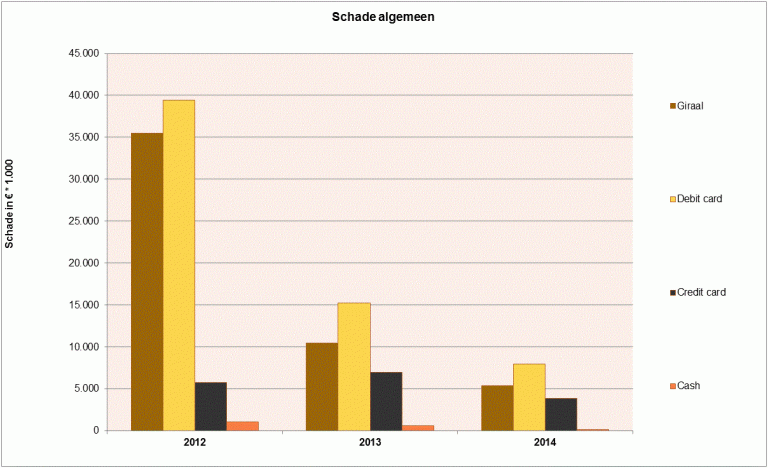
Losses caused by fraud in Dutch payments almost halved in 2014 compared with the previous year.
The percentage decline was almost the same for every electronic payment method, including debit cards, credit cards and online banking. Since 2012, total losses had fallen consistently from €81.8 million in 2012 and €33.3 million in 2013 to €17.3 million in 2014. Debit card skimming had been virtually eliminated. The Dutch Payments Association and the Dutch Banking Association announced the payment fraud figures.
Anti-skimming measures prove effective
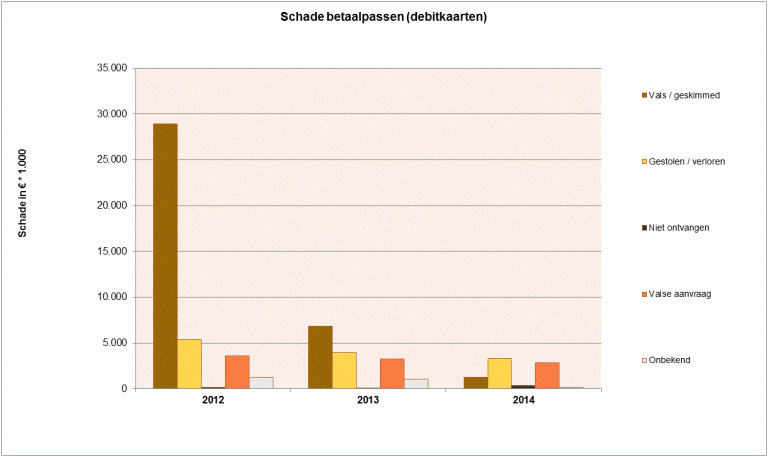
As expected, debit card skimming was reduced sharply in 2014. Skimming losses fell by 82%, from more than €6.8 million in 2013 to less than €1.3 million in 2014. The introduction of EMV chips on all debit cards, geoblocking for debit card use outside Europe and additional anti-skimming measures at unattended payment terminals and ATMs had made skimming unattractive to fraudsters. The last case of skimming at a staffed point-of-sale terminal had occurred in 2012, while the last case at an ATM occurred in late 2013. As skimming had almost disappeared in the Netherlands, the National Skimming Point was disbanded at the end of 2014. Skimmed debit cards could now only be used to obtain money outside Europe.
The largest source of debit card fraud losses was stolen or lost cards, accounting for €3.3 million in 2014. Criminals often observed the PIN being entered before stealing the card. The banks would therefore increase their communication about this type of fraud in 2015. Contactless payments without a PIN for small amounts and dip & go at parking terminals could help reduce opportunities to observe PINs.
Very low malware losses
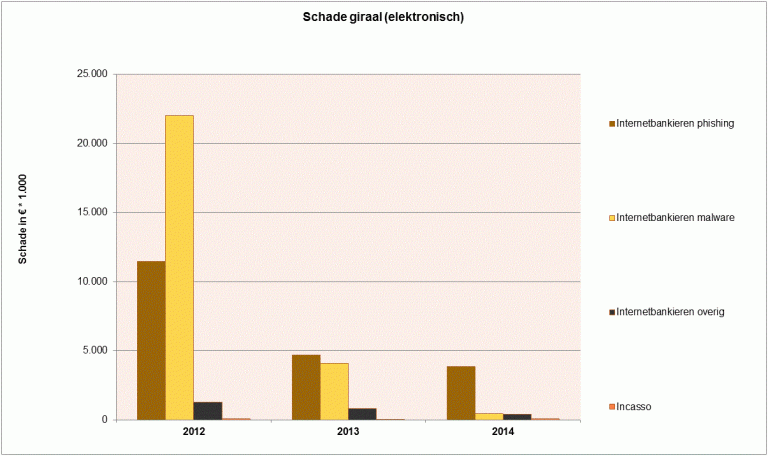
Despite the continued strong growth of online banking, fraud losses there also more than halved, from €9.6 million in 2013 to €4.7 million in 2014, a decline of 51%. As Dutch banks became increasingly effective at automatically detecting and preventing malware fraud, malware losses fell by as much as 90% to less than €500,000. Phishing caused the largest losses in 2014, at €3.9 million, down from €4.7 million in 2013.
Cooperation is key to success
The banks emphasised that effective cooperation was the key to keeping payments secure. “The joint efforts of the banks and other organisations are bearing fruit. Public-private partnerships, such as the National Cyber Security Centre and the Electronic Crimes Task Force, make an important contribution, as do interbank detection systems such as Cybercrime Monitoring & Investigation Services,” said Piet Mallekoote, director of the Dutch Payments Association, and Chris Buijink, chair of the Dutch Banking Association (link in Dutch).
Related articles
-
Pay-by-Bank, what is it?
-
News
-
Online payments
-
-
A2A payments continue to grow
-
News
-
Online payments
-
-

The Payments Association at GDC26: digital identity and payments
-
News
-
Digital identity
-
-

High confidence in Dutch payment system
-
News
-
Card payments
-
-

Industry organisations: involve the financial sector in the roll-out of digital wallets
-
News
-
Digital identity
-
-
Digital Resilience and AI
-
News
-
Digital identity
-