
Privacy and security of iDIN
Dutch banks are making iDIN widely available to online shops, companies and organisations, referred to as participating organisations. This raises questions for some people about the security and protection of bank customers’ personal and financial data when they use this online identification and login method.
A detailed answer is available on the iDIN website (in Dutch)(opens in new window) .
iDIN is as secure as iDEAL
The banks offering iDIN have more than ten years of experience securing iDEAL. That security has proven itself extensively and is regarded as highly robust and reliable. As iDIN builds on many years of online banking experience and iDEAL’s proven technology, it benefits from the same strong security.
No access to customers’ financial data
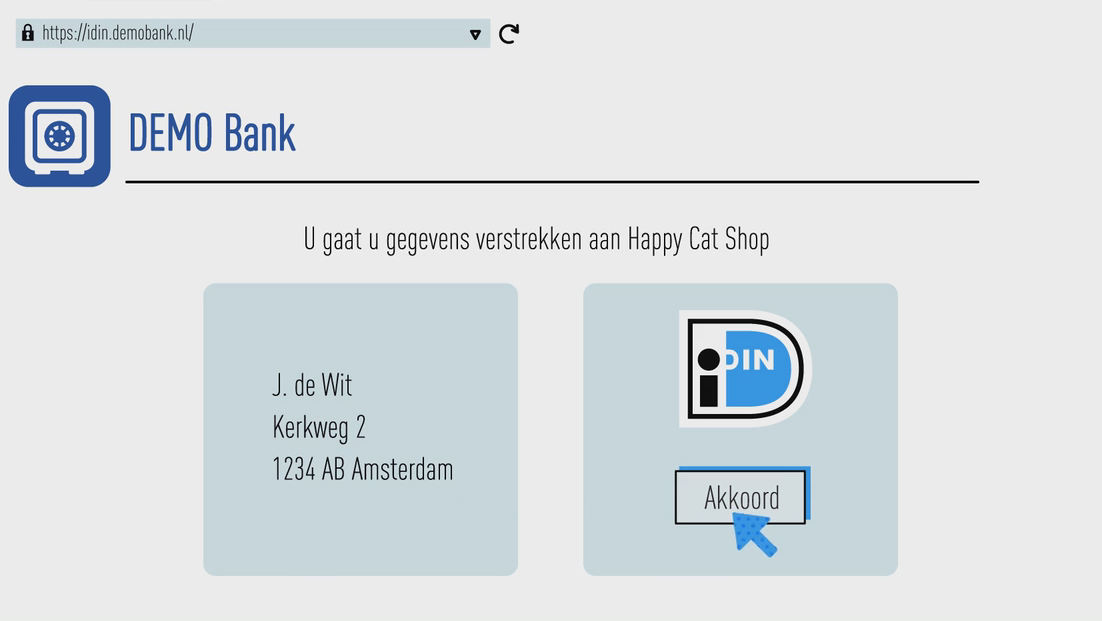
iDIN does not provide customers’ financial data, such as balances or payment details. It shares only limited personal data about an individual bank customer with a participating organisation: gender, name, address and an age indication or date of birth. The bank already knows this information from when the customer opened their account.
Whenever a participating organisation asks a bank through iDIN to provide a customer’s personal data, the customer is shown exactly which data are being requested. The bank may send the data only after the customer has given explicit approval.
No access to customer activity at participating organisations
Banks do not receive information from participating organisations about what their customers otherwise do or see on those organisations’ websites. Banks therefore cannot see which pages their customers visit there or which actions and orders they carry out.
When customers choose to identify themselves or log in with iDIN on a participating organisation’s website, they are redirected to a secure iDIN page at their own bank. After approving identification or login with iDIN at the bank, the customer is returned to the participating organisation’s website. A bank has no direct access to the organisation’s systems or website, just as a participating organisation has no direct access to a bank’s systems or website. iDIN exchanges only securely encrypted data between the bank and participating organisation: the data for which the customer has given consent.
Banks’ privacy commitments
All banks offering iDIN promise to handle their customers’ personal and usage data carefully and confidentially. They will not provide those data to third parties unless legally required to do so, and will not use data about iDIN usage for their own commercial purposes.
Related articles
-

Dutch abroad pay most with cards in Spanish hospitality
-
News
-
Card payments
-
-

The Payments Association at GDC26: digital identity and payments
-
News
-
Digital identity
-
-

High confidence in Dutch payment system
-
News
-
Card payments
-
-

Industry organisations: involve the financial sector in the roll-out of digital wallets
-
News
-
Digital identity
-
-
Next Phase of iDEAL Migration to Wero Begins in October
-
News
-
Online payments
-
-

Lower travel spending is putting pressure on overall online spending
-
News
-
Online payments
-